
Meta is up against 29 states in the largest trial regarding youth social media to date, with $1.4 trillion on the line.
The extensive legal evaluation concerning social media and childhood is reaching a critical moment in court.
Meta is set to face a trial this week brought by a coalition of 29 U.S. states, who allege that the company intentionally designed Facebook and Instagram to keep children hooked, marking one of the most significant tests to date of the ongoing wave of litigation regarding harm to youth.
The proceedings will commence in a federal courtroom in Oakland, California, overseen by Chief Judge Yvonne Gonzalez Rogers, who is also managing Elon Musk’s lawsuit against OpenAI. Jury selection began on Wednesday, with opening arguments scheduled for August 18; the trial is projected to last about seven weeks, with the judge expected to deliver a decision in October. An advisory jury will provide input on specific issues, but the final verdict will be hers.
The states contend that Meta knowingly developed features to keep young users continuously engaged, such as endless scrolling and incessant notifications, and that the company collected data on children under 13 in violation of federal privacy laws. They also claim that while Meta assured parents that its apps were safe, its internal research indicated otherwise.
This essentially mirrors a previous claim that resulted in a $567 million ruling against Meta in New Mexico, though this time the case is brought forward by nearly 30 states.
What distinguishes this trial is its magnitude. Meta estimates its potential liability could reach up to $1.4 trillion, nearly matching the company’s overall market value, a figure it deems “outrageous,” lacking “any foundation in fact or law” and “unprecedented in the realm of consumer protection enforcement.”
The states arrive at this figure by aggregating statutory penalties for infractions related to consumer protection and privacy, a strategy that Meta argues inaccurately counts the same minors multiple times.
However, the financial implications may be the least of Meta's concerns. Alongside monetary damages, the states are aiming for a court mandate to implement design changes that would fundamentally alter the apps, such as imposing age restrictions, enforcing strict time limits for young users, eliminating infinite scroll and constant notifications, recalibrating algorithms to prioritize well-being over engagement, and discontinuing the use of AI models trained on children’s data.
For a company that thrives on attention, these demands represent a significant threat.
Meta firmly contests all allegations, arguing vigorously against them. The company maintains it has dedicated years to developing safeguards and collaborating with parents, experts, and law enforcement. It also puts forth a more technical argument, asserting that “social media addiction” is not a recognized psychiatric condition, which it believes undermines claims of deception.
Executives, including CEO Mark Zuckerberg and Instagram head Adam Mosseri, are anticipated to testify.
The trial is part of a larger collection of related cases, with over 3,000 lawsuits consolidated before Gonzalez Rogers and thousands more in state courts.
Meta increasingly finds itself facing these issues alone, as Snap, YouTube, and TikTok have settled major cases with school districts, and appeals courts have already permitted thousands of addiction claims to proceed without impacting the protections afforded by Section 230 that the platforms have long depended on.
The tide appears to be turning against Meta, particularly after a recent California jury deemed it liable for the mental distress of one teenager, with the New Mexico ruling also requiring changes to how its apps operate.
Amid this backdrop, public sentiment has largely solidified. According to Reuters/Ipsos polling, 85% of Americans believe that social media can be addictive for children, and 61% support tighter regulation of these companies, a view that has intensified since Frances Haugen’s disclosures in 2021.
Meta is investing significantly more in artificial intelligence than any single verdict is likely to cost, yet the outcome in Oakland could still influence how its applications function, a cost that won’t appear on a financial statement.
Other articles
 The Pixel 11 finally includes the video enhancements I’ve been anticipating, but not all Pixels receive these updates.
This year, Google equipped the Pixel 11 series with significant video enhancements, including 8K recording and an integrated teleprompter.
The Pixel 11 finally includes the video enhancements I’ve been anticipating, but not all Pixels receive these updates.
This year, Google equipped the Pixel 11 series with significant video enhancements, including 8K recording and an integrated teleprompter.
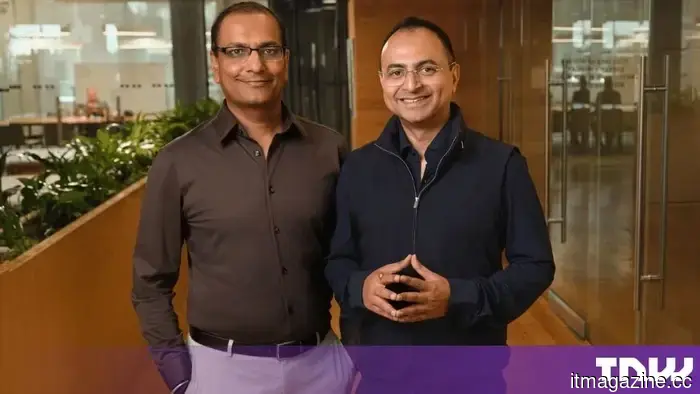 Skan AI has secured $63 million to observe the actual work patterns of office employees and subsequently create agents that mimic their behavior.
Skan AI secured $63 million to document employee screen activities and subsequently create agents that perform the same tasks. Seven out of the ten largest banks in the US are clients.
Skan AI has secured $63 million to observe the actual work patterns of office employees and subsequently create agents that mimic their behavior.
Skan AI secured $63 million to document employee screen activities and subsequently create agents that perform the same tasks. Seven out of the ten largest banks in the US are clients.
 Musk claims that SpaceX's AI will surpass rocket earnings by September and will be trained using the company's personnel.
Musk informed a SpaceX all-hands meeting that by September, revenue from AI will surpass that of all other products, and that Grok will be trained using staff members.
Musk claims that SpaceX's AI will surpass rocket earnings by September and will be trained using the company's personnel.
Musk informed a SpaceX all-hands meeting that by September, revenue from AI will surpass that of all other products, and that Grok will be trained using staff members.
 Upwork reduces its full-year outlook due to the impact of AI on its marketplace.
Revenue and margins exceeded expectations. Guidance was lowered, active clients decreased by 4%, and the market reflected concerns about AI disintermediation.
Upwork reduces its full-year outlook due to the impact of AI on its marketplace.
Revenue and margins exceeded expectations. Guidance was lowered, active clients decreased by 4%, and the market reflected concerns about AI disintermediation.
 Forget about the Pixel 11; I can't stop admiring these PixelSnap accessories.
Google's latest PixelSnap accessories transform your Pixel into a significantly more practical desk companion.
Forget about the Pixel 11; I can't stop admiring these PixelSnap accessories.
Google's latest PixelSnap accessories transform your Pixel into a significantly more practical desk companion.
 Tencent's expenditures on AI computing have surpassed its cash flow, prompting the company to consider a backup strategy of becoming a property landlord.
Tencent's capital expenditures increased by 176% to 52.8 billion yuan, while free cash flow became negative. Executives indicated that the alternative is to lease the computing resources at a cost recovery basis.
Tencent's expenditures on AI computing have surpassed its cash flow, prompting the company to consider a backup strategy of becoming a property landlord.
Tencent's capital expenditures increased by 176% to 52.8 billion yuan, while free cash flow became negative. Executives indicated that the alternative is to lease the computing resources at a cost recovery basis.
Meta is up against 29 states in the largest trial regarding youth social media to date, with $1.4 trillion on the line.
Twenty-nine US states claim that Meta created Instagram and Facebook to ensnare children. With the largest trial addressing youth harm beginning in Oakland, the design modifications being requested could be more significant than the financial implications.