
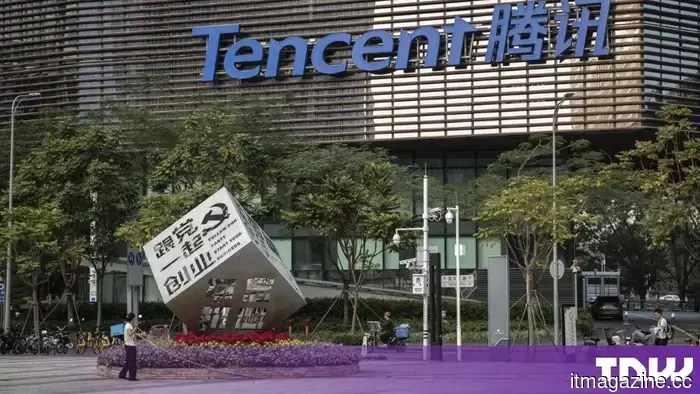
Tencent's expenditures on AI computing have surpassed its cash flow, prompting the company to consider a backup strategy of becoming a property landlord.
On Wednesday, Tencent announced its second-quarter revenue of 204.8 billion yuan ($30.4 billion), which is an 11% increase and surpasses expectations. The net profit stood at 56 billion yuan, trailing analysts' expectations of 61.8 billion yuan, according to CNBC. Capital expenditure surged 176% year-on-year to 52.8 billion yuan, approximately $7.8 billion. Free cash flow turned into an outflow of 13.8 billion yuan.
These figures reflect a singular decision: the company is investing its profits into computing and urging investors to be patient.
When examining the cash figures, Tencent's capital expenditure for the quarter amounted to 52.8 billion yuan, while free cash flow registered at minus 13.8 billion yuan, as reported by Bloomberg. This indicates that operational revenue was insufficient to cover both the infrastructure costs and other expenses.
In summary, the revenue from WeChat, gaming, advertising, and cloud services did not adequately cover the computing expenses. A company that has consistently generated substantial profits for two decades has recently spent more than it earned.
The 176% figure is a year-on-year comparison highlighted by the South China Morning Post, whereas capital expenditure rose 65% compared to the previous quarter. Both statistics stem from the same report, and most coverage chose one over the other, with the discrepancy illustrating the rapid acceleration of spending.
Operating costs increased by 22.6% during the quarter, as per Bloomberg Intelligence. The growth in adjusted operating profit slowed to 9.2%, while adjusted net income reached 68.4 billion yuan, reflecting a 9% rise and aligning with expectations.
Analysts posed numerous questions about returns, and the responses were notably specific. Chief strategy officer James Mitchell indicated that Tencent could achieve a “decent return in an immediate timeframe” merely by renting out all its computing capacity. However, the company is opting to develop its own models, which he claims will yield “superior economic returns over the longer term.”
President Martin Lau reiterated this stance, suggesting that in a worst-case scenario, which the company does not foresee, the infrastructure could be rented out at cost recovery. “There is also clear downside protection,” he informed analysts.
To interpret that plainly, the downside scenario for a $7.8 billion quarterly compute expense suggests that Tencent could transition into a neocloud business. This represents a legitimate avenue but is markedly different from the company's current focus on selling game skins and advertising.
This presents a dilemma; Alibaba has committed over $50 billion over three years toward AI infrastructure, while Tencent has set no multi-year investment goal, merely stating that its investment in AI products will double this year.
Consequently, the market is able to criticize Tencent from both angles. The stock price has fallen 26% this year, resulting in a loss of approximately $170 billion in market value. Part of this decline stems from perceptions of reckless spending, while another part reflects concerns that expenditures are inadequate. Notably, Tencent is the only major tech player in China without a flagship model at the forefront.
Competitors have been vocal; Moonshot’s Kimi K3 has matched industry leaders with considerably fewer resources, while Alibaba’s Qwen3.8-Max has performed well on several metrics. Tencent has opted for a cautious approach by participating in DeepSeek’s initial funding round and integrating its V4 model across its offerings.
However, the operating business performed positively in this quarter. Revenue from domestic games rose 17% to 47.3 billion yuan, fueled by titles like Delta Force and Valorant, marking a significant increase from 6% growth in the first quarter. Marketing services grew 22% to 43.6 billion yuan, attributable to AI-enhanced ad targeting. Cloud services experienced low twenty percentage growth, and the company increased its prices.
International game revenue dipped by 0.8% due to currency, but grew by 4% in constant terms. WeChat and Weixin together reached 1.44 billion monthly users, an increase of 2%. Meanwhile, QQ Mobile experienced a 2% decrease, bringing its user count to 520 million. Tencent has also been reducing its studio investments in Japan and downsizing staff at LightSpeed and TiMi.
The company's own AI products are nascent but showing potential. WorkBuddy has become China’s leading AI office tool, attracting 21 million monthly visits in June. Meanwhile, Xiaowei, the digital assistant within WeChat, is still in a small-scale prototype testing phase.
The implications were felt in Europe, as Prosus, the Amsterdam-listed group with a significant stake in Tencent, saw its stock drop 6% following the quarterly report. A quarterly update from Shenzhen has become a noteworthy event in the European market, despite this connection often being overlooked.
Tencent has been acquiring hardware for some time, including a reported $3 billion deal for memory with CXMT.
Other articles
 Google's latest Pixel 11 Pro and Pro XL feature brighter screens, extended zoom capabilities, and an innovative method to capture your interest.
Google's Pixel 11 Pro and Pro XL feature a new Tensor G6 chip, an upgraded display with a brightness of 3,600 nits, and HiLight; however, the base RAM and battery capacity have seen a slight decrease compared to last year's versions.
Google's latest Pixel 11 Pro and Pro XL feature brighter screens, extended zoom capabilities, and an innovative method to capture your interest.
Google's Pixel 11 Pro and Pro XL feature a new Tensor G6 chip, an upgraded display with a brightness of 3,600 nits, and HiLight; however, the base RAM and battery capacity have seen a slight decrease compared to last year's versions.
 Electric vehicles have reached a record proportion of China's market, yet their sales have still decreased.
In July, electric and hybrid vehicles achieved a record portion of sales in China, yet the volume of New Energy Vehicles (NEVs) declined for the seventh consecutive month, while the overall market fell by 18%.
Electric vehicles have reached a record proportion of China's market, yet their sales have still decreased.
In July, electric and hybrid vehicles achieved a record portion of sales in China, yet the volume of New Energy Vehicles (NEVs) declined for the seventh consecutive month, while the overall market fell by 18%.
 Datamaxxing is the newest trend in AI, and this time, it may actually benefit your health objectives.
Datamaxxing allows AI to access health data from wearables, enabling it to clarify patterns that your smartwatch may not fully explain. Studies indicate that this concept holds potential, but providing medical advice still poses significant risks.
Datamaxxing is the newest trend in AI, and this time, it may actually benefit your health objectives.
Datamaxxing allows AI to access health data from wearables, enabling it to clarify patterns that your smartwatch may not fully explain. Studies indicate that this concept holds potential, but providing medical advice still poses significant risks.
 South Korea aims for a Moon landing by 2030 through a seven-part technology strategy.
President Lee Jae-myung introduced seven strategic technology initiatives, ranging from small modular reactors to a robotic lander for the Moon.
South Korea aims for a Moon landing by 2030 through a seven-part technology strategy.
President Lee Jae-myung introduced seven strategic technology initiatives, ranging from small modular reactors to a robotic lander for the Moon.
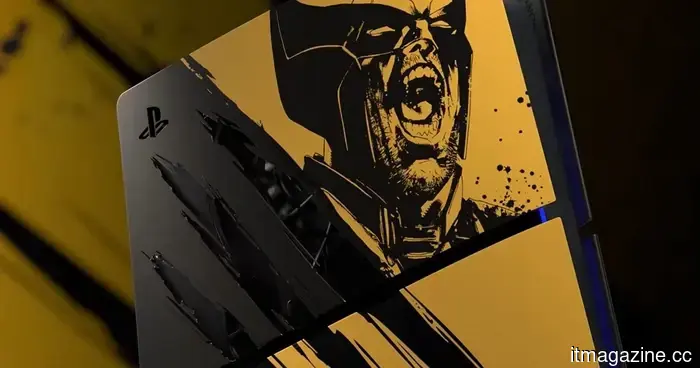 Sony's Wolverine PS5 features actual claw marks carved into its exterior.
Sony's Marvel's Wolverine hardware collection adds a significant touch of claw damage to the PS5 and DualSense, along with an Adamantium-inspired metallic design for PS5 Pro users.
Sony's Wolverine PS5 features actual claw marks carved into its exterior.
Sony's Marvel's Wolverine hardware collection adds a significant touch of claw damage to the PS5 and DualSense, along with an Adamantium-inspired metallic design for PS5 Pro users.
 Datamaxxing is the newest trend in AI, and this time, it might actually benefit your health objectives.
Datamaxxing provides AI with access to wearable health information, allowing it to clarify patterns that your smartwatch may not fully explain. Studies indicate that the concept holds potential, but offering medical advice is a risky boundary to traverse.
Datamaxxing is the newest trend in AI, and this time, it might actually benefit your health objectives.
Datamaxxing provides AI with access to wearable health information, allowing it to clarify patterns that your smartwatch may not fully explain. Studies indicate that the concept holds potential, but offering medical advice is a risky boundary to traverse.
Tencent's expenditures on AI computing have surpassed its cash flow, prompting the company to consider a backup strategy of becoming a property landlord.
Tencent's capital expenditures increased by 176% to 52.8 billion yuan, while free cash flow became negative. Executives indicated that the alternative is to lease the computing resources at a cost recovery basis.