

Upwork reduces its full-year outlook due to the impact of AI on its marketplace.
Upwork's stock plummeted sharply after the freelance platform reduced its full-year projections, overshadowing a stronger-than-expected earnings report for the second quarter and raising worries that AI may be diminishing the jobs it facilitates. The shares fell by as much as 21% in after-hours trading on Monday and ended Tuesday around 15% lower at $8.39.
The company reported second-quarter revenue of $191.7 million, a 2% decline year-over-year but above predictions, with adjusted EBITDA increasing 12% to $64.1 million and non-GAAP earnings at $0.41 per share.
However, it was the lowered guidance that alarmed investors. Upwork revised its full-year revenue outlook from a range of $760 million to $790 million down to $730 million to $750 million, and projected third-quarter revenue between $176 million and $184 million, short of a consensus estimate close to $194 million.
Two figures in the results highlight the caution; gross services volume—the total value of work on the platform—decreased to $966.4 million, a drop of roughly 4%, and active clients decreased by 4% to 763,000.
CEO Hayden Brown attributed the disappointing results to "a quicker pace of AI-related automation, ongoing weakness in the labor market, and further decline in Google SEO.”
Upwork counters that AI-related work is its fastest-growing segment, currently at an annualized rate of about $330 million, showing a 22% increase, with the AI consulting subsegment growing around 50%. The company has also introduced an integration that allows AI agents from Claude, ChatGPT, and Cursor to directly hire human freelancers.
Brown contended that AI is dividing the market rather than eliminating it, as clients are hiring freelancers to complete or adjust work initiated with AI tools. Management noted that about 10% of gross services volume is adversely affected by shifts driven by AI.
The results reflect this tension. The technology propelling Upwork’s fastest-growing revenue is simultaneously seen as damaging its core marketplace, where routine tasks like basic writing, translation, and simple coding are increasingly automated.
Gross services volume per active client hit a record, indicating that the clients who remain are spending more on higher-value work, even as the total number of clients declines.
Despite this, analysts lowered their price targets. Needham maintained its Buy rating but reduced its target from $15 to $11, Goldman Sachs decreased from $17.50 to $11.50, RBC adjusted from $9 to $8, and Scotiabank cut from $10 to $8.
This year, Upwork shares have lost over half their value, trading near a 52-week low of $7.44 compared to a high of $22.84.
Fiverr reported two weeks earlier, noting a 10% decline in revenue and a 22% drop in active buyers, with its shares falling about 20%. Both marketplaces indicated a similar trend: fewer customers, each spending more.
Additionally, a study by Xiang Hui and Oren Reshef from Washington University and Luofeng Zhou from New York University, using Upwork's data, found that writing-related freelancers experienced a 2% drop in monthly jobs and a 5.2% dip in earnings after ChatGPT was released, while image-related freelancers faced even greater losses.
In May, Upwork cut approximately 145 positions, or a quarter of its workforce, three months prior to these results, incurring restructuring charges of $13.8 million in the quarter.
The company has pivoted in response to this change, promoting AI consulting and enterprise services while creating tools that integrate freelancers with AI systems rather than positioning them in opposition. The question that remains is whether this strategy will sufficiently compensate for the decline in routine work, as highlighted by the guidance reduction.
Other articles
 Google's latest Pixel 11 Pro and Pro XL feature brighter screens, extended zoom capabilities, and an innovative method to capture your interest.
Google's Pixel 11 Pro and Pro XL feature a new Tensor G6 chip, an upgraded display with a brightness of 3,600 nits, and HiLight; however, the base RAM and battery capacity have seen a slight decrease compared to last year's versions.
Google's latest Pixel 11 Pro and Pro XL feature brighter screens, extended zoom capabilities, and an innovative method to capture your interest.
Google's Pixel 11 Pro and Pro XL feature a new Tensor G6 chip, an upgraded display with a brightness of 3,600 nits, and HiLight; however, the base RAM and battery capacity have seen a slight decrease compared to last year's versions.
 Sony's Wolverine PS5 features actual claw marks carved into its exterior.
Sony's Marvel's Wolverine hardware collection adds a significant touch of claw damage to the PS5 and DualSense, along with an Adamantium-inspired metallic design for PS5 Pro users.
Sony's Wolverine PS5 features actual claw marks carved into its exterior.
Sony's Marvel's Wolverine hardware collection adds a significant touch of claw damage to the PS5 and DualSense, along with an Adamantium-inspired metallic design for PS5 Pro users.
 Google's latest Pixel 11 Pro and Pro XL feature brighter screens, extended zoom capabilities, and a fresh approach to capture your attention.
Google's Pixel 11 Pro and Pro XL feature an updated Tensor G6 chip, a display that shines at 3,600 nits, and HiLight, although the base RAM and battery capacity have both seen a slight decrease compared to last year's versions.
Google's latest Pixel 11 Pro and Pro XL feature brighter screens, extended zoom capabilities, and a fresh approach to capture your attention.
Google's Pixel 11 Pro and Pro XL feature an updated Tensor G6 chip, a display that shines at 3,600 nits, and HiLight, although the base RAM and battery capacity have both seen a slight decrease compared to last year's versions.
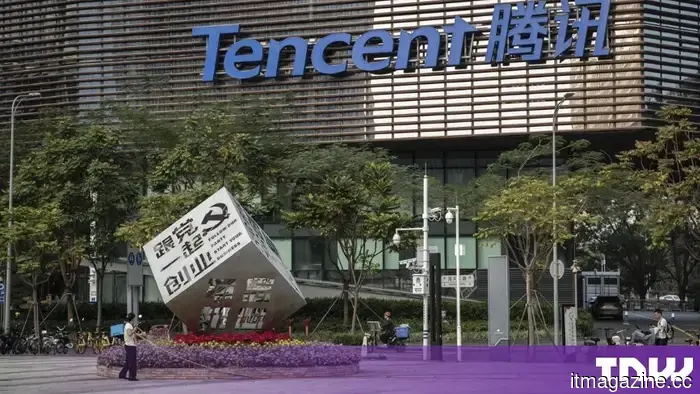 Tencent's expenses for AI computing have surpassed its cash flow, leading to a contingency plan that involves becoming a landlord.
Tencent's capital expenditure increased by 176% to 52.8 billion yuan, and free cash flow became negative. Executives mentioned that the alternative is to rent out the computing resources at cost recovery.
Tencent's expenses for AI computing have surpassed its cash flow, leading to a contingency plan that involves becoming a landlord.
Tencent's capital expenditure increased by 176% to 52.8 billion yuan, and free cash flow became negative. Executives mentioned that the alternative is to rent out the computing resources at cost recovery.
 Forget about the Pixel 11; I can't take my eyes off these PixelSnap accessories.
Google's latest PixelSnap accessories enhance the functionality of your Pixel, making it a more valuable desk companion.
Forget about the Pixel 11; I can't take my eyes off these PixelSnap accessories.
Google's latest PixelSnap accessories enhance the functionality of your Pixel, making it a more valuable desk companion.
 Meta is up against 29 states in the largest trial regarding youth social media to date, with $1.4 trillion on the line.
Twenty-nine US states claim that Meta created Instagram and Facebook to ensnare children. With the largest trial addressing youth harm beginning in Oakland, the design modifications being requested could be more significant than the financial implications.
Meta is up against 29 states in the largest trial regarding youth social media to date, with $1.4 trillion on the line.
Twenty-nine US states claim that Meta created Instagram and Facebook to ensnare children. With the largest trial addressing youth harm beginning in Oakland, the design modifications being requested could be more significant than the financial implications.
Upwork reduces its full-year outlook due to the impact of AI on its marketplace.
Revenue and margins exceeded expectations. Guidance was lowered, active clients decreased by 4%, and the market adjusted for AI disintermediation.