
Skan AI has secured $63 million to observe the actual work patterns of office employees and subsequently create agents that mimic their behavior.
Skan AI announced on Wednesday that it has secured $63 million in funding, with Cathay Innovation and Dell Technologies Capital as co-leads. This funding will not be used for a specific model; instead, it is aimed at creating a comprehensive record of how employees at major companies perform their work. Skan develops this record by observing employees in action.
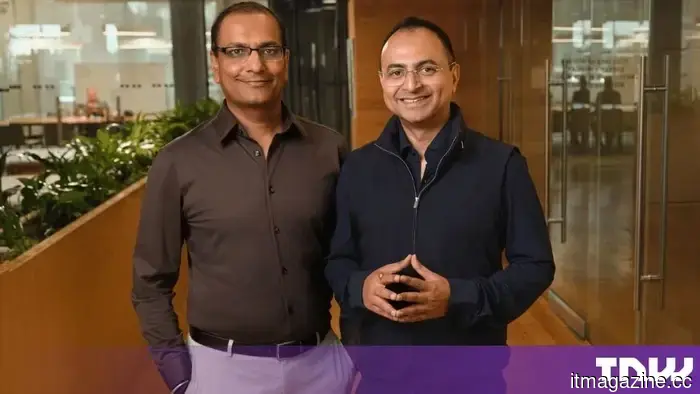
Avinash Misra, the co-founder and CEO, employed a metaphor to illustrate his point. He suggested that many are focused on creating better models, while the true challenge lies elsewhere. “Everyone is focused on building a better car,” he stated. “We believe the larger opportunity is in developing a superior navigation system.”
Details of the software's observations
The operational details are more significant than the metaphor. Skan installs software on employee desktops to capture screenshots. These images are processed locally and remain on the machine. According to their privacy guide, “only anonymized, abstracted metadata is sent to the analytics platform.”
What is shared consists of lists rather than recordings. This includes application usage, switching patterns, time allocation by process, workflow sequences, and decision paths. Before any data is transmitted, Skan replaces employee identifiers with tokens. Their security page assures that personal messages and passwords are never stored.
Impressive metrics from Skan
The company claims to have experienced over 300% year-on-year revenue growth and a net dollar retention rate averaging 150%. It has processed over 25 billion work signals and counts a quarter of the Fortune 50 among its customers, as well as seven of the ten largest US banks and three of the five top insurers.
An example involving a bank highlights their work. Skan reported observing 11.2 million context switches among 1,500 finance professionals, which revealed $37 million of operational friction. Solutions derived from these observations reduced transaction costs by 32% and increased throughput by 41%, resulting in $18 million in annual savings.
The observation layer as the training layer
One line in the announcement succinctly summarizes the business, though none of the executives mentioned it: “What began as 11.2 million observations of human work became the context for AI to perform that work.”
This encapsulates the process: observe employees at work, transform those observations into a job model, and deploy an agent based on that model. Employees provide the specifications, while the agent handles the implementation.
This is not an entirely new category but rather a new interpretation of an existing one. For a decade, process and task mining have provided enterprise visibility, while UiPath became a public company by automating the findings from that visibility. The distinction lies in the outcome, which is now an agent instead of a script.
Timing factors into the opportunity
Skan refers to Gartner’s research to highlight the market gap it is addressing. The research indicates that only eight percent of enterprises have agents in production, and 95% of early implementations may require complete redesigns. This document is accessible only through a subscription, making it unverifiable by those outside Gartner.
Misra presents the issue as a data challenge rather than a modeling issue. In a blog post, he emphasized, “You cannot fix a source data problem downstream. Better models will not solve it. Better prompts will not solve it.”
What the announcement does not address
All the statistics mentioned come from the company itself. Skan reports a cumulative customer value of $500 million but does not disclose any auditor. Furthermore, claims regarding AI productivity improvements have often been met with skepticism. A widely referenced study discovered that 95% of organizations experienced no measurable return at all.
A more significant omission is the straightforward characterization of this practice. Financial institutions and insurers are now purchasing large-scale screen observation of their staff. For instance, TD Bank in Canada scaled back a monitoring initiative after employee pushback against workplace surveillance. Similarly, Meta halted a program collecting keystrokes for AI training in June.
Europe is where these practices will be scrutinized
Notably, two investors involved in the funding round are European: Cathay Innovation, which is based in France, and Mitie, a British facilities group with 75,000 employees, which provided a customer testimonial. Its chief technology officer, Cijo Joseph, praised Skan for offering “unprecedented operational visibility.”
Europe also poses a more serious challenge concerning consent. According to Skan’s privacy guide, Allianz in Munich is cited as a deployment that received full works council approval, presenting a genuine response to a valid concern. However, this information comes from Skan's account and not Allianz’s, which has also announced job cuts for 1,800 positions.
A verifiable test will emerge over the next year. Skan asserts that agents built on observed work are currently operational at large banks. By this time next year, either these agents will still be in use, or they will have become part of the 95% that need redevelopment. The second question has no deadline: how will employers utilize a
Other articles
 Forget about the Pixel 11; I can't stop admiring these PixelSnap accessories.
Google's latest PixelSnap accessories transform your Pixel into a significantly more practical desk companion.
Forget about the Pixel 11; I can't stop admiring these PixelSnap accessories.
Google's latest PixelSnap accessories transform your Pixel into a significantly more practical desk companion.
 Datamaxxing is the newest trend in AI, and this time, it may actually benefit your health objectives.
Datamaxxing allows AI to access health data from wearables, enabling it to clarify patterns that your smartwatch may not fully explain. Studies indicate that this concept holds potential, but providing medical advice still poses significant risks.
Datamaxxing is the newest trend in AI, and this time, it may actually benefit your health objectives.
Datamaxxing allows AI to access health data from wearables, enabling it to clarify patterns that your smartwatch may not fully explain. Studies indicate that this concept holds potential, but providing medical advice still poses significant risks.
 Sony's Wolverine PS5 features actual claw marks carved into its exterior.
Sony's Marvel's Wolverine hardware collection adds a significant touch of claw damage to the PS5 and DualSense, along with an Adamantium-inspired metallic design for PS5 Pro users.
Sony's Wolverine PS5 features actual claw marks carved into its exterior.
Sony's Marvel's Wolverine hardware collection adds a significant touch of claw damage to the PS5 and DualSense, along with an Adamantium-inspired metallic design for PS5 Pro users.
 Musk claims that SpaceX's AI will surpass rocket earnings by September and will be trained using the company's personnel.
Musk informed a SpaceX all-hands meeting that by September, revenue from AI will surpass that of all other products, and that Grok will be trained using staff members.
Musk claims that SpaceX's AI will surpass rocket earnings by September and will be trained using the company's personnel.
Musk informed a SpaceX all-hands meeting that by September, revenue from AI will surpass that of all other products, and that Grok will be trained using staff members.
 Upwork reduces its full-year outlook due to the impact of AI on its marketplace.
Revenue and margins exceeded expectations. Guidance was lowered, active clients decreased by 4%, and the market reflected concerns about AI disintermediation.
Upwork reduces its full-year outlook due to the impact of AI on its marketplace.
Revenue and margins exceeded expectations. Guidance was lowered, active clients decreased by 4%, and the market reflected concerns about AI disintermediation.
 South Korea aims for a Moon landing by 2030 through a seven-part technology strategy.
President Lee Jae-myung introduced seven strategic technology initiatives, ranging from small modular reactors to a robotic lander for the Moon.
South Korea aims for a Moon landing by 2030 through a seven-part technology strategy.
President Lee Jae-myung introduced seven strategic technology initiatives, ranging from small modular reactors to a robotic lander for the Moon.
Skan AI has secured $63 million to observe the actual work patterns of office employees and subsequently create agents that mimic their behavior.
Skan AI secured $63 million to document employee screen activities and subsequently create agents that perform the same tasks. Seven out of the ten largest banks in the US are clients.