
SpaceX is pushing competitors out of the market for the rockets they rely on.
SpaceX is facing a scheduling issue that is essentially a strategic maneuver. By consistently launching more of its own Starlink satellites, the company is pushing competitors off the very rockets they need for their own missions.
This impact is evident in the launch manifest. The proportion of Falcon 9 missions allocated to Starlink has risen from 54% in 2020 to nearly 79% this year, significantly reducing availability for other users.
At least seven spacecraft companies have been informed that the Falcon 9 is fully booked until 2028 or 2029, a setback that could be detrimental for startups with their hardware ready but no means to get into space.
The issue is systemic. SpaceX operates as the leading launch service provider while simultaneously competing with many satellite firms that rely on its rockets through its Starlink initiative, which generates substantial revenue.
Financially, the situation favors Starlink consistently. The network earned $11.4 billion in 2025, accounting for about 60% of SpaceX’s total revenue, compared to $4.1 billion from its launch services, making every seat given to an external payload a loss of profit.
SpaceX has made its priorities clear. In regulatory filings, it stated it "may prioritize our own launch payloads over additional US government contracts or third-party customers,” a statement its competitors have paid close attention to.
Akhil Rao from Rational Futures noted, "If they were to utilize the same launch capacity for an external customer, they are forfeiting the profits from deploying their own satellites," highlighting an incentive that becomes stronger as Starlink expands.
The repercussions of this situation are extensive. Since 2000, over 500 US companies have developed spacecraft and invested around $50 billion into the sector, many of which now rely on a single supplier that also acts as their competitor.
Pressure will only reduce if capacity increases, which depends on Starship. SpaceX’s massive next-generation rocket is designed to introduce significant launch capability; however, until it achieves regular flights, Falcon 9 remains a shared bottleneck.
For a satellite startup, this constraint is overwhelming. Constructing a spacecraft is already a significant challenge; realizing that their only affordable launch option belongs to their competitor and is booked for years can spell disaster before they even start.
Even the largest firms are not exempt from these issues. Amazon's satellite initiative has encountered delays, with United Launch Alliance’s Vulcan grounded since February, pushing even a trillion-dollar entity towards its main competitor’s rockets.
Some companies are looking to buy their way out of this predicament. Rocket Lab is acquiring satellite operator Iridium for $8 billion, partly to secure its own launch opportunities instead of enduring SpaceX’s waitlist.
For smaller players, the situation is harsh. One satellite executive warned, "The valley of death is going to get a lot deeper for space companies in general," referring to the challenging gap between constructing a satellite and launching it into orbit.
This gap also presents opportunities for others. European initiatives to develop a rival, including a $3.1 billion satellite merger, have struggled to achieve Starlink’s scale, while alternatives like Eutelsat remain significantly smaller.
Starlink’s dominance has implications that go beyond the launch manifest. The increasing size of its satellite constellation has led to complaints from astronomers and regulators, highlighting how one company’s ambitions are altering low Earth orbit for everyone.
This concentration has attracted regulatory scrutiny. When a single entity controls both the launch vehicles and the satellites being launched, questions arise about whether competitors are receiving fair access, and SpaceX's dual role raises this issue.
Starlink's advantage is self-perpetuating. Every prioritized launch adds more satellites, subscribers, and revenue, which in turn finances additional launches, creating a cycle that its grounded competitors cannot rival from the back of the line.
None of this breaches any regulations. A company is entitled to prioritize its own satellites, which precisely complicates the situation for its competitors.
Meanwhile, launch costs continue to rise, from around $54 million for a Falcon 9 in 2013 to approximately $74 million today. SpaceX established the most affordable route to space and, by monopolizing it, has made access increasingly difficult for almost all others.
Other articles
 Nvidia and Dell support the AI cloud startup Volta, which has been valued at $2.4 billion.
AI cloud startup Volta has secured $300 million in funding and arranged for $5 billion in financing, achieving a valuation of $2.4 billion, with support from a16z, Altimeter, Nvidia, and Michael Dell.
Nvidia and Dell support the AI cloud startup Volta, which has been valued at $2.4 billion.
AI cloud startup Volta has secured $300 million in funding and arranged for $5 billion in financing, achieving a valuation of $2.4 billion, with support from a16z, Altimeter, Nvidia, and Michael Dell.
 BlackRock introduces tokenized money market funds to support stablecoins.
BlackRock has introduced two tokenized money market funds designed to act as reserves for stablecoin issuers, furthering its expansion into on-chain finance.
BlackRock introduces tokenized money market funds to support stablecoins.
BlackRock has introduced two tokenized money market funds designed to act as reserves for stablecoin issuers, furthering its expansion into on-chain finance.
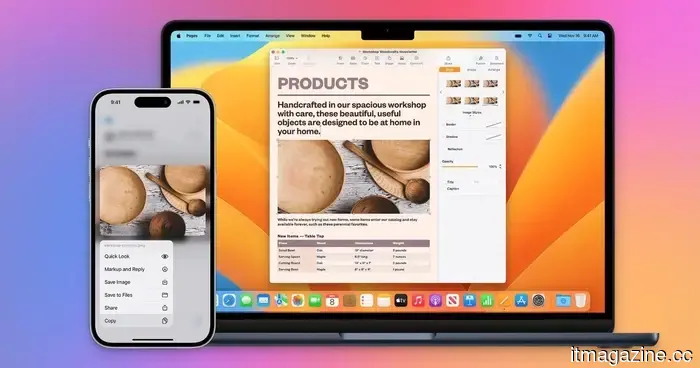 Apple is finally introducing one of my favorite Continuity features to Windows.
Apple is said to be developing a feature that will allow users to copy content on their iPhone and paste it on a Windows PC, following a request from Microsoft, but it may not be available until 2027 or beyond.
Apple is finally introducing one of my favorite Continuity features to Windows.
Apple is said to be developing a feature that will allow users to copy content on their iPhone and paste it on a Windows PC, following a request from Microsoft, but it may not be available until 2027 or beyond.
 Nvidia and Dell support AI cloud startup Volta, which is valued at $2.4 billion.
AI cloud startup Volta has secured $300 million in funding and arranged $5 billion in financing at a valuation of $2.4 billion, with support from a16z, Altimeter, Nvidia, and Michael Dell.
Nvidia and Dell support AI cloud startup Volta, which is valued at $2.4 billion.
AI cloud startup Volta has secured $300 million in funding and arranged $5 billion in financing at a valuation of $2.4 billion, with support from a16z, Altimeter, Nvidia, and Michael Dell.
 TikTok reaches another settlement to avoid a jury trial regarding harm to teens.
TikTok resolved the three lawsuits it was scheduled to contest in October, continuing a streak that has spared it from any jury trials. In contrast, Meta and Google opted to contest their cases.
TikTok reaches another settlement to avoid a jury trial regarding harm to teens.
TikTok resolved the three lawsuits it was scheduled to contest in October, continuing a streak that has spared it from any jury trials. In contrast, Meta and Google opted to contest their cases.
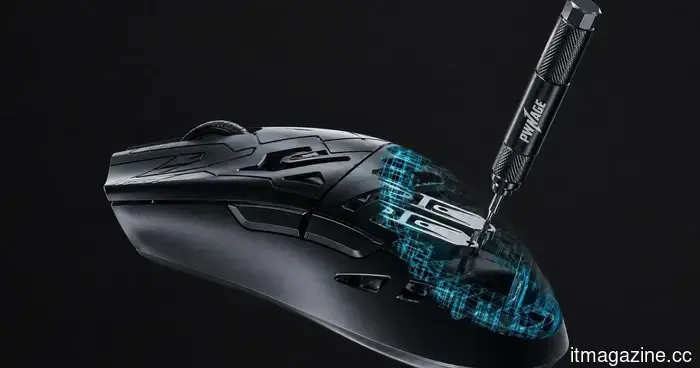 Pwnage's latest gaming mouse allows users to modify the click force and travel distance using a screwdriver.
The updated Pwnage Vanta allows users to adjust click force and travel without needing to swap switches, and its sensor can be repositioned to accommodate various grip styles. It is currently available for preorder.
Pwnage's latest gaming mouse allows users to modify the click force and travel distance using a screwdriver.
The updated Pwnage Vanta allows users to adjust click force and travel without needing to swap switches, and its sensor can be repositioned to accommodate various grip styles. It is currently available for preorder.
SpaceX is pushing competitors out of the market for the rockets they rely on.
As SpaceX increases the number of its Starlink satellites, it is pushing competing satellite companies out of the Falcon 9 launch schedule, with some reservations extending to 2028-2029.