

Nvidia and Dell support the AI cloud startup Volta, which has been valued at $2.4 billion.
A newly established company aims to finance AI chips for a wide range of businesses. Volta Infra Holdings has secured $300 million in venture capital and has arranged an additional $5 billion in funding to assist various tech companies in acquiring Nvidia's expensive hardware, achieving a valuation of $2.4 billion in the process.
The funding round was co-led by Andreessen Horowitz and Altimeter Capital, with Nvidia and Michael Dell also participating. Volta presents itself as a solution to a financing challenge, disguised as a cloud service provider. Its founders argue that only large companies with robust financial resources can bear the initial costs of state-of-the-art chips, and Volta seeks to distribute these costs to enable smaller laboratories to compete effectively.
This approach positions Volta among the neoclouds, a new category of GPU-focused providers offering AI computing resources for rent, with an equal emphasis on financial solutions as on the technology itself. A $5 billion financing pool, organized by asset manager Azora from various banks, is designed to support its clients.
Founded this year by Ricard Boada and Sofia Gumuzio, both previous executives in Brookfield’s infrastructure division, Volta aims to fill a significant gap in the market. “We identified a tremendous opportunity and a substantial void,” said Boada, who now serves as the CEO.
Their background is crucial to their pitch. Developing AI clouds has become a challenge related to power agreements, project financing, and banking connections, rather than just technology, and Volta's founders hail from that environment instead of just software.
Volta is not starting modestly. It claims to have already secured a $10 billion, six-year agreement to provide cloud services to an unnamed leading AI developer, marking a standout deal for a company that is just months old.
This contract will partially utilize borrowed capacity. It will be executed in partnership with Bitdeer, a bitcoin mining firm now functioning as a data center operator, utilizing a 133-megawatt facility in Norway, with additional locations planned for Texas and Wyoming.
The collaboration with Bitdeer exemplifies a broader trend. Bitcoin miners, benefiting from inexpensive electricity and existing infrastructure, have unexpectedly become providers for the AI surge, repurposing resources designed for one boom to support another.
There is also a European aspect to consider. The initial significant site is located in Norway, and the founders' experience in infrastructure investing highlights that the growth of AI is not solely an American narrative.
Power is the key limitation, and Volta has been actively securing it. The company claims to have secured a gigawatt of capacity in the short term, sufficient to power hundreds of thousands of homes, and targets several gigawatts by 2030.
Volta is among many attempting to facilitate the same processes. Nvidia itself has extended offers to startups for immediate computing capabilities with deferred payments, while Broadcom, Apollo, and Blackstone have stepped in to finance chip production for Anthropic.
Nvidia's influence permeates this sector. The company has exceeded $40 billion in AI-related equity investments this year and has indicated support for potential hundreds of billions of dollars in chip purchases for OpenAI, blurring the lines between supplier and financier.
This overlap raises concerns among some observers. Critics describe these arrangements as circular, creating an interconnected web where suppliers finance the customers purchasing their products, a framework that could exacerbate losses if AI demand fades.
Even Volta's investors were initially doubtful. Andreessen Horowitz had generally steered clear of neoclouds and data center startups but was persuaded by the founders' expertise in financing projects and securing energy, as noted by managing partner Raghu Raghuram.
Dell will serve as a technology partner, providing equipment to Volta’s facilities and adding another prominent entity to its lineup. Raghuram emphasized that success hinges on mastering “the financial complexities of establishing and running new clouds while selling to customers.”
Not every player will endure the boom. “There will ultimately be many failures and significant consolidation,” noted Altimeter’s Jamin Ball. Volta is counting on its banking connections and esteemed partners to sustain it when the market shifts.
Other articles
 Nvidia and Dell support AI cloud startup Volta, which is valued at $2.4 billion.
AI cloud startup Volta has secured $300 million in funding and arranged $5 billion in financing at a valuation of $2.4 billion, with support from a16z, Altimeter, Nvidia, and Michael Dell.
Nvidia and Dell support AI cloud startup Volta, which is valued at $2.4 billion.
AI cloud startup Volta has secured $300 million in funding and arranged $5 billion in financing at a valuation of $2.4 billion, with support from a16z, Altimeter, Nvidia, and Michael Dell.
 Alex Karp's one-sided radicalism: Palantir's issue with Marxism is Palantir itself.
Alex Karp states that Palantir has 'Marxist overtones.' If this concept is considered seriously, it focuses on Palantir itself, the company that controls the infrastructure.
Alex Karp's one-sided radicalism: Palantir's issue with Marxism is Palantir itself.
Alex Karp states that Palantir has 'Marxist overtones.' If this concept is considered seriously, it focuses on Palantir itself, the company that controls the infrastructure.
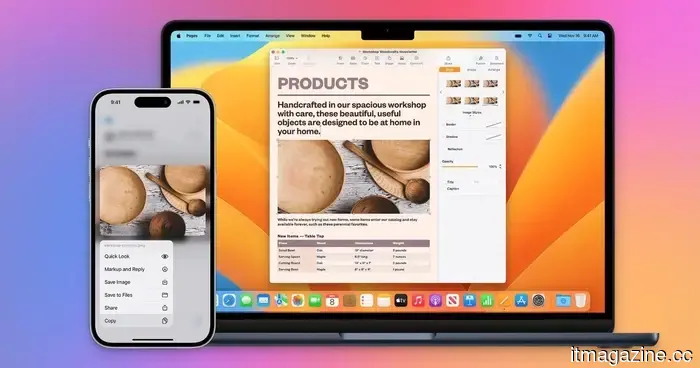 Apple is finally introducing one of my favorite Continuity features to Windows.
Apple is said to be developing a feature that will allow users to copy content on their iPhone and paste it on a Windows PC, following a request from Microsoft, but it may not be available until 2027 or beyond.
Apple is finally introducing one of my favorite Continuity features to Windows.
Apple is said to be developing a feature that will allow users to copy content on their iPhone and paste it on a Windows PC, following a request from Microsoft, but it may not be available until 2027 or beyond.
 BlackRock introduces tokenized money market funds to support stablecoins.
BlackRock has introduced two tokenized money market funds designed to act as reserves for stablecoin issuers, furthering its expansion into on-chain finance.
BlackRock introduces tokenized money market funds to support stablecoins.
BlackRock has introduced two tokenized money market funds designed to act as reserves for stablecoin issuers, furthering its expansion into on-chain finance.
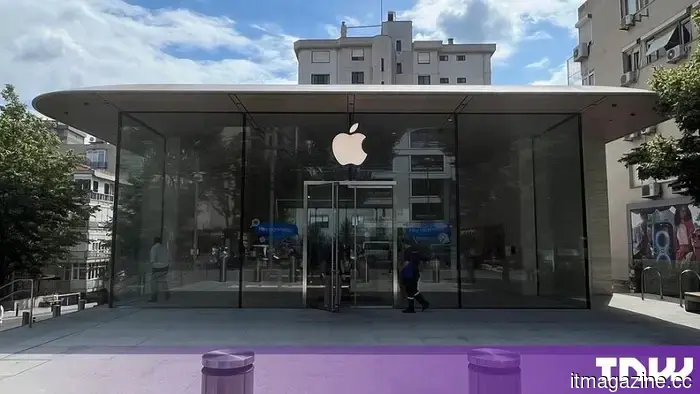 Apple challenges the UK's restricted iCloud backdoor directive.
After losing the battle in 2025, Britain restricted its demand for an Apple backdoor to only UK users. Apple has gone back to a covert surveillance court to contest this.
Apple challenges the UK's restricted iCloud backdoor directive.
After losing the battle in 2025, Britain restricted its demand for an Apple backdoor to only UK users. Apple has gone back to a covert surveillance court to contest this.
 The 'death zone': how independent Chinese models are undermining US AI.
Bloomberg refers to it as a ‘death zone’: China’s advanced, accessible open-source AI models are impacting the mid-market segment where US model developers operate.
The 'death zone': how independent Chinese models are undermining US AI.
Bloomberg refers to it as a ‘death zone’: China’s advanced, accessible open-source AI models are impacting the mid-market segment where US model developers operate.
Nvidia and Dell support the AI cloud startup Volta, which has been valued at $2.4 billion.
AI cloud startup Volta has secured $300 million in funding and arranged for $5 billion in financing, achieving a valuation of $2.4 billion, with support from a16z, Altimeter, Nvidia, and Michael Dell.