
BlackRock introduces tokenized money market funds to support stablecoins.
BlackRock aims to manage the capital behind stablecoins. The world's largest asset manager has introduced two tokenized money market funds designed to act as reserves for stablecoin issuers, furthering its efforts in blockchain-based finance.
These funds represent the latest phase of tokenization, which involves transferring traditional assets like Treasury bills onto a blockchain. This is a competitive area that has also attracted Wall Street rivals such as JPMorgan.
One of the funds, identified as BSTBL, is a tokenized share class of an existing BlackRock money market fund that operates on Ethereum. The second fund, named BRSRV, is a new initiative created specifically as a stablecoin reserve, offering daily dividend reinvestment and accessibility across various blockchains.
This initiative aligns with regulatory changes. The US GENIUS Act, enacted about a year ago, established guidelines for backing stablecoins, and BlackRock is presenting its funds as secure, yield-generating assets for issuers to hold against the tokens they create.
“We anticipate significant growth in stablecoins and aim to be the reserve manager of choice,” stated Martin Small, BlackRock's chief financial officer, noting that the firm already oversees tens of billions in stablecoin reserves.
BlackRock is not alone in this endeavor. Morgan Stanley, State Street, and Fidelity have launched similar offerings, making the competition to manage on-chain cash a bustling aspect of traditional finance.
The market has rapidly expanded. BlackRock's inaugural tokenized fund, BUIDL, which launched in 2024, now holds approximately $2.5 billion, while the overall tokenized asset market has surged from about $2 billion to $37 billion during the same period.
This surge has attracted startups as well, with companies like Midas securing funding to tokenize real-world assets, betting on the transition of financial infrastructure to public blockchains, regardless of the role banks play.
Managing reserves is just one aspect of the stablecoin landscape. A consortium that includes Visa and Mastercard has introduced Open USD to challenge existing players, underscoring the rivalry over both token issuance and the management of the funds behind them.
Established players are sensing the shift. Visa’s entry into the stablecoin market caused shares of the established issuer Circle to plummet, demonstrating how rapidly the market dynamics are evolving.
Tokenizing a fund involves issuing its shares as blockchain tokens that can be transferred and settled continuously. Institutions are drawn to this for the faster settlement and programmable cash it offers, rather than for speculative purposes.
Stablecoins have become the cash layer of the cryptocurrency economy, and those managing their reserves benefit from a steady yield on a growing pool of funds. This is the opportunity BlackRock is pursuing.
For BlackRock, the strategy hinges on scale. Stablecoins currently facilitate the movement of hundreds of billions of dollars, and the reserves that support them represent a low-risk, fee-generating venture that has been foundational to the firm's operations.
There is also a strategic advantage. Should tokenized cash become the standard for transferring value on-chain, an asset manager that fails to adapt risks losing part of the money market to those who embrace this shift.
Regulation has transitioned a niche concept into a competitive race. Clearer US regulations have provided banks and asset managers the opportunity to act, and Europe is now initiating a similar transition.
An ongoing consideration is geography. BlackRock's tokenization efforts have so far focused on US regulations, and the extent to which these funds will reach European investors, as well as under which regulatory framework, remains to be seen.
Early movers in infrastructure play a crucial role. The asset manager that establishes itself as the default destination for stablecoin reserves could secure a market position that is challenging for competitors to disrupt later.
Tokenized money market funds may lack glamour, which is exactly the intention. BlackRock is wagering that the steady and reliable cash supporting the cryptocurrency economy constitutes a valuable market, and it is determined to claim a significant stake in it.
Other articles
 TikTok reaches another settlement to avoid a jury trial regarding harm to teens.
TikTok resolved the three lawsuits it was scheduled to contest in October, continuing a streak that has spared it from any jury trials. In contrast, Meta and Google opted to contest their cases.
TikTok reaches another settlement to avoid a jury trial regarding harm to teens.
TikTok resolved the three lawsuits it was scheduled to contest in October, continuing a streak that has spared it from any jury trials. In contrast, Meta and Google opted to contest their cases.
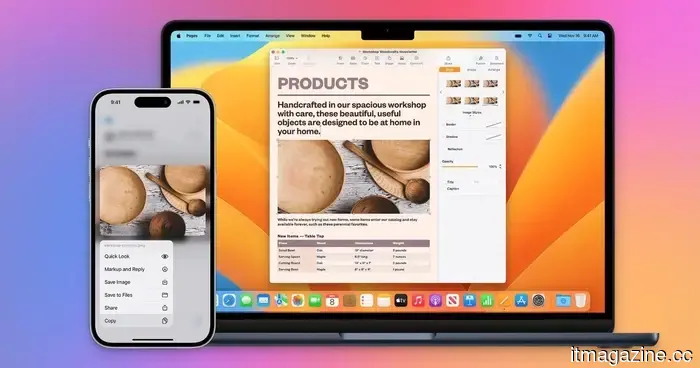 Apple is finally introducing one of my favorite Continuity features to Windows.
Apple is said to be developing a feature that will allow users to copy content on their iPhone and paste it on a Windows PC, following a request from Microsoft, but it may not be available until 2027 or beyond.
Apple is finally introducing one of my favorite Continuity features to Windows.
Apple is said to be developing a feature that will allow users to copy content on their iPhone and paste it on a Windows PC, following a request from Microsoft, but it may not be available until 2027 or beyond.
 The 'death zone': how independent Chinese models are undermining US AI.
Bloomberg refers to it as a ‘death zone’: China’s advanced, accessible open-source AI models are impacting the mid-market segment where US model developers operate.
The 'death zone': how independent Chinese models are undermining US AI.
Bloomberg refers to it as a ‘death zone’: China’s advanced, accessible open-source AI models are impacting the mid-market segment where US model developers operate.
 The U.S. is working on a prohibition against Chinese devices in data centers.
The Trump administration is working on a ban for data center equipment manufactured in China, furthering its efforts to isolate US AI infrastructure from Chinese technology.
The U.S. is working on a prohibition against Chinese devices in data centers.
The Trump administration is working on a ban for data center equipment manufactured in China, furthering its efforts to isolate US AI infrastructure from Chinese technology.
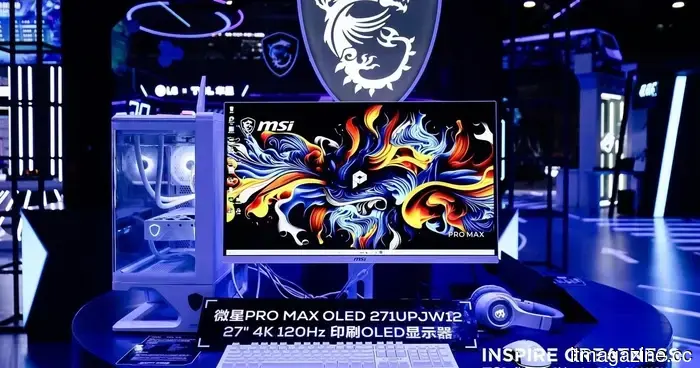 MSI's latest 4K 120Hz OLED monitor utilizes inkjet technology that has the potential to reduce the cost of high-end displays.
The first 27-inch 4K 120Hz inkjet-printed OLED monitor has been introduced, but MSI has not disclosed its price or when it will be released.
MSI's latest 4K 120Hz OLED monitor utilizes inkjet technology that has the potential to reduce the cost of high-end displays.
The first 27-inch 4K 120Hz inkjet-printed OLED monitor has been introduced, but MSI has not disclosed its price or when it will be released.
 Apple requests a court to prevent OpenAI from accessing its trade secrets.
Apple has requested a preliminary injunction against OpenAI and two former Apple engineers in relation to its trade-secrets lawsuit concerning OpenAI's hardware initiatives.
Apple requests a court to prevent OpenAI from accessing its trade secrets.
Apple has requested a preliminary injunction against OpenAI and two former Apple engineers in relation to its trade-secrets lawsuit concerning OpenAI's hardware initiatives.
BlackRock introduces tokenized money market funds to support stablecoins.
BlackRock has introduced two tokenized money market funds designed to act as reserves for stablecoin issuers, furthering its expansion into on-chain finance.