

Nvidia and Dell support AI cloud startup Volta, which is valued at $2.4 billion.
A new company aims to become the financial backbone for the AI chip needs of other companies. Volta Infra Holdings has secured $300 million in venture funding and has an additional $5 billion lined up in financing to make Nvidia's expensive hardware more accessible to a wider array of tech firms, which gives it a valuation of $2.4 billion.
The funding round was co-led by Andreessen Horowitz and Altimeter Capital, with contributions from Nvidia and Michael Dell. Volta's proposal addresses a financial challenge while presenting itself as a cloud service provider. Its founders contend that only the largest firms with robust financial positions can handle the initial costs of advanced chips, and Volta seeks to distribute these expenses so smaller laboratories can remain competitive.
This approach situates Volta within the new wave of GPU-centric providers offering AI computing services, but its focus is equally on financing as it is on hardware. A $5 billion financing pool, facilitated by asset manager Azora from various banks, is designed to support its customers.
Founded this year by Ricard Boada and Sofia Gumuzio, both ex-executives from Brookfield’s infrastructure sector, Volta targets a significant gap in the market. "We recognized a considerable opportunity and a substantial void," said Boada, who now serves as CEO. Their background suits the current needs; developing AI clouds has become as much about securing power contracts, financing projects, and managing banking relations as it is about the technology itself.
Volta is not starting small, stating that it has already secured a $10 billion, six-year agreement to provide cloud capacity for a prominent AI developer, which it did not identify. This is a significant deal for a company that is only a few months old. The contract will be partially executed on leased land in cooperation with Bitdeer, a bitcoin mining company that has transitioned into data center operations, utilizing a 133-megawatt facility in Norway, with plans for additional sites in Texas and Wyoming.
The relationship with Bitdeer highlights a broader trend, as bitcoin miners with access to inexpensive power and established facilities are turning into unexpected providers for the ongoing AI surge, repurposing their infrastructure for this new demand.
Additionally, there is a European aspect to consider, with the first major site located in Norway and the founders having backgrounds in infrastructure investing rather than solely in technology, indicating that the AI expansion story extends beyond the United States.
Securing power is crucial, and Volta has made significant strides in this area. The company reports securing a gigawatt of capacity in the short term, enough to supply hundreds of thousands of homes, with aspirations to achieve multiple gigawatts by 2030.
Volta is among many players attempting to facilitate this market. Nvidia has initiated programs that allow startups to access computing power now while deferring payment until later, and other companies such as Broadcom, Apollo, and Blackstone are also positioning themselves to finance chip acquisitions for entities like Anthropic.
Nvidia has a substantial presence in this market, with over $40 billion in AI-related equity investments this year and discussions of potentially financing billions in chip purchases for OpenAI, causing a blurring of lines between supplier and financier.
Some observers express concern regarding these blurred lines, labeling the arrangements as circular networks where suppliers provide funding for their own customers, a structure that could exacerbate losses if AI demand does not meet expectations.
Even Volta's investors had been cautious initially. Andreessen Horowitz had generally steered clear of neoclouds and data center startups but found confidence in the founders' ability to finance projects and secure energy, according to managing partner Raghu Raghuram.
Dell will serve as a technology partner, supplying equipment to Volta’s facilities and adding a recognized name to its lineup. Raghuram noted that success will hinge on navigating “the financial complexities of establishing and running new clouds while marketing to clients."
Not all will thrive during this boom. "We will see many failures and a great deal of consolidation ahead," noted Jamin Ball of Altimeter. Volta is banking on its financial partnerships and reputable collaborators to keep it afloat when market conditions shift.
Other articles
 The 'death zone': how independent Chinese models are undermining US AI.
Bloomberg refers to it as a ‘death zone’: China’s advanced, accessible open-source AI models are impacting the mid-market segment where US model developers operate.
The 'death zone': how independent Chinese models are undermining US AI.
Bloomberg refers to it as a ‘death zone’: China’s advanced, accessible open-source AI models are impacting the mid-market segment where US model developers operate.
 Spotify indicates that its Q3 profits will fall short of expectations due to a slowdown in user growth.
Spotify projected an operating income of €670 million for Q3, slightly missing Wall Street expectations, as user growth decelerates in its established markets.
Spotify indicates that its Q3 profits will fall short of expectations due to a slowdown in user growth.
Spotify projected an operating income of €670 million for Q3, slightly missing Wall Street expectations, as user growth decelerates in its established markets.
 Congress allocates 88% of its AI budget to ChatGPT.
House records indicate that OpenAI's ChatGPT captured nine out of every ten visible AI dollars in Congress, with Democrats, who are the most vocal skeptics of AI, having the highest spending.
Congress allocates 88% of its AI budget to ChatGPT.
House records indicate that OpenAI's ChatGPT captured nine out of every ten visible AI dollars in Congress, with Democrats, who are the most vocal skeptics of AI, having the highest spending.
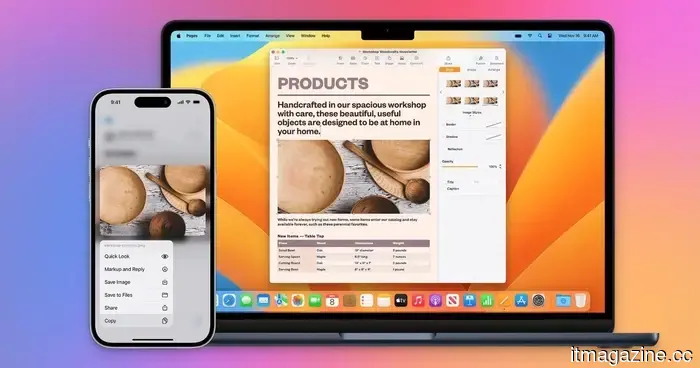 Apple is finally introducing one of my favorite Continuity features to Windows.
Apple is said to be developing a feature that will allow users to copy content on their iPhone and paste it on a Windows PC, following a request from Microsoft, but it may not be available until 2027 or beyond.
Apple is finally introducing one of my favorite Continuity features to Windows.
Apple is said to be developing a feature that will allow users to copy content on their iPhone and paste it on a Windows PC, following a request from Microsoft, but it may not be available until 2027 or beyond.
 Nvidia and Dell support the AI cloud startup Volta, which has been valued at $2.4 billion.
AI cloud startup Volta has secured $300 million in funding and arranged for $5 billion in financing, achieving a valuation of $2.4 billion, with support from a16z, Altimeter, Nvidia, and Michael Dell.
Nvidia and Dell support the AI cloud startup Volta, which has been valued at $2.4 billion.
AI cloud startup Volta has secured $300 million in funding and arranged for $5 billion in financing, achieving a valuation of $2.4 billion, with support from a16z, Altimeter, Nvidia, and Michael Dell.
 Passkeys were promoted as a more secure future. However, hackers have found methods to compromise those synchronized with Google.
Researchers discovered three methods by which malware on a compromised Windows PC can seize Google-synced passkeys, circumvent user verification, and retrieve all private keys stored in the vault.
Passkeys were promoted as a more secure future. However, hackers have found methods to compromise those synchronized with Google.
Researchers discovered three methods by which malware on a compromised Windows PC can seize Google-synced passkeys, circumvent user verification, and retrieve all private keys stored in the vault.
Nvidia and Dell support AI cloud startup Volta, which is valued at $2.4 billion.
AI cloud startup Volta has secured $300 million in funding and arranged $5 billion in financing at a valuation of $2.4 billion, with support from a16z, Altimeter, Nvidia, and Michael Dell.