
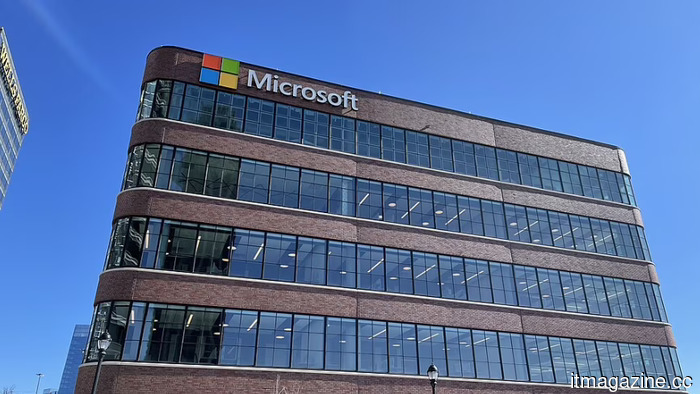
Microsoft Q4: Azure surpasses $100 billion, AI investment yields positive results.
Microsoft entered its earnings report with one key question: is the significant investment in AI paying off? The results indicated that, for the most part, the answer is yes.
Revenue increased by 18% to $90 billion for the quarter ending June 30, and net income rose by 31% to $35.8 billion, according to the company. Microsoft Cloud generated $59.3 billion, up 27%. Following the announcement, shares experienced a roughly 2% increase in after-hours trading.
Azure experiences reacceleration
Investors are particularly focused on Azure, which outperformed expectations. Azure and other cloud services grew 43% year over year, surpassing the anticipated 40% and improving from 40% in the previous quarter, as reported by CNBC. For the entire financial year, Azure exceeded $100 billion in revenue for the first time.
This growth is significant because Microsoft has been facing a shortage of computing power. The company has had to ration its chip resources among Azure clients, its research initiatives, and Copilot. Achieving 43% growth under such constraints is a strong indicator for the quarter.
The backlog is expanding
In the latest insights from the EU tech sector, a report from our knowledgeable founder Boris, along with some questionable AI art, will be available weekly in your inbox for free—sign up now! The demand isn't solely from AI labs. Microsoft's commercial backlog, which includes revenue that has been booked but not yet acknowledged, surged 84% year-over-year to $678 billion. The company noted that the sequential growth in the quarter was driven by customers beyond just the major model developers.
This is important due to concerns about concentration. In January, Microsoft indicated that around 45% of the backlog was linked to OpenAI. The emergence of additional customers signing up alleviates concerns that the entire story relies on a single partner. Paid subscriptions for Microsoft 365 Copilot surpassed 30 million, an increase from 20 million in July.
Costs continue to rise
The expenses associated with this growth are not decreasing. Microsoft invested $35.8 billion in property and equipment during the quarter alone, more than double the $17 billion spent the previous year. Overall, capital expenditures for the year reached around $116 billion.
Investors have expressed concerns regarding this situation. The stock has dropped 19% this year as expenses have risen, and competitors are making similar investments. The slight rebound in after-hours trading offers some relief, as revenue is currently keeping pace with expenditures.
A positive outcome, but with caveats
The increase in profit requires clarification. While net income rose by 31% on record, a one-time gain of $3.2 billion from Microsoft’s investment in the AI lab Anthropic contributed to this boost. When excluding the fluctuations in its OpenAI investment, the company’s profit increased by 22%.
Additionally, costs were lower due to Microsoft’s inaugural voluntary retirement program, which was partially offset by a writedown related to Xbox. Therefore, the overall assessment is mixed. Demand for AI cloud services is evidently genuine and expanding, but the associated spending continues to rise, and the construction still requires funding.
Other articles
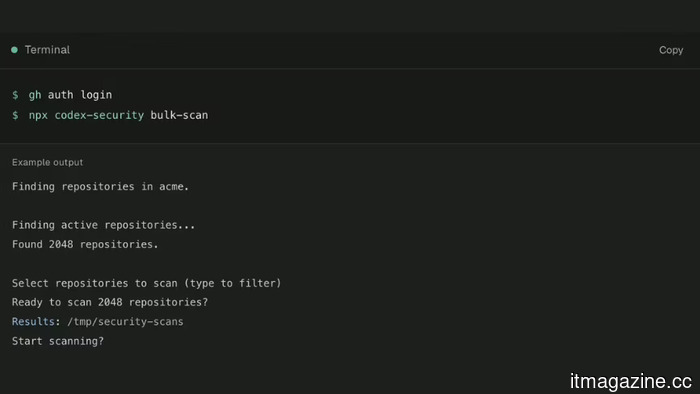 OpenAI has made Codex Security available as open-source, but has restricted access to the scanner.
OpenAI has made its Codex Security CLI available as open source to identify bugs in code, but the scanner itself is still restricted. This move can be seen as a strategic attempt to capture the Application Security market and to compete with Anthropic’s Claude Security.
OpenAI has made Codex Security available as open-source, but has restricted access to the scanner.
OpenAI has made its Codex Security CLI available as open source to identify bugs in code, but the scanner itself is still restricted. This move can be seen as a strategic attempt to capture the Application Security market and to compete with Anthropic’s Claude Security.
 Lilian Weng departs from Thinking Machines and re-enters OpenAI within days.
Lilian Weng left Thinking Machines due to stress and health issues, only to rejoin OpenAI shortly after to focus on recursive self-improvement.
PwC is the most recent Big Four company to be exposed for disseminating poor-quality AI content.
PwC released reports in the Middle East that contained bogus footnotes and fabricated sources, including one URL that ended with “chatgpt.com.” This marks the fourth instance of a Big Four firm being caught utilizing subpar AI content.
Lilian Weng departs from Thinking Machines and re-enters OpenAI within days.
Lilian Weng left Thinking Machines due to stress and health issues, only to rejoin OpenAI shortly after to focus on recursive self-improvement.
PwC is the most recent Big Four company to be exposed for disseminating poor-quality AI content.
PwC released reports in the Middle East that contained bogus footnotes and fabricated sources, including one URL that ended with “chatgpt.com.” This marks the fourth instance of a Big Four firm being caught utilizing subpar AI content.
 DeepMind disbands its Nobel Prize-winning AlphaFold team.
Google DeepMind has disbanded its Nobel Prize-winning AlphaFold team, reallocating the majority of its members to the Gemini project as key contributors depart for Anthropic.
DeepMind disbands its Nobel Prize-winning AlphaFold team.
Google DeepMind has disbanded its Nobel Prize-winning AlphaFold team, reallocating the majority of its members to the Gemini project as key contributors depart for Anthropic.
 As AI produces an increasing number of messages, the ability for humans to recognize them becomes more important.
AI has accelerated internal communication but has also made it more challenging to trust. Motivosity suggests that incorporating company updates into recognition platforms, where employees are already engaged, is the way for organizations to break through the clutter.
As AI produces an increasing number of messages, the ability for humans to recognize them becomes more important.
AI has accelerated internal communication but has also made it more challenging to trust. Motivosity suggests that incorporating company updates into recognition platforms, where employees are already engaged, is the way for organizations to break through the clutter.
 OpenAI provides 100,000 scientists with complimentary access to AI and demonstrates the process.
OpenAI is granting 100,000 researchers free frontier access until 2027, coinciding with its announcement about reducing token costs for its agents to enable such initiatives.
OpenAI provides 100,000 scientists with complimentary access to AI and demonstrates the process.
OpenAI is granting 100,000 researchers free frontier access until 2027, coinciding with its announcement about reducing token costs for its agents to enable such initiatives.
Microsoft Q4: Azure surpasses $100 billion, AI investment yields positive results.
Microsoft's Azure saw a growth of 43% and exceeded $100 billion for the year, with its backlog reaching $678 billion, while the stock increased by 2%. Meanwhile, investment in AI continues to rise.