

OpenAI provides 100,000 scientists with complimentary access to AI and demonstrates the process.
OpenAI made two announcements this week that appear to be unrelated. One is notably generous, while the other explains how the company can afford such generosity.
The generous announcement: OpenAI will provide 100,000 academic researchers with free access to its advanced models through 2027, as reported by Axios. This initiative, called ChatGPT for Academic Researchers, will begin with 10,000 users this summer and gradually expand.
Free access to advanced models for scientists
Researchers will gain access to GPT-5.6 Sol Pro, OpenAI’s leading model, and each of them can invite up to four collaborators. The company stated that researchers' data will not be used to train models by default. Initial institutions involved include the Institute for Advanced Study and the École normale supérieure. OpenAI presents this initiative as a way to accelerate scientific progress and is part of a commitment of over $250 million to fund external research through 2027. Greg Brockman referred to it as “more shots on goal against humanity’s hardest problems.”
However, not all responses have been positive. Critics point out the potential for a cycle: attract researchers with a limited compute budget, learn from their activities, and maintain control of frontier computing within the company. Encouraging a generation of scientists to rely on ChatGPT creates a unique advantage.
The underlying engine
The second announcement is more technical and explains the rationale behind the first. OpenAI provided details on how it has reduced the costs associated with running its agents, according to The Deep View.
The essential component is the agent harness, which supports Codex and ChatGPT Work by coordinating the model, tools, and context like a conductor. It is open-source, in contrast to Anthropic’s Claude Code. Moreover, it has been described as a token furnace. Earlier this year, some developers faced monthly bills of $20,000 as agents consumed significant compute resources.
To optimize efficiency, OpenAI improved this system. According to the company, GPT-5.6 Sol now outperforms Claude Fable 5 on a key coding benchmark while using 54% fewer output tokens. Additionally, a lighter model, GPT-5.5 Luna, is reported to cost 80% less than Sol.
The model that reduced its own costs
One notable detail is its recursive nature. By utilizing Codex, GPT-5.6 managed to rewrite and optimize OpenAI’s production kernels, the foundational code that operates the models, as reported by The New Stack. OpenAI claims this process enhanced token efficiency by over 15%, effectively lowering its own operational costs.
This timing is not coincidental. Many enterprises have become disillusioned with the practice of “tokenmaxxing,” which involves expending vast amounts of compute resources on every task. Databricks notes that managing AI costs is now the primary concern they hear from clients.
Two aspects of a unified strategy
Together, these two announcements represent a cohesive strategy. Lowering inference costs allows OpenAI to offer its models for free to 100,000 researchers, as well as to the other 990 million ChatGPT users it aims to engage with its agents. Thus, generosity and cost management are part of the same approach.
However, there is an associated risk. Free access to advanced tools could increase the dependency of the field on OpenAI’s platform at a time when the company is learning to operate that platform at a lower cost. The more affordable it becomes for OpenAI to provide services, the greater the stake the company has in the global AI landscape. As one commenter noted, Anthropic may be poised to respond next.
Other articles
 Microsoft Q4: Azure surpasses $100 billion, AI investment yields positive results.
Microsoft's Azure saw a growth of 43% and exceeded $100 billion for the year, with its backlog reaching $678 billion, while the stock increased by 2%. Meanwhile, investment in AI continues to rise.
Microsoft Q4: Azure surpasses $100 billion, AI investment yields positive results.
Microsoft's Azure saw a growth of 43% and exceeded $100 billion for the year, with its backlog reaching $678 billion, while the stock increased by 2%. Meanwhile, investment in AI continues to rise.
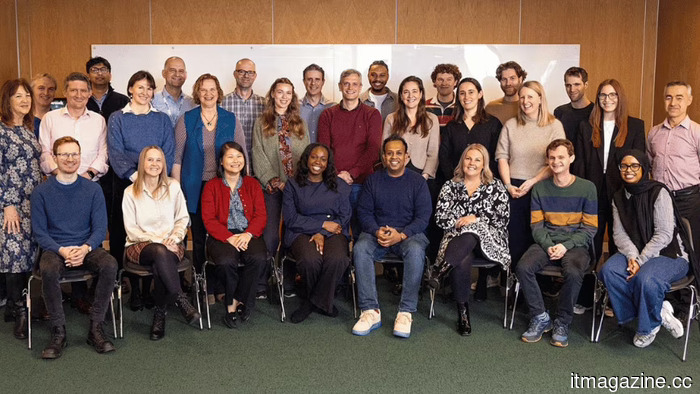 Qureight secures $20 million for an AI technology focused on chest conditions to accelerate drug trials.
Cambridge's Qureight secured $20 million in Series B funding to develop an AI "foundation model" for the chest, aimed at accelerating drug trials for lung and heart conditions.
Qureight secures $20 million for an AI technology focused on chest conditions to accelerate drug trials.
Cambridge's Qureight secured $20 million in Series B funding to develop an AI "foundation model" for the chest, aimed at accelerating drug trials for lung and heart conditions.
 Lilian Weng departs from Thinking Machines and re-enters OpenAI within days.
Lilian Weng left Thinking Machines due to stress and health issues, only to rejoin OpenAI shortly after to focus on recursive self-improvement.
Lilian Weng departs from Thinking Machines and re-enters OpenAI within days.
Lilian Weng left Thinking Machines due to stress and health issues, only to rejoin OpenAI shortly after to focus on recursive self-improvement.
 DeepMind disbands its Nobel Prize-winning AlphaFold team.
Google DeepMind has disbanded its Nobel Prize-winning AlphaFold team, reallocating the majority of its members to the Gemini project as key contributors depart for Anthropic.
DeepMind disbands its Nobel Prize-winning AlphaFold team.
Google DeepMind has disbanded its Nobel Prize-winning AlphaFold team, reallocating the majority of its members to the Gemini project as key contributors depart for Anthropic.
 Audi's Q9 is a V8 petrol model aimed at the American market as its electric vehicle strategy faces delays.
Audi's Q9 is a petrol-powered SUV designed to appeal to American preferences, introduced as its electric vehicle initiative faces challenges, tariffs impact its entirely imported lineup, and employees express concerns over potential plant closures.
Audi's Q9 is a V8 petrol model aimed at the American market as its electric vehicle strategy faces delays.
Audi's Q9 is a petrol-powered SUV designed to appeal to American preferences, introduced as its electric vehicle initiative faces challenges, tariffs impact its entirely imported lineup, and employees express concerns over potential plant closures.
 AI is not merely being imposed on us; even monkeys in the forest are now part of the test audience for scientific research.
AI has already infiltrated nearly every facet of our lives. Currently, it is found in the rainforest, where wild capuchin monkeys are using an AI-equipped touchscreen to obtain banana rewards as part of an innovative research project.
AI is not merely being imposed on us; even monkeys in the forest are now part of the test audience for scientific research.
AI has already infiltrated nearly every facet of our lives. Currently, it is found in the rainforest, where wild capuchin monkeys are using an AI-equipped touchscreen to obtain banana rewards as part of an innovative research project.
OpenAI provides 100,000 scientists with complimentary access to AI and demonstrates the process.
OpenAI is granting 100,000 researchers free frontier access until 2027, coinciding with its announcement about reducing token costs for its agents to enable such initiatives.