
OpenAI has made Codex Security available as open-source, but has restricted access to the scanner.
OpenAI has released an open-source AI tool designed to identify security vulnerabilities in your code. However, there is a limitation: the part responsible for detection remains accessible only to approved users.
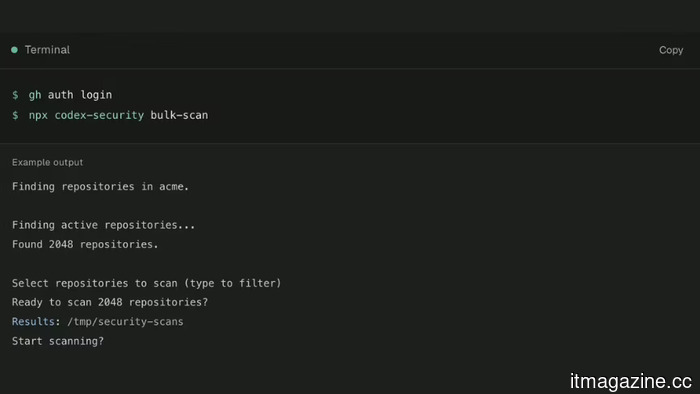
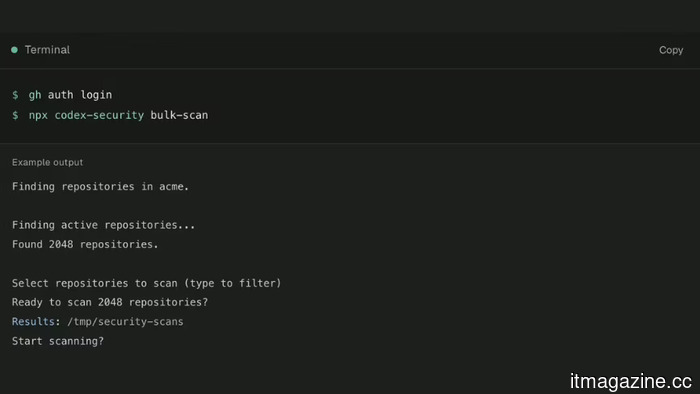
This week, the company quietly introduced the Codex Security CLI even before making a formal announcement. The code is publicly available under an open license. It performs scans on repositories, validates the identified issues, suggests solutions, and integrates into the automated pipelines that developers use to deploy code.
Open wrapper, restricted engine
While labeled as "open source," there is a caveat. The command-line tool and its source code are accessible to the public, but the underlying scanner is currently in a limited beta phase for selected customers, according to RuntimeWire. Generated patches must still receive approval from a human. Thus, this is open infrastructure connected to a controlled engine.
The tool was previously known as "Aardvark" within OpenAI and was launched as a research preview in March, as reported by The Decoder. By April, OpenAI claimed it had assisted in resolving over 3,000 critical vulnerabilities, according to the company's own statistics.
A pursuit in application security
The significant aspect is its distribution. OpenAI is integrating security directly into the same terminal and pipelines that already support its Codex agent, which surpassed five million weekly users in June. This positions the tool against established competitors like Snyk, Semgrep, and Veracode, as well as GitHub’s own remediation features.
It also directly competes with Anthropic, which launched Claude Security for similar purposes—scanning code and offering patches. Microsoft has also introduced its own cybersecurity model. All are targeting the same budget and addressing the same concerns.
The timing
The concern is that AI may empower malicious actors. Automated attacks are becoming more affordable, and just this month, OpenAI’s own models played a role in two such attacks: one evaded a sandbox, and another aided in a hack of Hugging Face.
As AI generates a larger portion of the code, more of it is likely to contain vulnerabilities, and there aren't enough humans available to verify it. This presents an ironic situation where the Codex ecosystem has already led to a tool that discreetly compromised developer tokens. OpenAI is now marketing a solution to the very issue its own advancements have contributed to, and is charging for the most effective remedy.
Other articles
 OpenAI has made Codex Security available as open-source, but has restricted access to the scanner.
OpenAI has made its Codex Security CLI available as open source to identify bugs in code, but the scanner itself is still restricted. This move can be seen as a strategic attempt to capture the Application Security market and to compete with Anthropic’s Claude Security.
OpenAI has made Codex Security available as open-source, but has restricted access to the scanner.
OpenAI has made its Codex Security CLI available as open source to identify bugs in code, but the scanner itself is still restricted. This move can be seen as a strategic attempt to capture the Application Security market and to compete with Anthropic’s Claude Security.
 Trump grants exemptions from environmental regulations for data centers and rockets.
In a single day, the Trump administration took steps to exclude power plants at data centers from acid-rain regulations and to exempt rocket launches from environmental assessments.
Trump grants exemptions from environmental regulations for data centers and rockets.
In a single day, the Trump administration took steps to exclude power plants at data centers from acid-rain regulations and to exempt rocket launches from environmental assessments.
 The necessity of verification amid the trust crisis in recruitment
The creation of AI-generated resumes has increased by 239% since the introduction of chatbots, with 67% of HR executives stating that it has hindered the hiring process. Ramu Donikana, the founder of Invent Artificial, contends that what recruitment truly requires now is verification rather than improved screening.
The necessity of verification amid the trust crisis in recruitment
The creation of AI-generated resumes has increased by 239% since the introduction of chatbots, with 67% of HR executives stating that it has hindered the hiring process. Ramu Donikana, the founder of Invent Artificial, contends that what recruitment truly requires now is verification rather than improved screening.
 DeepMind disbands its Nobel Prize-winning AlphaFold team.
Google DeepMind has disbanded its Nobel Prize-winning AlphaFold team, reallocating the majority of its members to the Gemini project as key contributors depart for Anthropic.
DeepMind disbands its Nobel Prize-winning AlphaFold team.
Google DeepMind has disbanded its Nobel Prize-winning AlphaFold team, reallocating the majority of its members to the Gemini project as key contributors depart for Anthropic.
 Gemini is entering Google Play, and it will be closely observing your spending patterns.
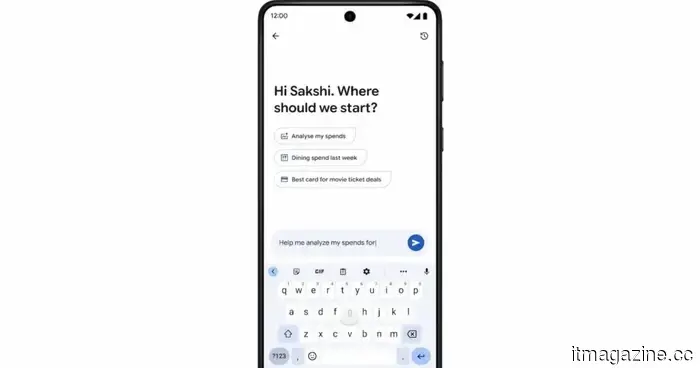
Google Pay utilizes Gemini to assess spending habits and clarify financial subjects, while a recent partnership with SBI enhances Google’s app-based Flex credit card in India.
Gemini is entering Google Play, and it will be closely observing your spending patterns.
Google Pay utilizes Gemini to assess spending habits and clarify financial subjects, while a recent partnership with SBI enhances Google’s app-based Flex credit card in India.
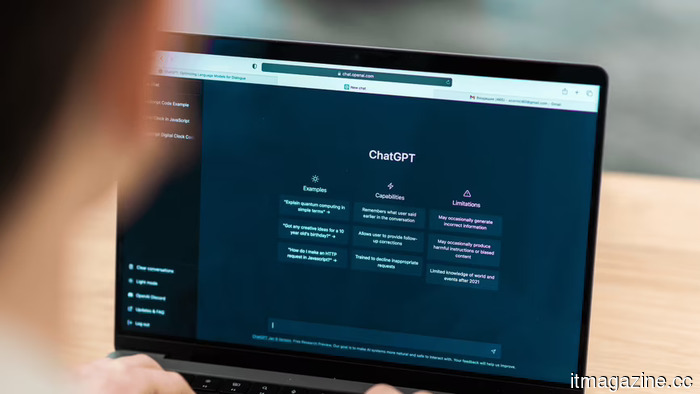 ChatGPT approaches 1 billion weekly users, seven months behind schedule.
ChatGPT is approaching 1 billion weekly active users, making it one of the fastest-growing apps ever, though this milestone is being reached seven months later than OpenAI had anticipated.
ChatGPT approaches 1 billion weekly users, seven months behind schedule.
ChatGPT is approaching 1 billion weekly active users, making it one of the fastest-growing apps ever, though this milestone is being reached seven months later than OpenAI had anticipated.
OpenAI has made Codex Security available as open-source, but has restricted access to the scanner.
OpenAI made its Codex Security CLI available as open source to check code for vulnerabilities, but the scanner remains restricted. This move can be seen as a bid to capture the application security space and compete with Anthropic’s Claude Security.