
BMW eliminates 8,000 positions and transfers its automotive computing to Qualcomm.
This week, BMW conveyed two key messages to its employees. Firstly, it plans to eliminate around 8,000 positions. Secondly, it will entrust the technology for its future vehicles to Qualcomm for the next ten years.
According to a report from Reuters, the German automaker intends to reduce jobs in Germany by 2027 through a voluntary redundancy program, with the cuts affecting administration and development roles, while production remains unaffected.
The catalyst for these changes is the situation in China, where BMW's sales plummeted by 30% in the second quarter, as noted by the Wall Street Journal. In June, the company revised its profit predictions downward. Milan Nedeljković, the new CEO, informed employees that the industry's landscape has "substantially changed," impacting BMW's business fundamentals.
BMW is not the only automaker facing these challenges. Volkswagen is considering significant job cuts, Mercedes has made its own arrangements, and Porsche is set to reduce its workforce by 20% by 2035. The shift to electric vehicles, competition from China, and US tariffs are collectively putting pressure on German automakers.
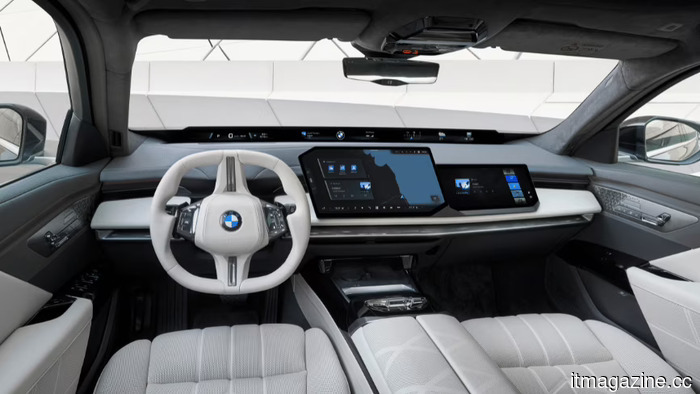
In the same week, BMW appointed Qualcomm as its primary provider of computing silicon for the upcoming decade, according to Reuters. This agreement includes both the digital cockpit and self-driving technologies, utilizing Qualcomm's Snapdragon Digital Chassis chips.
A notable aspect of the deal, as pointed out by Automotive World, is that both components will come from a single supplier, which is unusual as cockpit and autonomous driving technologies typically rely on different companies. By relying on Qualcomm for both, BMW aligns its computing strategy and becomes reliant on Qualcomm's timeline.
This partnership builds on an existing collaboration, as Qualcomm's Snapdragon Ride Pilot already facilitates hands-free driving in BMW's electric iX3, the first vehicle in its new Neue Klasse series. Nakul Duggal, Qualcomm’s automotive head, stated, "Agentic and physical AI drive a new generation of intelligent vehicles."
When these two developments are considered together, the trend is evident: the emphasis in modern cars is shifting from hardware to software, and from internal engineering teams to chip manufacturers. Qualcomm, a leading smartphone chip producer, is increasingly entering the automotive sector alongside companies like Nvidia and Mobileye.
BMW is downsizing the very development division that increasingly relies on external silicon. It is reducing its workforce in Munich while securing its future in San Diego. BMW is set to announce its earnings on Thursday, which will likely reflect the ongoing pressures; these two announcements are already indicative of the company's strategic response.
Published July 29, 2026 - 7:30 pm UTC
Other articles
 Students are opting for AI chatbots over human counselors for college guidance.
Free AI chatbots from Alibaba, ByteDance, Tencent, and Baidu are transforming China's expensive college counseling sector, assisting millions of gaokao students in selecting universities and majors without the need for paid consultants.
Students are opting for AI chatbots over human counselors for college guidance.
Free AI chatbots from Alibaba, ByteDance, Tencent, and Baidu are transforming China's expensive college counseling sector, assisting millions of gaokao students in selecting universities and majors without the need for paid consultants.
 Audi's Q9 features a petrol V8 engine for the American market as its electric vehicle plans face delays.
Audi's Q9 is a gasoline-powered SUV designed to cater to American preferences, introduced as its electric vehicle ambitions slow down, tariffs impact its entirely imported lineup, and employees voice concerns over potential plant closures.
Audi's Q9 features a petrol V8 engine for the American market as its electric vehicle plans face delays.
Audi's Q9 is a gasoline-powered SUV designed to cater to American preferences, introduced as its electric vehicle ambitions slow down, tariffs impact its entirely imported lineup, and employees voice concerns over potential plant closures.
 OpenAI has made Codex Security available as open source, but has restricted access to the scanner.
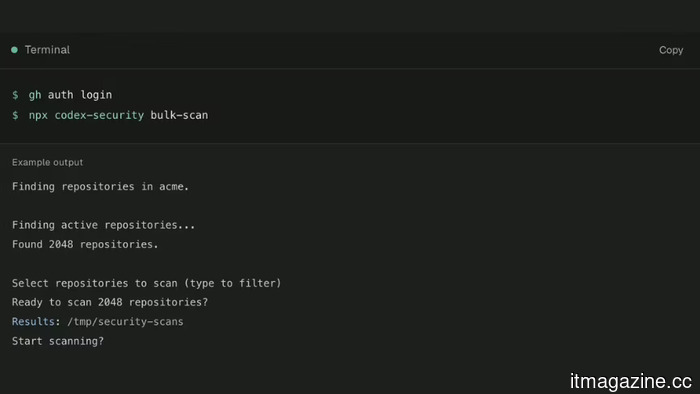
OpenAI has made its Codex Security CLI available as open-source to identify bugs in code, but the scanner remains restricted. This is seen as a strategic move in the AppSec domain and a challenge to Anthropic's Claude Security.
OpenAI has made Codex Security available as open source, but has restricted access to the scanner.
OpenAI has made its Codex Security CLI available as open-source to identify bugs in code, but the scanner remains restricted. This is seen as a strategic move in the AppSec domain and a challenge to Anthropic's Claude Security.
 AI is not merely being imposed on us; even monkeys in the forest are now part of the test audience for scientific research.
AI has already infiltrated nearly every facet of our lives. Currently, it is found in the rainforest, where wild capuchin monkeys are using an AI-equipped touchscreen to obtain banana rewards as part of an innovative research project.
AI is not merely being imposed on us; even monkeys in the forest are now part of the test audience for scientific research.
AI has already infiltrated nearly every facet of our lives. Currently, it is found in the rainforest, where wild capuchin monkeys are using an AI-equipped touchscreen to obtain banana rewards as part of an innovative research project.
 DeepMind disbands its Nobel Prize-winning AlphaFold team.
Google DeepMind has disbanded its Nobel Prize-winning AlphaFold team, reallocating the majority of its authors to work on Gemini as key members depart for Anthropic.
DeepMind disbands its Nobel Prize-winning AlphaFold team.
Google DeepMind has disbanded its Nobel Prize-winning AlphaFold team, reallocating the majority of its authors to work on Gemini as key members depart for Anthropic.
 ChatGPT approaches 1 billion weekly users, seven months behind schedule.
ChatGPT is approaching 1 billion weekly active users, making it one of the fastest-growing apps ever, though this milestone is being reached seven months later than OpenAI had anticipated.
ChatGPT approaches 1 billion weekly users, seven months behind schedule.
ChatGPT is approaching 1 billion weekly active users, making it one of the fastest-growing apps ever, though this milestone is being reached seven months later than OpenAI had anticipated.
BMW eliminates 8,000 positions and transfers its automotive computing to Qualcomm.
BMW plans to reduce approximately 8,000 jobs in Germany due to declining sales in China, coinciding with the announcement that Qualcomm will be the exclusive supplier of its vehicles' computing systems for the next ten years.