
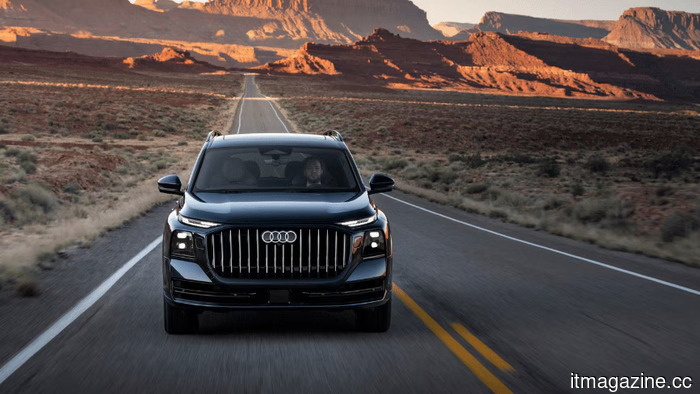
Audi's Q9 features a petrol V8 engine for the American market as its electric vehicle plans face delays.
Audi has spent years focusing on its future with electric vehicles. However, its latest flagship model for the American market is powered by a V8 engine, featuring spacious cupholders and a ChatGPT assistant. This week, the German manufacturer introduced the Q9, a full-size three-row luxury SUV, which it has specifically designed for the US market. The starting price is approximately $89,000, while the sportier SQ9 is priced around $119,000, according to CNBC. Both models are set to launch later this year.
Targeting American Preferences
Audi is clearly aiming for a specific audience. According to product chief Filip Brabec, the Q9 was created with the American consumer in mind, including its engine options and larger cupholders. Currently, SUVs represent over 80% of the premium market, making this Audi's move towards the most lucrative segment.
Advanced Technology Features
The technological features are an added bonus. The Q9 is equipped with a ChatGPT voice assistant and a hands-free driver-assist system. It also has matrix LED headlights that adjust to avoid blinding other drivers and can project turn signals onto the road. However, under the hood, it remains firmly a combustion vehicle, built on Volkswagen's new petrol-first platform.
A Misstep in the EV Strategy
Audi was an early mover in the electric vehicle space, debuting the e-tron in 2019. However, the US market did not develop as anticipated, with pure EVs accounting for just 5.4% of American sales in June. Audi invested heavily in a segment that has remained relatively small. One analyst noted that this focus diverted attention from its petrol models, leaving them less competitive.
Thus, the Q9 represents a shift back toward petrol, and Audi is counting on its success. Sales in the US dropped 16% last year and declined another 17% in the first half of 2026, with a significant 30% drop in the first quarter. This trend reflects the same slump in EV demand and production cuts affecting competitors, but it’s hitting Audi particularly hard.
Challenges Linked to Tariffs
A significant issue for Audi is that it produces its vehicles outside the US, meaning it imports its entire lineup and is more vulnerable to tariffs compared to BMW or Mercedes, both of which have manufacturing facilities in the US. While Mercedes' sales fell about 3.5% this year, BMW experienced nearly a 5% increase.
Audi executives are reportedly considering establishing production in the US to mitigate tariff impacts, but currently, they don’t have any manufacturing there. As RBC’s Tom Narayan noted, while having a great product is beneficial, tariffs will remain a key factor affecting their performance. No amount of cupholders can rectify the problem of a factory located on the wrong continent.
Domestic Struggles in Germany
The situation is equally difficult in Germany. On Wednesday, about 6,000 Audi workers protested at the Neckarsulm plant, as reported by Reuters. Parent company Volkswagen has indicated that the plant may close after 2030, and it is implementing a restructuring plan that could see job cuts increase to 100,000, with other brands like Porsche also letting go of thousands of employees.
The Q9 represents Audi's significant move to reclaim the American market, as its electric vehicle aspirations fade and its domestic production faces uncertainty. While reviews may be positive, the complexities of manufacturing in Europe and selling in a US market protected by tariffs present a more challenging issue to resolve.
Other articles
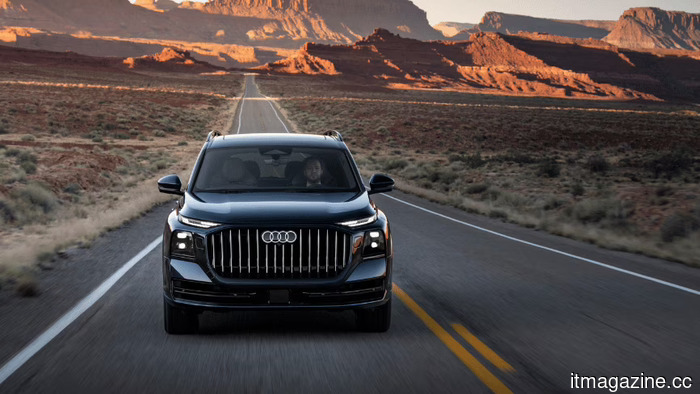 Audi's Q9 is a V8 petrol model aimed at the American market as its electric vehicle strategy faces delays.
Audi's Q9 is a petrol-powered SUV designed to appeal to American preferences, introduced as its electric vehicle initiative faces challenges, tariffs impact its entirely imported lineup, and employees express concerns over potential plant closures.
Audi's Q9 is a V8 petrol model aimed at the American market as its electric vehicle strategy faces delays.
Audi's Q9 is a petrol-powered SUV designed to appeal to American preferences, introduced as its electric vehicle initiative faces challenges, tariffs impact its entirely imported lineup, and employees express concerns over potential plant closures.
 Anthropic stands alone in every AI battle, yet still manages to succeed.
Anthropic stands out as the distinct entity in almost every AI policy debate, whether it concerns open weights or the Pentagon. Furthermore, it remains the most valuable startup globally.
Anthropic stands alone in every AI battle, yet still manages to succeed.
Anthropic stands out as the distinct entity in almost every AI policy debate, whether it concerns open weights or the Pentagon. Furthermore, it remains the most valuable startup globally.
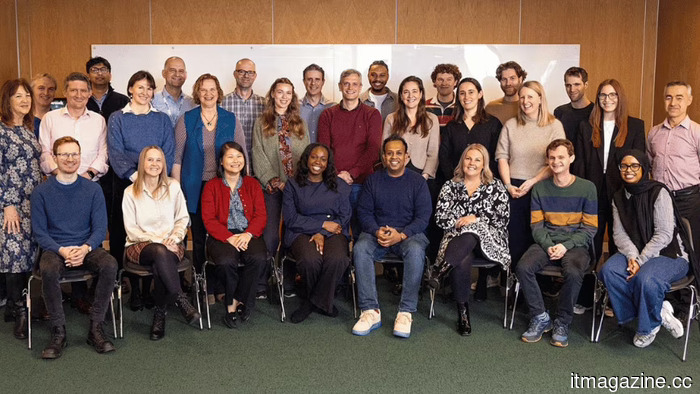 Qureight secures $20 million for an AI technology focused on chest conditions to accelerate drug trials.
Cambridge's Qureight secured $20 million in Series B funding to develop an AI "foundation model" for the chest, aimed at accelerating drug trials for lung and heart conditions.
Qureight secures $20 million for an AI technology focused on chest conditions to accelerate drug trials.
Cambridge's Qureight secured $20 million in Series B funding to develop an AI "foundation model" for the chest, aimed at accelerating drug trials for lung and heart conditions.
 eBay agrees to pay $56 million regarding its harassment campaign involving bloody pig masks.
eBay and three former executives will compensate the couple they harassed with cockroaches and a bloody pig mask nearly $56 million. The more significant consequence: no non-disclosure agreement.
eBay agrees to pay $56 million regarding its harassment campaign involving bloody pig masks.
eBay and three former executives will compensate the couple they harassed with cockroaches and a bloody pig mask nearly $56 million. The more significant consequence: no non-disclosure agreement.
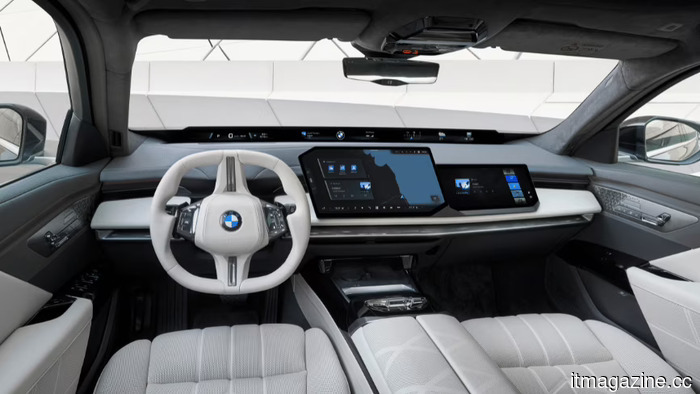 BMW eliminates 8,000 positions and transfers its automotive computing to Qualcomm.
BMW plans to reduce approximately 8,000 jobs in Germany due to declining sales in China, coinciding with the announcement that Qualcomm will be the exclusive supplier of its vehicles' computing systems for the next ten years.
BMW eliminates 8,000 positions and transfers its automotive computing to Qualcomm.
BMW plans to reduce approximately 8,000 jobs in Germany due to declining sales in China, coinciding with the announcement that Qualcomm will be the exclusive supplier of its vehicles' computing systems for the next ten years.
 As AI produces an increasing number of messages, the ability for humans to recognize them becomes more important.
AI has accelerated internal communication but has also made it more challenging to trust. Motivosity suggests that incorporating company updates into recognition platforms, where employees are already engaged, is the way for organizations to break through the clutter.
As AI produces an increasing number of messages, the ability for humans to recognize them becomes more important.
AI has accelerated internal communication but has also made it more challenging to trust. Motivosity suggests that incorporating company updates into recognition platforms, where employees are already engaged, is the way for organizations to break through the clutter.
Audi's Q9 features a petrol V8 engine for the American market as its electric vehicle plans face delays.
Audi's Q9 is a gasoline-powered SUV designed to cater to American preferences, introduced as its electric vehicle ambitions slow down, tariffs impact its entirely imported lineup, and employees voice concerns over potential plant closures.