
AI is not merely being imposed on us; even monkeys in the forest are now part of the test audience for scientific research.
Researchers at Emory University have developed an AI-powered touchscreen that rewards wild capuchin monkeys with banana slices, aiding in the study of their thinking, learning, and problem-solving abilities in their natural environment.
You didn't request an AI summary of your inbox or a chatbot in your camera app, yet you received them nonetheless. A similar scenario is occurring among the monkeys in Costa Rica's Taboga Forest Reserve. According to a report from the New York Times, scientists have introduced a touchscreen system that utilizes artificial intelligence to investigate how wild capuchins think and learn, all while keeping them in their natural habitat.
Even monkeys can’t escape AI now
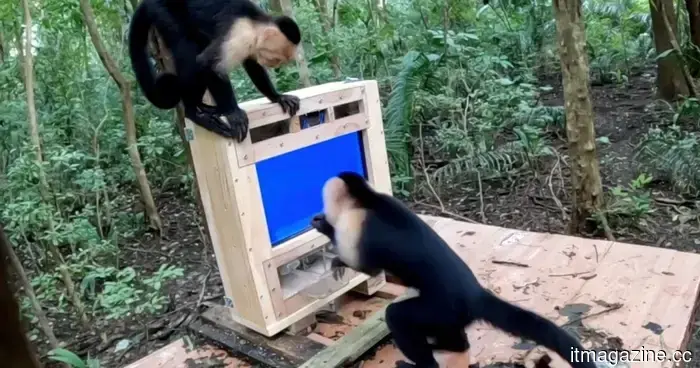
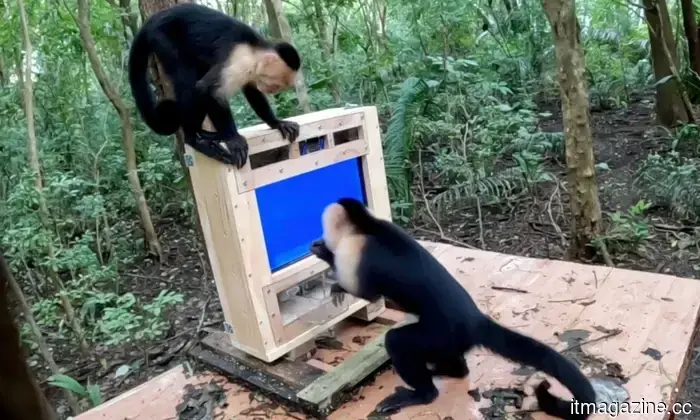
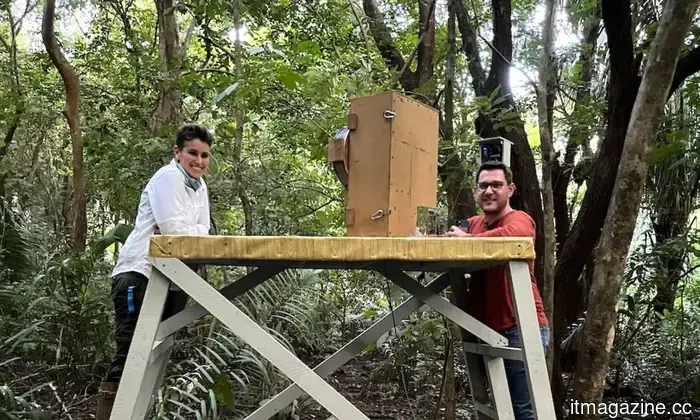
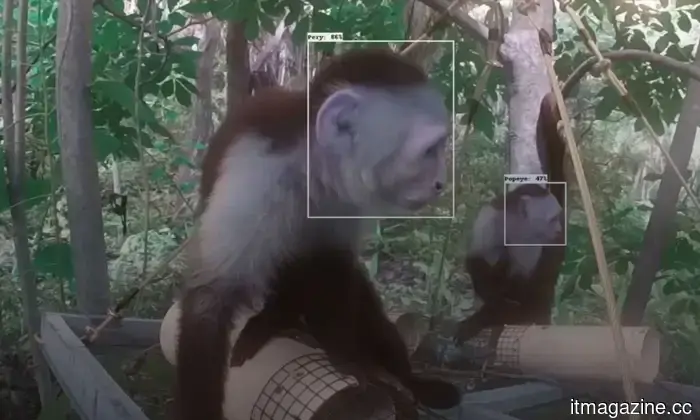
In contrast to the AI features that are becoming commonplace in our applications, this initiative serves a legitimate scientific purpose. The system, named CapuchinAI, is a portable testing station created by researchers from Emory University. It consists of a touchscreen, a webcam, and a 3D-printed food dispenser housed in a wooden frame. Facial recognition software, trained on images of the local capuchins, detects an oncoming monkey and presents a simple task: touch the screen to receive a piece of dried banana.
According to the study, the researchers observed for two days before any capuchin approached the device. On the third day, an alpha male known as Papi arrived, quickly learning the pattern. Eventually, ten of the sixteen capuchins that engaged with the station understood the task, and at least eight recalled how to perform it during subsequent sessions.
Dr. Marcela Benítez, a primatologist at Emory University, expressed that the aim is to examine how primates tackle problems under the same conditions they face in the wild, which cannot be replicated in a laboratory setting.
The AI upgrade is already on the way
This summer, the team intends to test an enhanced model that will recognize individual capuchins rather than just identifying the species as a whole. This new system will also conduct tests on impulse control and cognitive flexibility, monitoring each monkey's development similar to how a game tracks player statistics. It represents a more interactive advancement over the facial recognition software previously utilized for identifying individual chimpanzees in the wild, as CapuchinAI combines this recognition with a live reward loop.
Most of us recognize AI as the technology that keeps appearing on our devices, whether we desire it or not. Now, it has also made its way into the Costa Rican rainforest. The distinction here is that the new users are wild capuchins tapping on a screen for banana slices, all for the sake of scientific research.




Other articles
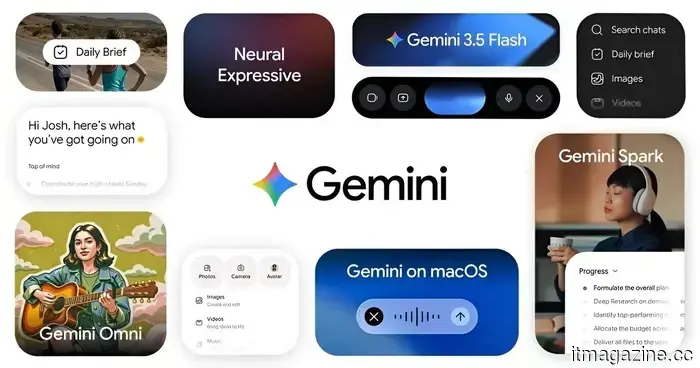 Gemini is now able to condense the most chaotic comment threads in Google Docs.
Gemini can now organize extensive comments in Google Docs by reviewer or topic, highlight unresolved queries, create responses, and recommend edits, although access is contingent on the appropriate plan, settings, and document permissions.
Gemini is now able to condense the most chaotic comment threads in Google Docs.
Gemini can now organize extensive comments in Google Docs by reviewer or topic, highlight unresolved queries, create responses, and recommend edits, although access is contingent on the appropriate plan, settings, and document permissions.
 OpenAI provides 100,000 scientists with complimentary access to AI and demonstrates the process.
OpenAI is granting 100,000 researchers free frontier access until 2027, coinciding with its announcement about reducing token costs for its agents to enable such initiatives.
OpenAI provides 100,000 scientists with complimentary access to AI and demonstrates the process.
OpenAI is granting 100,000 researchers free frontier access until 2027, coinciding with its announcement about reducing token costs for its agents to enable such initiatives.
 Audi's Q9 is a V8 petrol model aimed at the American market as its electric vehicle strategy faces delays.
Audi's Q9 is a petrol-powered SUV designed to appeal to American preferences, introduced as its electric vehicle initiative faces challenges, tariffs impact its entirely imported lineup, and employees express concerns over potential plant closures.
Audi's Q9 is a V8 petrol model aimed at the American market as its electric vehicle strategy faces delays.
Audi's Q9 is a petrol-powered SUV designed to appeal to American preferences, introduced as its electric vehicle initiative faces challenges, tariffs impact its entirely imported lineup, and employees express concerns over potential plant closures.
 Microsoft Q4: Azure surpasses $100 billion, AI investment yields positive results.
Microsoft's Azure saw a growth of 43% and exceeded $100 billion for the year, with its backlog reaching $678 billion, while the stock increased by 2%. Meanwhile, investment in AI continues to rise.
PwC is the most recent Big Four company to be exposed for disseminating poor-quality AI content.
PwC released reports in the Middle East that contained bogus footnotes and fabricated sources, including one URL that ended with “chatgpt.com.” This marks the fourth instance of a Big Four firm being caught utilizing subpar AI content.
Microsoft Q4: Azure surpasses $100 billion, AI investment yields positive results.
Microsoft's Azure saw a growth of 43% and exceeded $100 billion for the year, with its backlog reaching $678 billion, while the stock increased by 2%. Meanwhile, investment in AI continues to rise.
PwC is the most recent Big Four company to be exposed for disseminating poor-quality AI content.
PwC released reports in the Middle East that contained bogus footnotes and fabricated sources, including one URL that ended with “chatgpt.com.” This marks the fourth instance of a Big Four firm being caught utilizing subpar AI content.
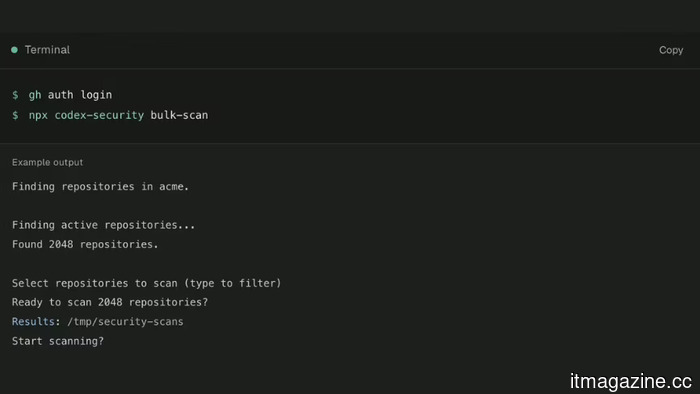 OpenAI has made Codex Security available as open-source, but has restricted access to the scanner.
OpenAI has made its Codex Security CLI available as open source to identify bugs in code, but the scanner itself is still restricted. This move can be seen as a strategic attempt to capture the Application Security market and to compete with Anthropic’s Claude Security.
OpenAI has made Codex Security available as open-source, but has restricted access to the scanner.
OpenAI has made its Codex Security CLI available as open source to identify bugs in code, but the scanner itself is still restricted. This move can be seen as a strategic attempt to capture the Application Security market and to compete with Anthropic’s Claude Security.
AI is not merely being imposed on us; even monkeys in the forest are now part of the test audience for scientific research.
AI has already infiltrated nearly every facet of our lives. Currently, it is found in the rainforest, where wild capuchin monkeys are using an AI-equipped touchscreen to obtain banana rewards as part of an innovative research project.