
The Exploration Company is in discussions to secure $300 million at a valuation of $2 billion.
Europe's goal to no longer rely on external spacecraft for transportation is now accompanied by a tentative financial estimate. The Exploration Company, a startup based in Munich developing what it claims to be Europe's first reusable space capsule, is reportedly in discussions to secure at least $300 million, as indicated by the Financial Times.
This funding round would place the six-year-old company at a valuation exceeding $2 billion, a figure that Bloomberg referenced from the Financial Times' article on July 26, 2026. However, these numbers are not yet finalized. Sources familiar with the negotiations cautioned that the financing has not been completed, and both the terms and the deal itself could still change or fall through.
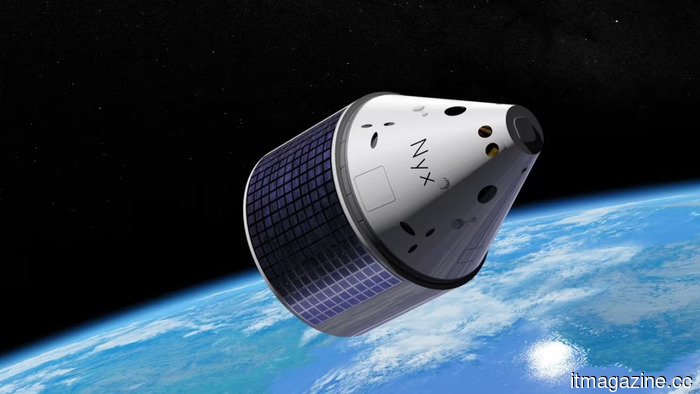
The comparison to Elon Musk's enterprise is not without basis. The Exploration Company is working on Nyx, a reusable capsule aimed at being Europe's response to SpaceX’s Dragon, meant for transporting cargo—and eventually, crew—to the International Space Station and its planned commercial replacements. This is the sector SpaceX has dominated over the past ten years.
At present, Europe lacks an independent method for returning cargo from orbit, which has left its agencies reliant on American, and previously Russian, technology. Founded in 2021 by Hélène Huby, a former head of Airbus’s space exploration division, The Exploration Company has positioned Nyx as the solution: a capsule designed to launch, return, and be reused, with a crewed version anticipated in the future.
The timing is strategic, as the ISS is expected to be decommissioned around 2030, necessitating new commercial stations that will require a logistics solution for transporting supplies and experiments. This is the market The Exploration Company aims to target.
Additionally, the European launch landscape is increasingly competitive. German rocket manufacturer Isar Aerospace secured €270 million late last year, and for the first time, private space investment in Europe has surpassed that of the United States. The argument for sovereignty emphasizes the importance of not becoming reliant on foreign suppliers for access to orbit.
Among the potential investors in this new funding round is the EU’s Scaleup Europe Fund, managed by Swedish investment group EQT, which is reportedly close to committing. The involvement of an EU-connected fund aligns perfectly with the company’s proposition: a European capsule, financed by European investment, transporting European cargo.
The Exploration Company is not starting from scratch; in November 2024, it completed a $160 million Series B funding round led by Balderton Capital and Plural, with additional support from French Tech Souveraineté and Germany’s DeepTech & Climate Fonds, representing government-affiliated investments from both nations. The company has also disclosed a contract backlog of approximately $770 million, with clients including Axiom Space, Vast, Starlab, and the European Space Agency.
However, it has yet to successfully bring a capsule back in one piece. Its most recent test, Mission Possible, launched aboard a SpaceX rideshare from Vandenberg Space Force Base on June 24, 2025. While the vehicle reached orbit and survived reentry, it lost contact shortly before its scheduled splashdown. The company referred to the mission as a "partial success," a term often loaded with significance in this field.
An earlier test, Mission Bikini, flew during the launch of Ariane 6 in July 2024, but a malfunction in the rocket's upper stage left the demonstrator stranded, leading to a missed reentry test. In essence, there have been two flights, neither of which has demonstrated the crucial reusability factor.
This is the challenge that a $300 million funding round aims to address. If successful, the capital would enable the transition from smaller-scale demonstrations to a functioning cargo vehicle, a shift better reflected in practical operations than in technical designs, emphasizing the capability to fly, recover, and reuse the vehicle. The valuation indicates investor confidence in the company's potential, although its flight history to date remains uncertain.
Neither the company nor EQT had publicly commented on the discussions at the time of the FT's report. Clarity regarding whether the funding round will conclude at the stated size and valuation, as well as which additional investors will participate, is expected to emerge in the coming weeks.
Other articles
 Nadella establishes a stipulation regarding the AI surge on CNN.
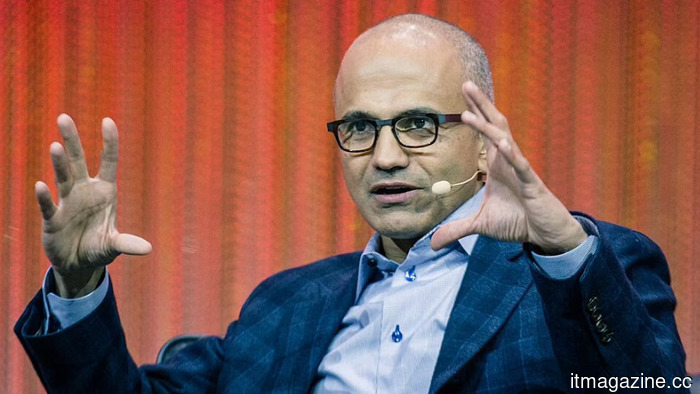
Nadella may not refer to it as a bubble, but he states that AI needs to enhance GDP; otherwise, the outcome will be negative. In the meantime, Copilot is receiving chips ahead of Azure clients.
Nadella establishes a stipulation regarding the AI surge on CNN.
Nadella may not refer to it as a bubble, but he states that AI needs to enhance GDP; otherwise, the outcome will be negative. In the meantime, Copilot is receiving chips ahead of Azure clients.
 Nadella establishes a requirement for the AI surge on CNN.
Nadella refrains from labeling it a bubble, but indicates that AI needs to boost GDP, or the outcome will be unfavorable. In the meantime, Copilot receives chips prior to Azure customers.
Nadella establishes a requirement for the AI surge on CNN.
Nadella refrains from labeling it a bubble, but indicates that AI needs to boost GDP, or the outcome will be unfavorable. In the meantime, Copilot receives chips prior to Azure customers.
 Sam Altman reiterates his ‘democratic AI’ message while Anthropic takes a firmer stance.
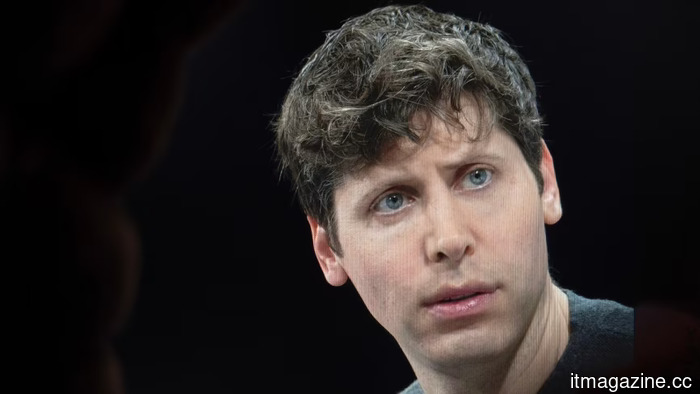
Sam Altman portrays the AI competition as a struggle between democracies and authoritarian regimes. Dario Amodei’s company, Anthropic, advocates for stricter chip export regulations instead of more relaxed ones.
Sam Altman reiterates his ‘democratic AI’ message while Anthropic takes a firmer stance.
Sam Altman portrays the AI competition as a struggle between democracies and authoritarian regimes. Dario Amodei’s company, Anthropic, advocates for stricter chip export regulations instead of more relaxed ones.
 Multiverse Computing aims for a $570 million Series C funding round at a valuation of $1.7 billion to reduce AI expenses.
Spain’s Multiverse Computing is seeking to raise up to $570 million at an estimated valuation of $1.7 billion, focusing on compressing AI models instead of scaling them.
Multiverse Computing aims for a $570 million Series C funding round at a valuation of $1.7 billion to reduce AI expenses.
Spain’s Multiverse Computing is seeking to raise up to $570 million at an estimated valuation of $1.7 billion, focusing on compressing AI models instead of scaling them.
 Xbox is addressing one of the largest frustrations with download speeds in the PC app.
Microsoft is trialing a Smart Download Client for Xbox that automatically connects to the fastest download server, which promises to speed up game installations on both PC and consoles.
Xbox is addressing one of the largest frustrations with download speeds in the PC app.
Microsoft is trialing a Smart Download Client for Xbox that automatically connects to the fastest download server, which promises to speed up game installations on both PC and consoles.
 Multiverse Computing aims for a $570 million Series C funding round at a valuation of $1.7 billion to reduce costs associated with AI.
Spain's Multiverse Computing is seeking to raise as much as $570 million at an estimated valuation of $1.7 billion, focusing on compressing AI models instead of scaling them.
Multiverse Computing aims for a $570 million Series C funding round at a valuation of $1.7 billion to reduce costs associated with AI.
Spain's Multiverse Computing is seeking to raise as much as $570 million at an estimated valuation of $1.7 billion, focusing on compressing AI models instead of scaling them.
The Exploration Company is in discussions to secure $300 million at a valuation of $2 billion.
The Munich-based startup developing Europe’s initial reusable space capsule is said to be negotiating to secure $300 million at a valuation exceeding $2 billion, according to the Financial Times.