
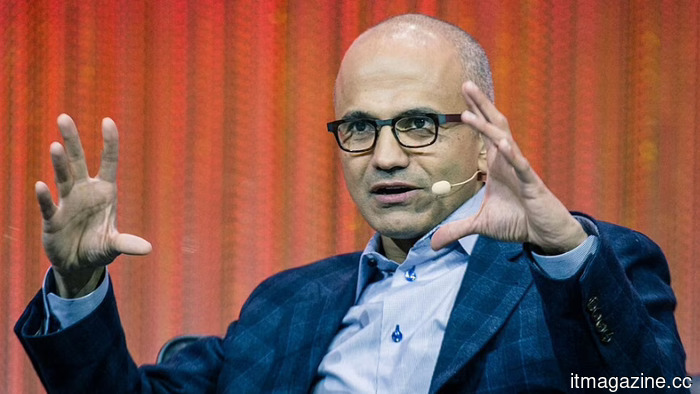
Nadella establishes a requirement for the AI surge on CNN.
Fareed Zakaria began with the question that many are contemplating: Are we experiencing an AI bubble that is beginning to burst? He pointed out that while OpenAI has promised to spend hundreds of billions, it has only generated a small fraction of that amount, indicating a disconnect in the numbers.
Nadella did not refute the concern but instead rephrased it as a challenge that AI must overcome. "This is a new general-purpose technology that will enhance productivity," he stated on CNN’s GPS. "That productivity should lead to extensive economic growth across the entire economy in terms of GDP expansion.”
He then presented a crucial condition: “If we don’t observe that growth, then we are facing a problem. Unless we see this broad economic growth, we won’t have a favorable outcome.” It is noteworthy for someone who invested $190 billion this year to articulate such a sentiment just two days prior to the earnings call.
The other side of Nadella emerged that same weekend, highlighted by accounts from Microsoft's executives. The company is struggling to ramp up its capacity quickly enough, forced into a prioritization strategy, as reported by Business Insider’s Ashley Stewart. Its own AI offerings are prioritized, with Azure customers receiving what remains.
Chief Financial Officer Amy Hood acknowledged this on the earnings call in January, explaining that the focus is first on M365 Copilot and GitHub Copilot, followed by research and development efforts. “What you ultimately get is the leftover resources directed towards meeting the growing demand for Azure capacity,” she stated. She added that had those resources been allocated to Azure, growth could have exceeded 40% rather than just 39%.
This detail is not new to those informed; a Michigan pension fund filed a lawsuit against Microsoft in June for this very reason, claiming the company concealed the diversion before a drop in January resulted in a $357 billion loss in market value. What is new is that insiders suggest the situation has worsened, with one executive telling Business Insider, “All supply is depleted once we account for frontier labs and our internal businesses like M365 and Microsoft AI.”
Here is a peculiar development: Microsoft is increasing quotas for its Azure sales teams, even amid the shortages. Reports indicate some quotas have risen by 30% this year. At the same time, Microsoft is purchasing capacity from competitors. After enduring a series of GitHub outages, Amazon assisted Microsoft. The company explored leasing Oracle’s cloud infrastructure but walked away due to security and compliance issues, and is now assessing options from Amazon and Google. “We are seeking capacity everywhere,” a source involved in the discussions said.
Internally, while the rationale is understood, the communication surrounding it is not clear. One executive bluntly questioned why Nadella would focus on expanding Adobe, an Azure client, rather than prioritizing M365 growth. “I have no idea how we’re going to convey that message to customers,” they added.
The predicament is palpable, and while Microsoft is not clearly mismanaging the situation, there are challenges. Focusing on Azure customers boosts immediate revenue, whereas dedicating resources to its products is a gamble for future success. Neglecting the first could lead to disappointing Azure growth, affecting share prices right away. On the other hand, overlooking the second means falling behind in the race that justified current spending.
This dilemma intensifies as customers can turn to alternatives. Google Cloud continues to show impressive performance, while Meta and SpaceX have also begun selling computing services. Microsoft’s clients may not be willing to remain patient as the company deliberates.
Zakaria’s second inquiry concerned China. He pointed out that most companies are not using AI for complex problems but are instead optimizing inventory systems. Thus, will the world simply opt for less expensive Chinese open-weight models, such as Moonshot’s Kimi?
Nadella countered that the source is less important than the infrastructure. “Even the Chinese models—where do you think those run? They operate on a lot of American hyperscalers globally,” he explained. He argued that because the weights are open, US companies can monitor, test, and fine-tune them. He posed the question: if a US lab fine-tunes a Chinese model and distributes it, whose model is it?
“As long as that scenario exists, we will certainly remain competitive and succeed,” he asserted, adding that while China will play a part, it is not a zero-sum competition.
Nadella has been promoting this perspective throughout the week. His pinned post discusses how to ensure “frontier benefits are distributed throughout the entire ecosystem,” given that software now incurs real marginal costs for the first time. The aim is diffusion; the reality is triage.
Three core businesses are simultaneously affected by AI developments.
The first is Microsoft 365. Knowledge workers who traditionally would start their day using Word, Excel, and PowerPoint are increasingly beginning their work within an AI tool. Gartner has predicted that AI could jeopardize the dominance of conventional
Other articles
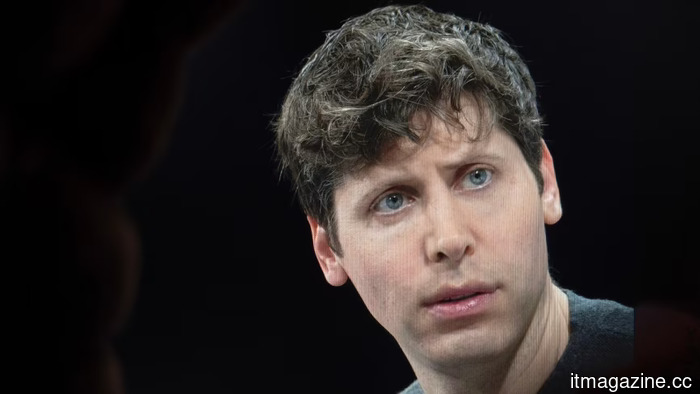 Sam Altman reiterates his ‘democratic AI’ message while Anthropic takes a firmer stance.
Sam Altman portrays the AI competition as a struggle between democracies and authoritarian regimes. Dario Amodei’s company, Anthropic, advocates for stricter chip export regulations instead of more relaxed ones.
Sam Altman reiterates his ‘democratic AI’ message while Anthropic takes a firmer stance.
Sam Altman portrays the AI competition as a struggle between democracies and authoritarian regimes. Dario Amodei’s company, Anthropic, advocates for stricter chip export regulations instead of more relaxed ones.
 The hope for extremely low-cost phones for children and seniors is essentially over due to AI.
Analysts report that the costs of memory chips for budget phones have increased by 400% this year, rendering it nearly unfeasible to manufacture devices priced under $100 profitably at this time.
The hope for extremely low-cost phones for children and seniors is essentially over due to AI.
Analysts report that the costs of memory chips for budget phones have increased by 400% this year, rendering it nearly unfeasible to manufacture devices priced under $100 profitably at this time.
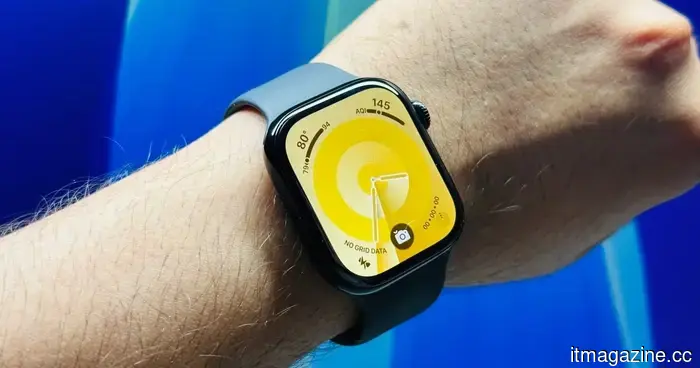 Apple's smartwatches are expected to retain their current design for at least the next year or two.
According to Bloomberg, Apple's upcoming Watch lineup will retain the same appearance as previous models, as the company emphasizes internal updates rather than design changes in its 2026 refresh.
Apple's smartwatches are expected to retain their current design for at least the next year or two.
According to Bloomberg, Apple's upcoming Watch lineup will retain the same appearance as previous models, as the company emphasizes internal updates rather than design changes in its 2026 refresh.
 Nadella establishes a stipulation regarding the AI surge on CNN.
Nadella may not refer to it as a bubble, but he states that AI needs to enhance GDP; otherwise, the outcome will be negative. In the meantime, Copilot is receiving chips ahead of Azure clients.
Nadella establishes a stipulation regarding the AI surge on CNN.
Nadella may not refer to it as a bubble, but he states that AI needs to enhance GDP; otherwise, the outcome will be negative. In the meantime, Copilot is receiving chips ahead of Azure clients.
 Thrift-maxxing jeopardizes the IPOs of OpenAI and Anthropic.
A million AI words are priced at $50 from Anthropic and 87 cents from DeepSeek. American companies are incorporating Chinese models, and the IPO valuations of the labs are under scrutiny.
Thrift-maxxing jeopardizes the IPOs of OpenAI and Anthropic.
A million AI words are priced at $50 from Anthropic and 87 cents from DeepSeek. American companies are incorporating Chinese models, and the IPO valuations of the labs are under scrutiny.
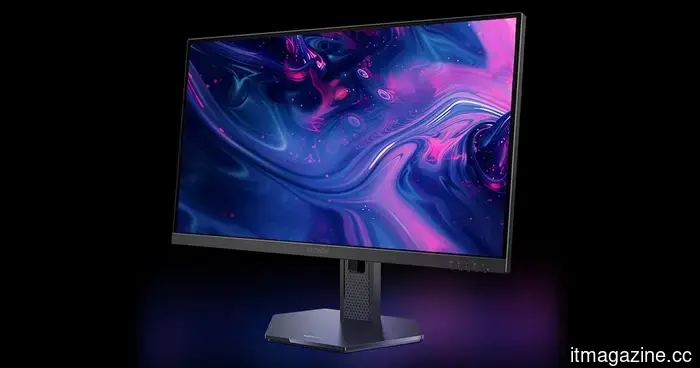 Lenovo’s $99 280Hz gaming monitor is designed for those on a tight budget.
Lenovo has introduced two budget-friendly 280Hz gaming monitors aimed at competitive gamers, spearheaded by a 23.8-inch version priced locally at approximately $99.
Lenovo’s $99 280Hz gaming monitor is designed for those on a tight budget.
Lenovo has introduced two budget-friendly 280Hz gaming monitors aimed at competitive gamers, spearheaded by a 23.8-inch version priced locally at approximately $99.
Nadella establishes a requirement for the AI surge on CNN.
Nadella refrains from labeling it a bubble, but indicates that AI needs to boost GDP, or the outcome will be unfavorable. In the meantime, Copilot receives chips prior to Azure customers.