
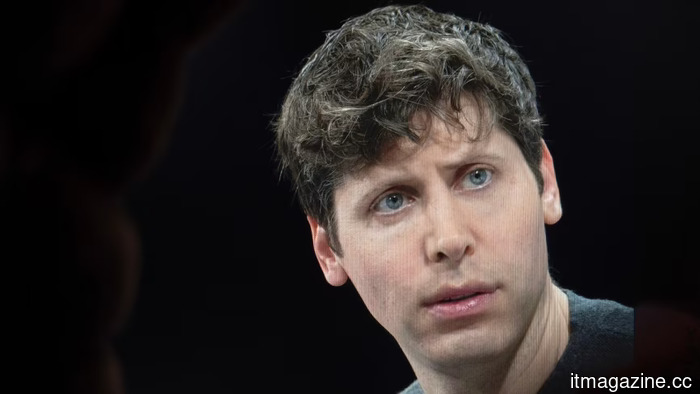
Sam Altman reiterates his ‘democratic AI’ message while Anthropic takes a firmer stance.
Sam Altman presents a distinct perspective on the competition surrounding artificial intelligence, which contrasts sharply. He asserts that the United States and its allies must develop the technology and share its advantages, or else authoritarian regimes will exploit it to strengthen and extend their influence. This dichotomy, elaborated in a 2024 Washington Post op-ed and reiterated during his congressional testimonies, is central to what he refers to as "democratic AI."
A recent article from Business Insider juxtaposes this stance against a more muted conflict with Anthropic, whose CEO Dario Amodei advocates for a U.S.-led AI coalition on fundamentally different terms. While both leaders recognize the threat posed by authoritarianism, their proposed solutions—and increasingly the way they articulate them—differ.
Altman’s approach emphasizes scaling up and transparency. He advocates for more data centers and the capacity to operate them, clearer guidelines on foreign investment, and a democratic framework that ensures allied nations benefit before authoritarian ones do. In terms of transparency, OpenAI recently released its gpt-oss models in August 2025, which were the company's first open-weight systems in years. This allows anyone to download and operate the models rather than requiring paid access.
This focus on open weights is significant for the case for democratic AI, as it represents the version of the technology that can be disseminated to allied developers and governments. However, this release felt somewhat disjointed, given OpenAI's absence from an industry letter endorsing American open models.
Altman has also proposed shared regulations, suggesting the formation of an international body to establish AI standards, akin to the organization that oversees internet domain names. He has indicated to lawmakers that the government should finance safety testing instead of restricting models through approval processes.
Conversely, Amodei takes a firmer stance on the hardware underpinning AI developments. In a January 2025 essay, following the emergence of China's DeepSeek model, he argued that "well-enforced export controls are the only way to prevent China from acquiring millions of chips." He contended that improved models should not lead to relaxed regulations, viewing DeepSeek as a validation of the existing controls’ effectiveness.
Altman frames the AI competition as a battle between democracies and authoritarian regimes, while Amodei and Anthropic advocate for stricter chip export regulations instead of easing them. The current U.S. chip export control regime has become increasingly stringent, with officials working to close loopholes that allow advanced processors to reach Chinese companies through foreign subsidiaries. Amodei occupies a more hardline position, suggesting that strict regulations could be the line separating a unipolar world from a bipolar one, indicating that the flow of chips is nearly the entire game.
In contrast, Altman's perspective is broader, arguably more advantageous for OpenAI. His “commercial diplomacy” strategy links export controls with the proactive export of American AI to allied nations, aligning closely with OpenAI's potential market. He asserts that the values embedded in a technology will accompany it, proposing that promoting a democratic version abroad serves as a security strategy.
On the other hand, Anthropic positions itself differently, advocating for keeping the most advanced hardware scarce, retaining the leading edge within a few accountable labs, and treating widespread dissemination as a risk rather than a competitive advantage. This viewpoint emphasizes safety while simultaneously being rooted in competition, and Amodei has seldom claimed otherwise.
Both positions reveal underlying self-interest, and Business Insider points out that the stark contrast is partly shaped by the observer's perspective. Altman gains from an environment eager for American models, while Anthropic stands to benefit from a climate where cautiousness and difficult replication serve as protective barriers.
It is evident that the two most scrutinized labs in the nation now articulate the same competition using different vocabularies: One advocates for the dissemination of AI to prevail, while the other focuses on restricting access to the critical components that enable such advancements.
Other articles
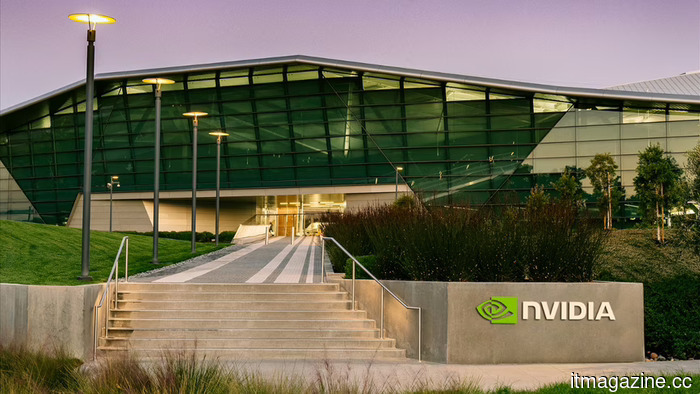 Nvidia is in discussions to support $250 billion of financing for OpenAI's data centers.
According to a report from the WSJ, Nvidia is said to be negotiating to secure approximately $250 billion in funding for an OpenAI data center in Ohio, although neither company has verified this information.
Nvidia is in discussions to support $250 billion of financing for OpenAI's data centers.
According to a report from the WSJ, Nvidia is said to be negotiating to secure approximately $250 billion in funding for an OpenAI data center in Ohio, although neither company has verified this information.
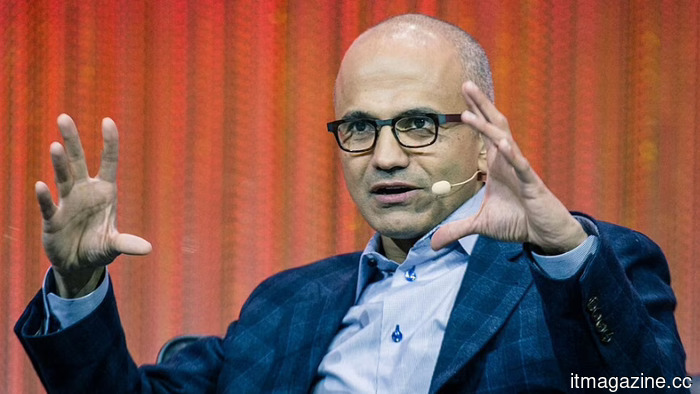 Nadella establishes a requirement for the AI surge on CNN.
Nadella refrains from labeling it a bubble, but indicates that AI needs to boost GDP, or the outcome will be unfavorable. In the meantime, Copilot receives chips prior to Azure customers.
Nadella establishes a requirement for the AI surge on CNN.
Nadella refrains from labeling it a bubble, but indicates that AI needs to boost GDP, or the outcome will be unfavorable. In the meantime, Copilot receives chips prior to Azure customers.
 A new iPhone application can detect Meta smart glasses in the vicinity.
Earlier this year, Android users were introduced to a unique privacy feature that could notify them when smart glasses were in the vicinity. Now, five months later, iPhone users have access to a comparable tool, and its title clearly expresses its stance on Meta. AntiZuck is a $2.99 iPhone application that detects Bluetooth signals linked to smart glasses and sends alerts […]
A new iPhone application can detect Meta smart glasses in the vicinity.
Earlier this year, Android users were introduced to a unique privacy feature that could notify them when smart glasses were in the vicinity. Now, five months later, iPhone users have access to a comparable tool, and its title clearly expresses its stance on Meta. AntiZuck is a $2.99 iPhone application that detects Bluetooth signals linked to smart glasses and sends alerts […]
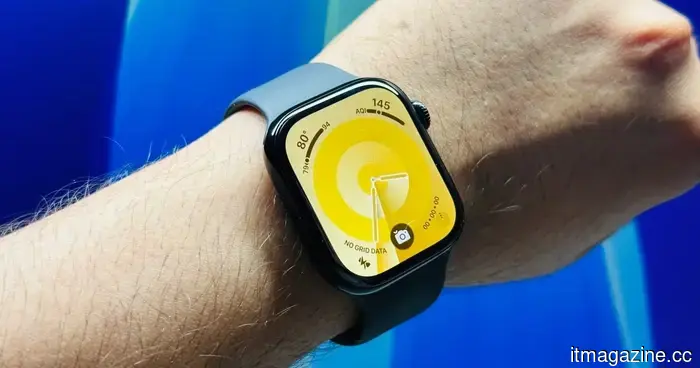 Apple's smartwatches are expected to retain their current design for at least the next year or two.
According to Bloomberg, Apple's upcoming Watch lineup will retain the same appearance as previous models, as the company emphasizes internal updates rather than design changes in its 2026 refresh.
Apple's smartwatches are expected to retain their current design for at least the next year or two.
According to Bloomberg, Apple's upcoming Watch lineup will retain the same appearance as previous models, as the company emphasizes internal updates rather than design changes in its 2026 refresh.
 The Exploration Company is in discussions to secure $300 million at a valuation of $2 billion.
The Munich-based startup developing Europe’s initial reusable space capsule is said to be negotiating to secure $300 million at a valuation exceeding $2 billion, according to the Financial Times.
The Exploration Company is in discussions to secure $300 million at a valuation of $2 billion.
The Munich-based startup developing Europe’s initial reusable space capsule is said to be negotiating to secure $300 million at a valuation exceeding $2 billion, according to the Financial Times.
 The hope for extremely low-cost phones for children and seniors is essentially over due to AI.
Analysts report that the costs of memory chips for budget phones have increased by 400% this year, rendering it nearly unfeasible to manufacture devices priced under $100 profitably at this time.
The hope for extremely low-cost phones for children and seniors is essentially over due to AI.
Analysts report that the costs of memory chips for budget phones have increased by 400% this year, rendering it nearly unfeasible to manufacture devices priced under $100 profitably at this time.
Sam Altman reiterates his ‘democratic AI’ message while Anthropic takes a firmer stance.
Sam Altman portrays the AI competition as a struggle between democracies and authoritarian regimes. Dario Amodei’s company, Anthropic, advocates for stricter chip export regulations instead of more relaxed ones.