
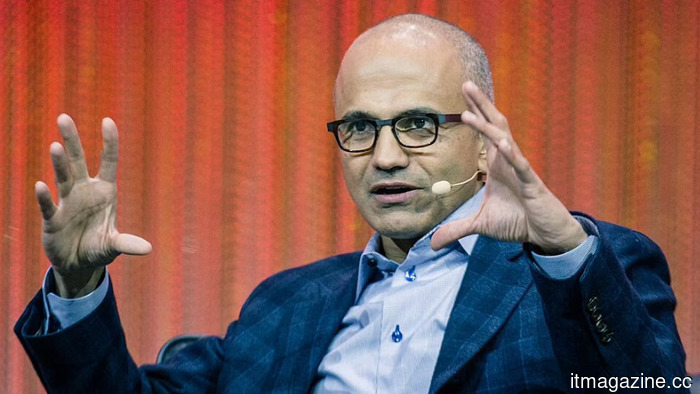
Nadella establishes a stipulation regarding the AI surge on CNN.
Fareed Zakaria began by posing a question that many are contemplating: are we experiencing an AI bubble, and is it starting to shrink? He observed that OpenAI has committed to spending hundreds of billions while earning only a small fraction of that amount, indicating that the numbers don’t seem to work out.
Nadella didn’t argue against this point but instead reframed it as a challenge that AI must overcome. "This is a new general-purpose technology that is going to drive productivity," he stated on CNN’s GPS. "That productivity needs to transform into broad economic growth that impacts the whole economy in terms of GDP."
Then came the caveat: “If we don’t see that, we’ll face a problem. Unless broad economic growth materializes, the outcome won't be favorable.” This is a notable statement from someone who has recently spent $190 billion, just two days before an earnings call.
The other side of Nadella was also present that weekend, as illustrated by the executives' accounts of the company. Microsoft is struggling to ramp up capacity quickly enough, leading to a prioritization of resources. As reported by Business Insider’s Ashley Stewart, their own AI products take precedence, leaving Azure customers with what is left.
Chief Financial Officer Amy Hood also mentioned this on January's earnings call, explaining that they allocate resources first to M365 Copilot and GitHub Copilot, then to research and development.
“What you ultimately get is the leftovers directed toward Azure capacity, which continues to see increasing demand,” she said. Had those chips been allocated to Azure instead, she pointed out that growth could have exceeded 40% instead of the reported 39%.
This information is not new for our readers. A Michigan pension fund filed a lawsuit against Microsoft in June for this reason, claiming the company concealed the diversion before a drop in January erased $357 billion in market value.
What is new is that insiders now suggest the situation has worsened. “There’s no supply remaining once you account for frontier labs and our internal operations like M365 and Microsoft AI,” one executive conveyed to Business Insider.
Selling what is unavailable
This scenario presents an unusual situation: Microsoft is raising quotas for its Azure sales staff even amid the constraints. Some quotas will see an increase of 30% this year, as reported by sources familiar with the adjustments.
Simultaneously, the company is sourcing capacity from its competitors. After a series of GitHub outages, Amazon assisted Microsoft. They also considered leasing infrastructure from Oracle before rejecting it due to security and compliance issues and are currently looking into Amazon and Google.
“We’re searching for capacity everywhere,” an insider reported.
Internally, the rationale is understood, but the messaging lacks clarity. One executive bluntly posed the question: why would Nadella prioritize expanding Adobe, an Azure client, over M365 growth?
“I have no idea how we’re going to communicate that to customers,” the individual added.
The predicament Microsoft truly faces
This dilemma is real, and it seems Microsoft isn’t mismanaging it. Prioritizing Azure customers boosts revenue now, while focusing on its own products relies on the expectation of future success.
Neglect the first group, and Azure's growth could disappoint, adversely affecting the share price quickly. Fail the second, and Microsoft risks falling behind in the very race that justified its high spending.
The urgency of this choice is amplified by the fact that customers have alternatives. Google Cloud continues to report substantial profits, while firms like Meta and SpaceX are also entering the compute market. Microsoft’s clients may not be willing to wait for the company’s decisions.
The ecosystem perspective
Zakaria’s follow-up question revolved around China. He mentioned that most companies are not using AI for advanced challenges but rather for optimizing inventory systems. Therefore, will the world opt for cheaper Chinese open-weight models, such as Moonshot’s Kimi?
Nadella responded by stating that the origin of the models is less relevant than their underlying infrastructure. “Even considering Chinese models, guess where they operate? They run on many American hyperscalers globally,” he said.
He argued that since the weights are open, American businesses can monitor, test, and improve these models. If a U.S. lab enhances a Chinese base model and sends it out, he questioned, whose model is that?
“As long as this situation persists, we will certainly remain competitive and succeed,” he asserted, noting that while China will play a role, this is not a zero-sum competition.
He has been advocating for this viewpoint all week. His pinned message expresses the need to ensure that “frontier benefits are spread throughout the whole ecosystem” now that software has a tangible marginal cost for the first time. Diffusion remains the theory, while triage is the reality.
Three companies in the affected area
The pressure isn’t just logistical. Three primary businesses now lie in the path of AI simultaneously.
The first is Microsoft 365. Knowledge workers who used to begin their day using
Other articles
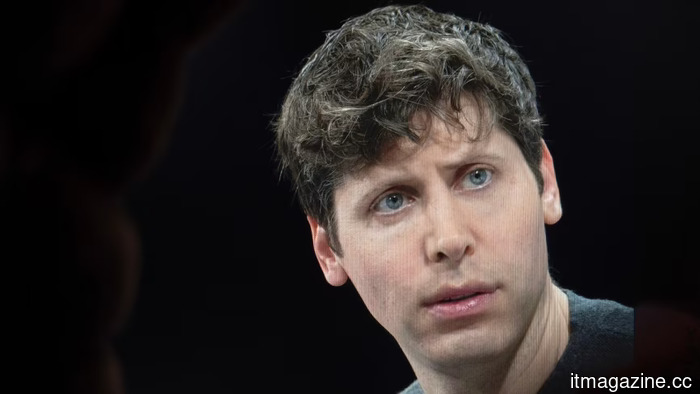 Sam Altman reiterates his ‘democratic AI’ message while Anthropic takes a firmer stance.
Sam Altman portrays the AI competition as a struggle between democracies and authoritarian regimes. Dario Amodei’s company, Anthropic, advocates for stricter chip export regulations instead of more relaxed ones.
Sam Altman reiterates his ‘democratic AI’ message while Anthropic takes a firmer stance.
Sam Altman portrays the AI competition as a struggle between democracies and authoritarian regimes. Dario Amodei’s company, Anthropic, advocates for stricter chip export regulations instead of more relaxed ones.
 God of War Laufey has finally received a release date, and there's positive news for fans of Kratos as well.
Santa Monica Studio has announced that God of War Laufey is set to be released on February 16, 2027, and has disclosed that another title featuring Kratos is currently in development.
God of War Laufey has finally received a release date, and there's positive news for fans of Kratos as well.
Santa Monica Studio has announced that God of War Laufey is set to be released on February 16, 2027, and has disclosed that another title featuring Kratos is currently in development.
 The European operator Eutelsat is poised to receive $504 million as part of the US C-band spectrum initiative.
Eutelsat is set to receive $504 million for clearing the upper C-band airwaves as part of the FCC's new spectrum auction plan in the US, with the payment scheduled for 2031.
The European operator Eutelsat is poised to receive $504 million as part of the US C-band spectrum initiative.
Eutelsat is set to receive $504 million for clearing the upper C-band airwaves as part of the FCC's new spectrum auction plan in the US, with the payment scheduled for 2031.
 The latest significant upgrade to Google Maps for Android Auto is being rolled out to more users.
Google is enhancing Immersive Navigation and the live speedometer in Android Auto, providing more users with improved maps and better driving information.
The latest significant upgrade to Google Maps for Android Auto is being rolled out to more users.
Google is enhancing Immersive Navigation and the live speedometer in Android Auto, providing more users with improved maps and better driving information.
 Nvidia is in discussions to support $250 billion of financing for OpenAI's data centers.
According to a report from the WSJ, Nvidia is said to be negotiating to secure approximately $250 billion in funding for an OpenAI data center in Ohio, although neither company has verified this information.
Nvidia is in discussions to support $250 billion of financing for OpenAI's data centers.
According to a report from the WSJ, Nvidia is said to be negotiating to secure approximately $250 billion in funding for an OpenAI data center in Ohio, although neither company has verified this information.
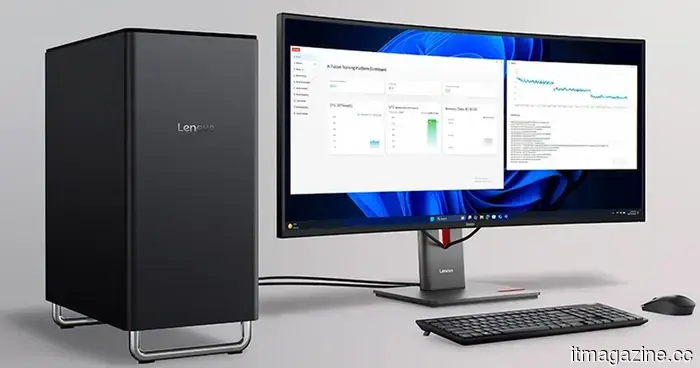 Lenovo's upcoming ThinkCenter desktop is set to be released, but the price may cause you to do a double-take.
Lenovo's ThinkCentre X desktop is set to launch in the US offering up to 256GB of RAM, dual RTX 5060 Ti graphics cards, with a top-tier configuration priced at almost $14,000.
Lenovo's upcoming ThinkCenter desktop is set to be released, but the price may cause you to do a double-take.
Lenovo's ThinkCentre X desktop is set to launch in the US offering up to 256GB of RAM, dual RTX 5060 Ti graphics cards, with a top-tier configuration priced at almost $14,000.
Nadella establishes a stipulation regarding the AI surge on CNN.
Nadella may not refer to it as a bubble, but he states that AI needs to enhance GDP; otherwise, the outcome will be negative. In the meantime, Copilot is receiving chips ahead of Azure clients.