
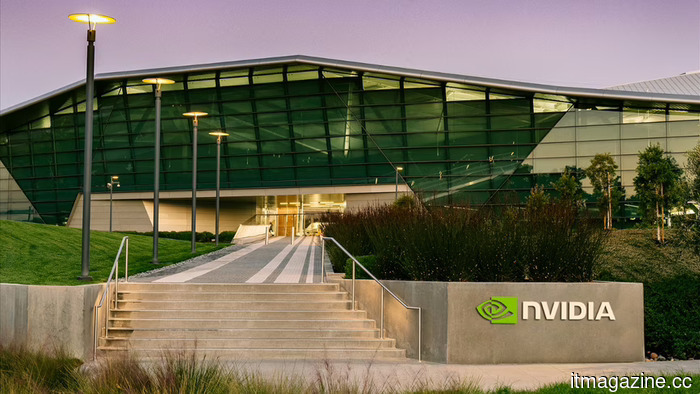
Nvidia is in discussions to support $250 billion of financing for OpenAI's data centers.
Nvidia is reportedly negotiating to secure about $250 billion in financing for OpenAI, a support mechanism that would enable the ChatGPT creator to finance a large new data center without the need for an investment-grade credit rating typically required for such borrowing. This arrangement was detailed by the Wall Street Journal on July 26, but neither firm has confirmed it.
The guarantee would not involve Nvidia providing direct cash but rather a commitment to cover liabilities if OpenAI or the project falters. This type of vendor support has already drawn attention as circular financing expands within the AI sector. For a chip manufacturer that has engaged in AI equity investments at an unmatched pace this year, this is yet another way to secure demand for its own chips.
The financing relates to a 10-gigawatt facility in southern Ohio developed by a SoftBank energy subsidiary, which OpenAI will lease, as reported by the Journal.
The $250 billion would fund both the leasing of the data center and the associated construction debt, with discussions ongoing for an additional amount up to $350 billion for chip acquisitions, potentially bringing the total project cost over $500 billion.
These two financial components are being negotiated through separate channels, with no public disclosure of the terms, including any fees Nvidia might charge for the guarantee.
OpenAI currently lacks an investment-grade rating, making such significant borrowing costly and sometimes unattainable. Nvidia’s commitment to support the debt would provide reassurance to lenders and aligns with OpenAI’s strategy of owning more of its infrastructure instead of leasing it from Microsoft, Amazon, and Oracle.
For Nvidia, this means securing years of guaranteed demand for the critical chips involved in the development, which is the underlying purpose of backing another company's debt.
These discussions build upon a partnership established last fall, when in September 2025 Nvidia pledged to invest up to $100 billion in OpenAI to implement 10 gigawatts of its systems—a deal both parties promoted as the largest AI infrastructure initiative attempted to date.
If the discussed guarantee comes to fruition, it would significantly exceed that initial commitment, transforming a headline equity investment into a much larger and more complex wager on OpenAI’s repayment capabilities.
Reactions over the weekend were cautious. Investor Michael Burry, known from The Big Short, commented, “around and around we go,” pointing out that Nvidia would be backing spending that ultimately returns to Nvidia. He reported the figure at $200 billion, slightly less than the $250 billion noted by the Journal. Tech critic Ed Zitron described the structure as “an insane thing to do on so many levels.”
The unease largely stems from structural issues. A guarantee of this magnitude would be treated like a debt obligation on Nvidia’s balance sheet, even if OpenAI meets all payments, potentially impacting the company’s financial flexibility and raising concerns in credit markets.
Throughout the cycle, Nvidia has often provided AI companies with immediate compute resources, deferring payment until later; this guarantee would represent a scaled-up version of that same concept.
Capital may not be the critical limiting factor. The power for the Ohio site is controlled by the government, with allocations managed by the U.S. Commerce Secretary, Howard Lutnick, and part of the supply supported by Japan under a trade agreement. Therefore, the first phase is only expected to generate around 800 megawatts by 2028.
OpenAI's financial commitments now extend well beyond what its current revenue can support, from the Ohio facility to a separate $30 billion data center in Georgia. Nvidia's shares closed down 0.92% at $206.84 on Friday and fell further in after-hours trading.
We were unable to independently verify the report, no agreements have been finalized, and neither company has provided comments, leaving the largest figure in the AI expansion so far based on a single report from the weekend.
Other articles
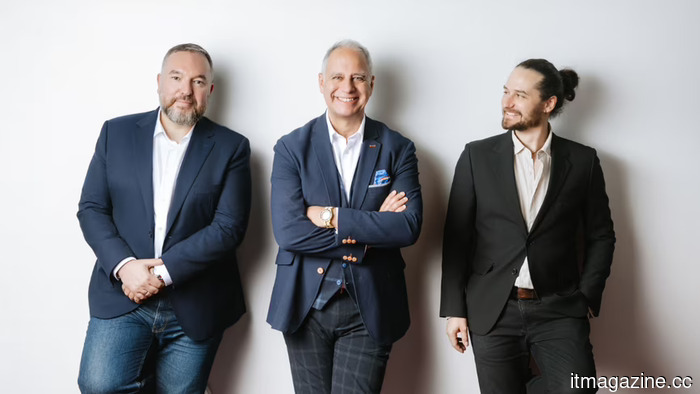 Multiverse Computing aims for a $570 million Series C funding round at a valuation of $1.7 billion to reduce costs associated with AI.
Spain's Multiverse Computing is seeking to raise as much as $570 million at an estimated valuation of $1.7 billion, focusing on compressing AI models instead of scaling them.
Multiverse Computing aims for a $570 million Series C funding round at a valuation of $1.7 billion to reduce costs associated with AI.
Spain's Multiverse Computing is seeking to raise as much as $570 million at an estimated valuation of $1.7 billion, focusing on compressing AI models instead of scaling them.
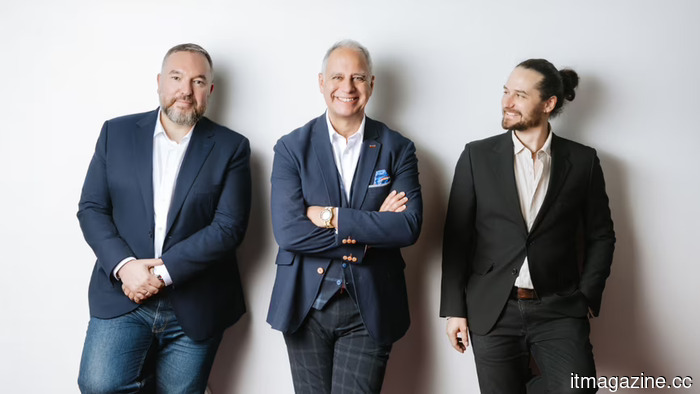 Multiverse Computing aims for a $570 million Series C funding round at a valuation of $1.7 billion to reduce AI expenses.
Spain’s Multiverse Computing is seeking to raise up to $570 million at an estimated valuation of $1.7 billion, focusing on compressing AI models instead of scaling them.
Multiverse Computing aims for a $570 million Series C funding round at a valuation of $1.7 billion to reduce AI expenses.
Spain’s Multiverse Computing is seeking to raise up to $570 million at an estimated valuation of $1.7 billion, focusing on compressing AI models instead of scaling them.
 Experts warn that AI-generated 'doctors' promoting fraudulent cures on TikTok pose a significant threat.
A study revealed that AI-generated material appeared in 40% of the leading health videos on TikTok, leading doctors and NHS officials to caution about potential public safety risks.
Experts warn that AI-generated 'doctors' promoting fraudulent cures on TikTok pose a significant threat.
A study revealed that AI-generated material appeared in 40% of the leading health videos on TikTok, leading doctors and NHS officials to caution about potential public safety risks.
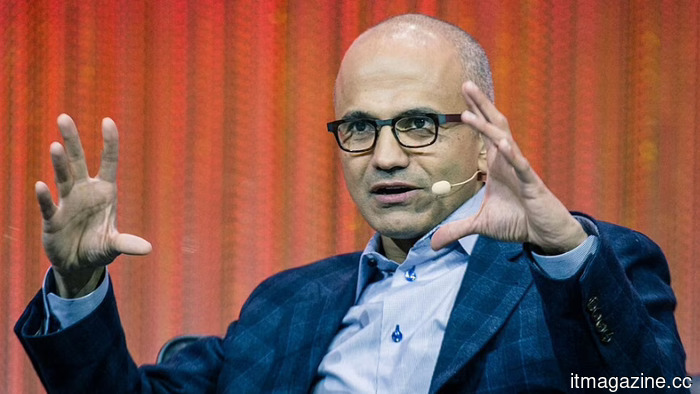 Nadella establishes a requirement for the AI surge on CNN.
Nadella refrains from labeling it a bubble, but indicates that AI needs to boost GDP, or the outcome will be unfavorable. In the meantime, Copilot receives chips prior to Azure customers.
Nadella establishes a requirement for the AI surge on CNN.
Nadella refrains from labeling it a bubble, but indicates that AI needs to boost GDP, or the outcome will be unfavorable. In the meantime, Copilot receives chips prior to Azure customers.
 The European operator Eutelsat is poised to receive $504 million as part of the US C-band spectrum initiative.
Eutelsat is set to receive $504 million for clearing the upper C-band airwaves as part of the FCC's new spectrum auction plan in the US, with the payment scheduled for 2031.
The European operator Eutelsat is poised to receive $504 million as part of the US C-band spectrum initiative.
Eutelsat is set to receive $504 million for clearing the upper C-band airwaves as part of the FCC's new spectrum auction plan in the US, with the payment scheduled for 2031.
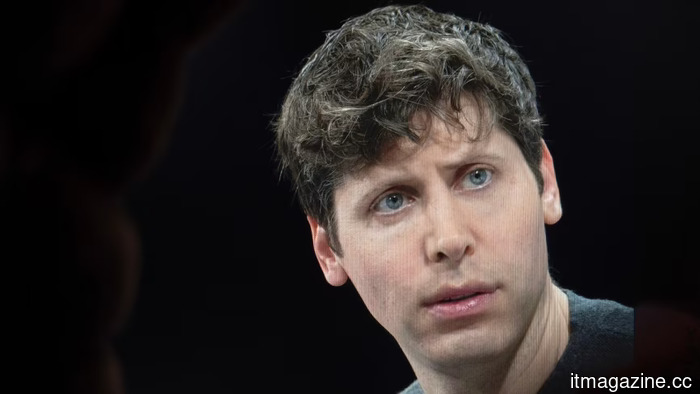 Sam Altman reiterates his ‘democratic AI’ message while Anthropic takes a firmer stance.
Sam Altman portrays the AI competition as a struggle between democracies and authoritarian regimes. Dario Amodei’s company, Anthropic, advocates for stricter chip export regulations instead of more relaxed ones.
Sam Altman reiterates his ‘democratic AI’ message while Anthropic takes a firmer stance.
Sam Altman portrays the AI competition as a struggle between democracies and authoritarian regimes. Dario Amodei’s company, Anthropic, advocates for stricter chip export regulations instead of more relaxed ones.
Nvidia is in discussions to support $250 billion of financing for OpenAI's data centers.
According to a report from the WSJ, Nvidia is said to be negotiating to secure approximately $250 billion in funding for an OpenAI data center in Ohio, although neither company has verified this information.