

The European operator Eutelsat is poised to receive $504 million as part of the US C-band spectrum initiative.
Eutelsat is set to receive $504 million, approximately €443 million, for relinquishing a portion of American airwaves. This payment is part of a compensation scheme aimed at clearing satellite companies for the upcoming significant wireless auction in the United States.
The compensation is linked to the Federal Communications Commission’s directive to redistribute upper C-band spectrum for mobile network use. On July 22, the regulator voted to auction off 160 MHz of this band, specifically from 3.98 to 4.14 GHz, providing it to carriers that need additional mid-band capacity. When combined with spectrum already in use, this results in a 440 MHz “super band” for 5G, with the FCC aiming to complete the sale by July 2027.
For Eutelsat, this sum is more of a compensation than a windfall. The company operates the OneWeb constellation in low-Earth orbit along with a fleet of geostationary satellites, utilizing the C-band to deliver television and data services. Exiting part of this band necessitates relocating customers, launching replacement capacity, and dealing with the resulting disruptions.
The $504 million serves as an incentive payment, contingent upon Eutelsat meeting two clearing deadlines, with the funds expected to be received in 2031. The FCC has also pledged to reimburse the “reasonable and necessary” expenses associated with the transition. Eutelsat's clearing costs are estimated at around $750 million, meaning the incentive functions as an additional amount on top of reimbursed expenses rather than covering the entire cost.
Eutelsat is not the primary recipient of these proceeds. SES, the Luxembourg operator moving significantly more capacity, is projected to receive approximately $5.6 billion in gross incentive payments. Other smaller incumbents, such as Telesat and Hispasat, are also set to receive payments for clearing the band on time.
This situation mirrors the FCC’s initial C-band clearing in 2020, during which operators divided about $9.7 billion in expedited relocation payments, primarily benefiting SES and Intelsat, which have since merged. The current repurposing involves 160 MHz, roughly 60% above the minimum set by Congress, indicative of US carriers' growing demand for mid-band spectrum.
However, not all requests were fulfilled. The FCC rejected a proposal to reserve any part of the band for satellite broadband, turning down SpaceX's request to allocate capacity for its direct-to-device plans. Instead, the airwaves will be auctioned to terrestrial carriers, consistent with the agency’s approach since the initial C-band sale.
Jean-François Fallacher, Eutelsat’s chief executive, expressed approval of the FCC's order, calling it a significant milestone for the US satellite and telecommunications sectors.
The clearing process is on a strict timeline, requiring the top 75 markets to be vacated by December 30, 2030, and the remaining markets cleared by June 30, 2031. The FCC anticipates that the auction will generate tens of billions of dollars for the US Treasury; the previous C-band auction in 2021 yielded around $81 billion. Chairman Brendan Carr referred to the band as “a Rubik’s cube of wireless, aviation, satellite, and media stakeholders.”
There is an ironic twist regarding the timing. Eutelsat is central to Europe's effort to establish a sovereign competitor to Starlink, being the owner of OneWeb and a key player in the EU’s planned IRIS² constellation, which has around €10.6 billion in public and private backing aimed at providing the bloc with secure connectivity by the decade's end. The financial gain from an American spectrum sale highlights that even Europe’s attempts to compete with Elon Musk still depend on the US market for financial stability.
The final order still leaves uncertainties. The FCC has not released a complete schedule of payments for each operator, and the exact reimbursements each company may claim will be determined later via a clearinghouse. Analysts estimate that auction proceeds could range between $30 billion and $75 billion, reflecting how dependent this is on the demand from carriers at that time.
For Eutelsat, which relied on investors, including the French government during a capital increase in 2025 as it assimilated OneWeb, any confirmed inflow is beneficial. However, at the moment, the $504 million remains a promise set for 2031, dependent on the timely relocation of satellites and the clearance of markets. The auction needs to take place first.
Other articles
 Experts warn that AI-generated 'doctors' promoting fraudulent cures on TikTok pose a significant threat.
A study revealed that AI-generated material appeared in 40% of the leading health videos on TikTok, leading doctors and NHS officials to caution about potential public safety risks.
Experts warn that AI-generated 'doctors' promoting fraudulent cures on TikTok pose a significant threat.
A study revealed that AI-generated material appeared in 40% of the leading health videos on TikTok, leading doctors and NHS officials to caution about potential public safety risks.
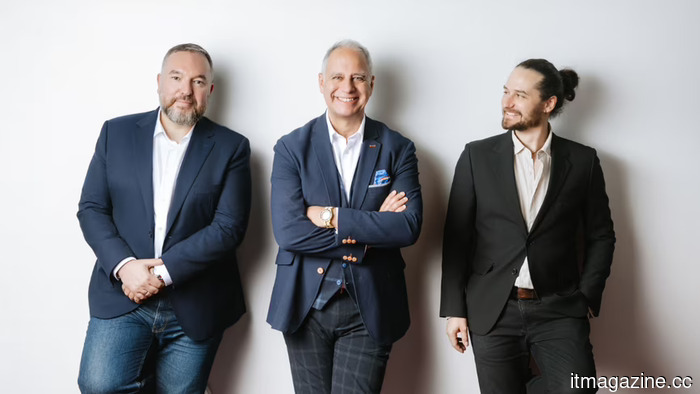 Multiverse Computing aims for a $570 million Series C funding round at a valuation of $1.7 billion to reduce costs associated with AI.
Spain's Multiverse Computing is seeking to raise as much as $570 million at an estimated valuation of $1.7 billion, focusing on compressing AI models instead of scaling them.
Multiverse Computing aims for a $570 million Series C funding round at a valuation of $1.7 billion to reduce costs associated with AI.
Spain's Multiverse Computing is seeking to raise as much as $570 million at an estimated valuation of $1.7 billion, focusing on compressing AI models instead of scaling them.
 I played Halo: Campaign Evolved, and its cutscenes illustrate what the Halo series might have looked like.
Halo is marking its 25th anniversary with a stunning remake of Combat Evolved, and the fresh cinematics have rekindled a lingering desire: I still yearn for a true Halo series.
I played Halo: Campaign Evolved, and its cutscenes illustrate what the Halo series might have looked like.
Halo is marking its 25th anniversary with a stunning remake of Combat Evolved, and the fresh cinematics have rekindled a lingering desire: I still yearn for a true Halo series.
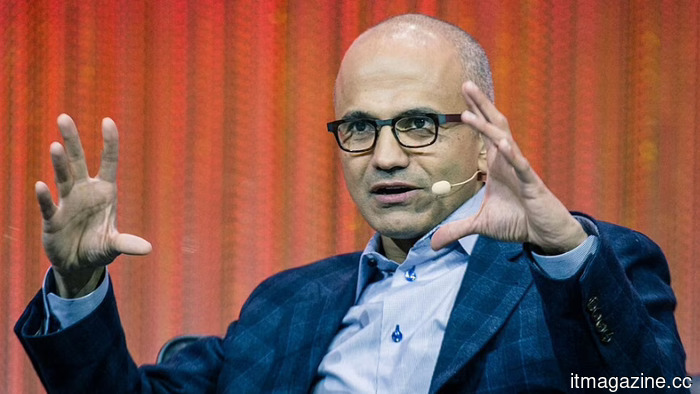 Nadella establishes a requirement for the AI surge on CNN.
Nadella refrains from labeling it a bubble, but indicates that AI needs to boost GDP, or the outcome will be unfavorable. In the meantime, Copilot receives chips prior to Azure customers.
Nadella establishes a requirement for the AI surge on CNN.
Nadella refrains from labeling it a bubble, but indicates that AI needs to boost GDP, or the outcome will be unfavorable. In the meantime, Copilot receives chips prior to Azure customers.
 Xbox is addressing one of the largest frustrations with download speeds in the PC app.
Microsoft is trialing a Smart Download Client for Xbox that automatically connects to the fastest download server, which promises to speed up game installations on both PC and consoles.
Xbox is addressing one of the largest frustrations with download speeds in the PC app.
Microsoft is trialing a Smart Download Client for Xbox that automatically connects to the fastest download server, which promises to speed up game installations on both PC and consoles.
 CXMT surges 466% to lead China's onshore market.
CXMT finished its first day of trading in Shanghai with a 466% increase, giving it a market capitalization of approximately $485 billion. Nomura believes it could rise an additional 1,239%. In contrast, Morningstar values it at only a third of that amount.
CXMT surges 466% to lead China's onshore market.
CXMT finished its first day of trading in Shanghai with a 466% increase, giving it a market capitalization of approximately $485 billion. Nomura believes it could rise an additional 1,239%. In contrast, Morningstar values it at only a third of that amount.
The European operator Eutelsat is poised to receive $504 million as part of the US C-band spectrum initiative.
Eutelsat is set to receive $504 million for clearing the upper C-band airwaves as part of the FCC's new spectrum auction plan in the US, with the payment scheduled for 2031.