

I played Halo: Campaign Evolved, and its cutscenes illustrate what the Halo series might have looked like.
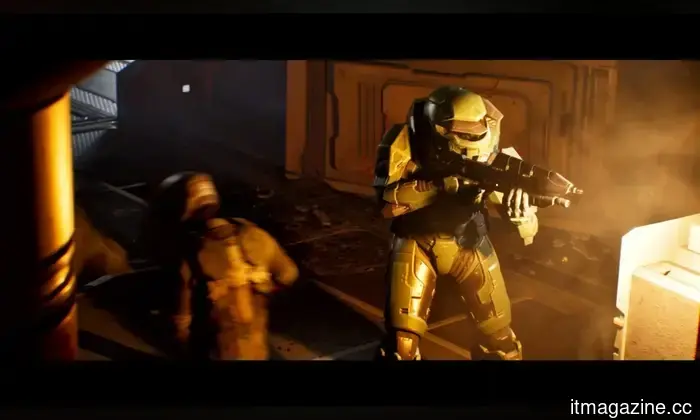
There’s a point early in Halo: Campaign Evolved where I momentarily stopped viewing the remake as just a game. While observing one of its newly reconstructed cutscenes, the cinematic portrayal of Master Chief, Captain Keyes, Cortana, and the Pillar of Autumn, along with the vastness surrounding them, felt more cinematic than ever.
Having played the original Halo: Combat Evolved in the early 2000s, I recalled it as I thought it looked and felt. That first installment introduced me to intergalactic warfare long before I encountered Star Wars, and the cinematic enhancements tastefully contributed minor touches that elevate Bungie’s original work from years past.
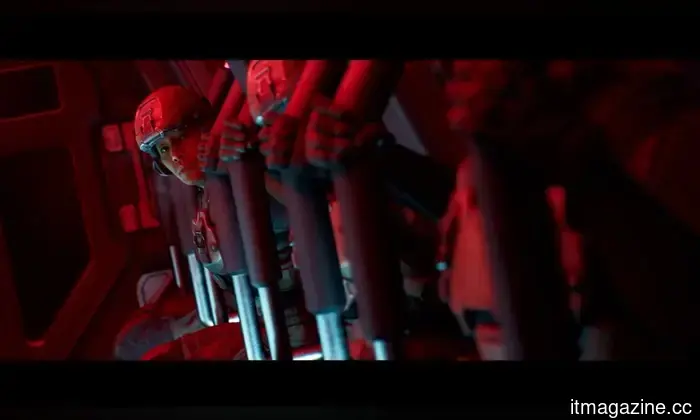
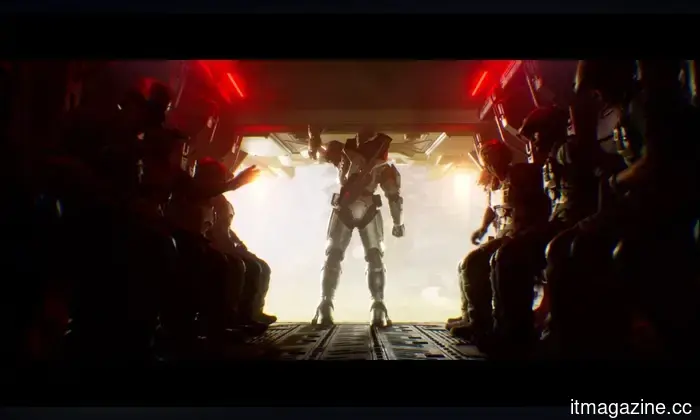
The improved framing, lighting, and character models in this pre-rendered presentation were impressive, until one frustrating thought crossed my mind: why haven’t we seen a proper Halo series that resembles this?
Halo is celebrating its 25th anniversary this year. The franchise boasts decades of games, novels, comics, animations, short stories, and a multitude of characters to draw upon. Campaign Evolved has somehow made the lack of a superb screen adaptation feel even more exasperating.
Halo has always had a cinematic essence.
Bungie’s Halo games have typically conveyed their stories through in-engine cinematics. This approach fostered a consistent visual identity, since the characters featured in story sequences were the same ones players controlled moments later. It also allowed for comedic interactions and experimentation, but that’s beside the point.
Halo Studios
The series has sometimes adopted a more cinematic approach since then. Halo 2 Anniversary is well-known for replacing its original cutscenes with stunning pre-rendered sequences, and now Campaign Evolved offers a similar treatment to the original adventure with entirely reimagined scenes. I was surprised to see this method applied to Combat Evolved.
The opening aboard the Pillar of Autumn has all the elements a sci-fi series needs. Humanity is engaged in a losing battle against a formidable alien force. A mysterious ringworld appears in space. You can sense the desperation among UNSC personnel. In the midst of the turmoil, Master Chief emerges as an immense, almost legendary figure. Campaign Evolved captures these moments with such visual clarity that I could easily envision them as part of a high-budget series.
Halo tried to reinvent itself too quickly.
We’ve already seen a costly live-action effort. Paramount+ launched Halo in 2022 after years of development. I truly wanted to enjoy it. While there were aspects I appreciated, including some of the production design, Covenant battles, and moments of military sci-fi spectacle that I had imagined, the overall creative direction lost me.
The series crafted its own Silver Timeline, diverging from the established continuity of the games, novels, and comics. This provided the writers with the freedom to reshape characters and events, which isn’t necessarily a bad thing. However, when the show strayed significantly from the core essence of pivotal characters like Master Chief, it caused the experience to come to a standstill for me.
Halo Studios
I won’t delve into all the details of my experience with the show, but I will acknowledge that Season 2 aimed to build upon some of the strengths of the first. The action sequences improved, and we eventually reached the Fall of Reach. Yet, the series continued to progress through its own interpretation of Halo before Paramount ultimately canceled it after two seasons.
Creatively adapting an established property can be executed excellently— the first episode of Star Wars: Visions serves as a notable example. It reimagined the entire concept in a unique context and style, and did so remarkably well.
The key difference between Halo and Star Wars is that the former has not truly had the opportunity to soar in this medium. While Halo was already a major name in gaming, it primarily experimented with animation, live-action miniseries, and other smaller projects. Therefore, when its highly anticipated first significant TV adaptation arrived, taking the narrative in such a drastically different direction diminished its potential.
We know Halo can thrive outside of games.
Some of my favorite Halo narratives are not tied to gameplay. Halo Legends explored the universe with animation, shifting between various characters, eras, and artistic styles. Forward Unto Dawn adopted a more intimate live-action approach, following UNSC cadets during the early Human-Covenant War before incorporating Master Chief into the storyline.
Halo Studios
Neither project needed to alter the foundational aspects of Halo. In particular, Forward Unto Dawn highlighted how effectively Chief can contribute when he enters someone else's story. The character possesses immense presence, particularly because we see him through the eyes of ordinary characters.
Moreover, the novels further expand the universe. The Fall of Reach alone includes the Spartan-II program, Chief’s early life, Dr. Halsey, the Covenant war, Blue Team, and the devastation of a critical human colony, while Ghosts of Onyx could explore an entirely different segment of the Spartan program. There’s a wealth of established stories ripe

Other articles
 The European operator Eutelsat is poised to receive $504 million as part of the US C-band spectrum initiative.
Eutelsat is set to receive $504 million for clearing the upper C-band airwaves as part of the FCC's new spectrum auction plan in the US, with the payment scheduled for 2031.
The European operator Eutelsat is poised to receive $504 million as part of the US C-band spectrum initiative.
Eutelsat is set to receive $504 million for clearing the upper C-band airwaves as part of the FCC's new spectrum auction plan in the US, with the payment scheduled for 2031.
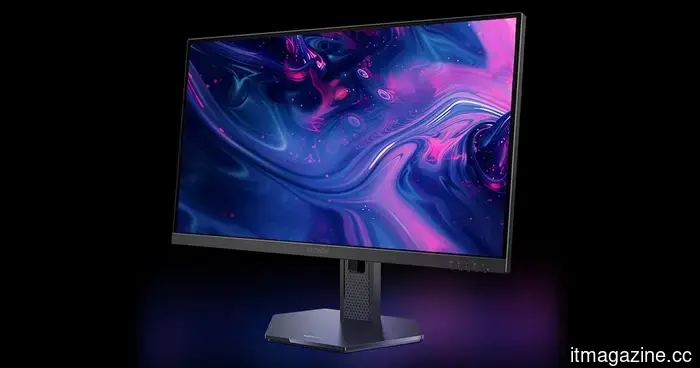 Lenovo’s $99 280Hz gaming monitor is designed for those on a tight budget.
Lenovo has introduced two budget-friendly 280Hz gaming monitors aimed at competitive gamers, spearheaded by a 23.8-inch version priced locally at approximately $99.
Lenovo’s $99 280Hz gaming monitor is designed for those on a tight budget.
Lenovo has introduced two budget-friendly 280Hz gaming monitors aimed at competitive gamers, spearheaded by a 23.8-inch version priced locally at approximately $99.
 The aspiration for extremely low-cost phones intended for children and seniors is, in essence, over, primarily due to AI.
Analysts report that the expenses for memory chips in budget smartphones have skyrocketed by 400% this year, rendering it virtually unfeasible to profitably produce devices priced under $100 at this time.
The aspiration for extremely low-cost phones intended for children and seniors is, in essence, over, primarily due to AI.
Analysts report that the expenses for memory chips in budget smartphones have skyrocketed by 400% this year, rendering it virtually unfeasible to profitably produce devices priced under $100 at this time.
 Multiverse Computing aims for a $570 million Series C funding round at a valuation of $1.7 billion to reduce AI expenses.
Spain’s Multiverse Computing is seeking to raise up to $570 million at an estimated valuation of $1.7 billion, focusing on compressing AI models instead of scaling them.
Shein reports a decline in profits and a quarterly loss before its IPO in Hong Kong.
Shein's preliminary prospectus indicates projected revenue of $41.8 billion for 2025, a profit decline of 38.7%, and a quarterly loss of $99 million due to the impact of tariffs.
Multiverse Computing aims for a $570 million Series C funding round at a valuation of $1.7 billion to reduce AI expenses.
Spain’s Multiverse Computing is seeking to raise up to $570 million at an estimated valuation of $1.7 billion, focusing on compressing AI models instead of scaling them.
Shein reports a decline in profits and a quarterly loss before its IPO in Hong Kong.
Shein's preliminary prospectus indicates projected revenue of $41.8 billion for 2025, a profit decline of 38.7%, and a quarterly loss of $99 million due to the impact of tariffs.
 Experts warn that AI-generated 'doctors' promoting fraudulent cures on TikTok pose a significant threat.
A study revealed that AI-generated material appeared in 40% of the leading health videos on TikTok, leading doctors and NHS officials to caution about potential public safety risks.
Experts warn that AI-generated 'doctors' promoting fraudulent cures on TikTok pose a significant threat.
A study revealed that AI-generated material appeared in 40% of the leading health videos on TikTok, leading doctors and NHS officials to caution about potential public safety risks.
I played Halo: Campaign Evolved, and its cutscenes illustrate what the Halo series might have looked like.
Halo is marking its 25th anniversary with a stunning remake of Combat Evolved, and the fresh cinematics have rekindled a lingering desire: I still yearn for a true Halo series.