
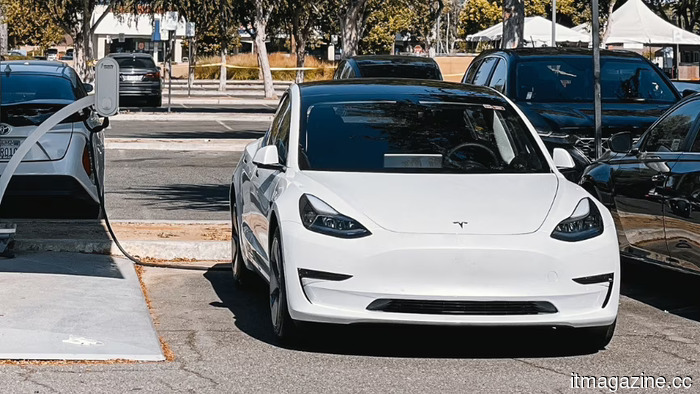
Tesla sold 25% more vehicles but experienced a 57% decrease in operating profit. The cause is attributed to spending on AI.
Tesla's Q2 revenue reached $28.24 billion, a 26% increase, with a record delivery of 480,126 vehicles. However, operating income dropped 57% to $398 million. Research and development expenses surged 49% to $2.37 billion. The adjusted earnings per share were $0.33, falling short of the $0.51 estimate.
In the second quarter, Tesla achieved a record delivery of 480,126 vehicles, leading to a revenue increase of 26% year-over-year, totaling $28.24 billion. Operating income decreased by 57% to $398 million, and the adjusted earnings of 33 cents per share significantly missed the 51-cent expectation. After hours, shares declined by approximately 4%.
The disparity between revenue and profit reveals key issues. Automotive gross margin fell to 16.3%, and average revenue per vehicle decreased from $45,345 to $42,730. Revenue from regulatory credits, which Tesla earns by selling emissions credits to other automakers, plummeted 67% year-on-year to $146 million. The Model 3 and Model Y made up 467,762 of the total deliveries, indicating that Tesla's main business relies on two lower-priced cars with reduced margins as the credits that previously bolstered profits diminish.
On the other hand, Tesla invested $2.37 billion in research and development, an increase of 49%, directing funds towards AI infrastructure, its robotaxi network, and the Optimus humanoid robot. Total capital expenditures reached $5.8 billion, and cash outflows surpassed cash inflows by $1.1 billion. An unrealized gain of about $1 billion from Tesla's investment in SpaceX painted a more favorable picture for the quarter than the operational performance might warrant. Tesla's robotaxis experienced crashes at a rate four times higher than human drivers, and the full self-driving (FSD) subscriber base reportedly neared 1.5 million users, but neither robotaxis nor the Optimus robot are generating substantial revenue yet.
The energy storage sector, however, showed promise, deploying a record 13.5 gigawatt-hours of battery capacity. Nevertheless, the fundamental issue persists: Tesla is selling more vehicles while earning less from each one. Rivian's R2 has entered the same price range as Tesla's key offerings, leading to structural competitive pressure on Model 3 and Model Y pricing. Tesla is urging investors to accept declining automotive profits while it invests heavily in ventures that have yet to yield earnings. The stock market's response indicates that Wall Street's patience may be waning.
Other articles
 Musk expresses gratitude to Micron for the chips and establishes a fabrication facility to take its place.
Elon Musk expressed gratitude to Micron for a 'substantial' memory-chip allocation during Tesla's earnings call, while simultaneously developing Terafab, a $55 billion chip manufacturing facility for Tesla and SpaceX.
Musk expresses gratitude to Micron for the chips and establishes a fabrication facility to take its place.
Elon Musk expressed gratitude to Micron for a 'substantial' memory-chip allocation during Tesla's earnings call, while simultaneously developing Terafab, a $55 billion chip manufacturing facility for Tesla and SpaceX.
 The postponement of Google's Gemini highlights a more significant issue: employee morale.
Insiders informed Axios that low morale, a disputed Pentagon agreement, and a talent drain are hindering Google's AI models, leading to negative cash flow. Google refutes these claims.
The postponement of Google's Gemini highlights a more significant issue: employee morale.
Insiders informed Axios that low morale, a disputed Pentagon agreement, and a talent drain are hindering Google's AI models, leading to negative cash flow. Google refutes these claims.
 AI is starting to be the source of our emotional support, and that concerns me.
A study revealed that top AI chatbots can surpass humans in alleviating anger and fear, prompting unsettling questions about whom we rely on more during challenging times.
AI is starting to be the source of our emotional support, and that concerns me.
A study revealed that top AI chatbots can surpass humans in alleviating anger and fear, prompting unsettling questions about whom we rely on more during challenging times.
 The surge in artificial intelligence has led to an 80% increase in investment proposals in Thailand.
Foreign investors sought to invest $40.6 billion in Thailand in the first half of the year, an increase of 80%, with artificial intelligence and data centers accounting for three-quarters of the total investment.
The surge in artificial intelligence has led to an 80% increase in investment proposals in Thailand.
Foreign investors sought to invest $40.6 billion in Thailand in the first half of the year, an increase of 80%, with artificial intelligence and data centers accounting for three-quarters of the total investment.
 Jensen Huang describes the concern over job losses due to AI as 'utter nonsense.'
Nvidia's Jensen Huang stated to Axios that concerns over widespread job losses due to AI are 'utter nonsense'. He explained that it's important not to confuse your specific tasks with your overall job.
Jensen Huang describes the concern over job losses due to AI as 'utter nonsense.'
Nvidia's Jensen Huang stated to Axios that concerns over widespread job losses due to AI are 'utter nonsense'. He explained that it's important not to confuse your specific tasks with your overall job.
Tesla sold 25% more vehicles but experienced a 57% decrease in operating profit. The cause is attributed to spending on AI.
In Q2, Tesla's revenue reached $28.24 billion, marking a 26% year-over-year increase, with 480,126 deliveries. However, operating income plummeted by 57% to $398 million. Research and development expenditures surged by 49% to $2.37 billion, focusing on AI and robotics.