

The postponement of Google's Gemini highlights a more significant issue: employee morale.
Google is falling behind in a competition it once dominated, and the issue may lie with its workforce. Six current and former DeepMind staff informed Axios that low morale is hindering the lab’s model releases, Axios reported.
The immediate issue is with Gemini 3.5 Pro, Google's most advanced model, which is reportedly several months late, as noted by Bloomberg. This week, Google did release a series of smaller, more affordable models, which received mixed feedback. Competitors took notice; Meta’s Alexandr Wang commented on X, “Gemini who?”
The timing is particularly painful, as expenses are increasing. Google exceeded earnings expectations on Wednesday, but its free cash flow went negative, largely due to AI investments. The company is projected to spend $190 billion this year.
Cloud revenue climbed by 82%, yet search revenue was lower than expected, raising concerns about whether the capital expenditures will yield returns.
A talent exodus
The latest developments in EU tech, insights from our founder Boris, and some questionable AI artwork can be found in our weekly newsletter. Subscribe for free! The more serious issue is the loss of talent. The competition for AI experts has impacted Google significantly, resulting in the departure of notable figures. Noam Shazeer, co-lead of Gemini, has joined OpenAI, while Nobel laureate John Jumper has moved to Anthropic. “We’re falling behind,” one employee told Axios, regarding the company's models compared to competitors.
One key issue that keeps resurfacing is an April agreement allowing the Pentagon to utilize Google’s technology. Several employees have said they resigned over this, and sources indicated it frequently comes up in exit interviews. Those against the deal described it as a “constant battle” leading to “emotional burnout.” Alex Turner, a former DeepMind scientist who left due to the military involvement, commented that CEO Demis Hassabis does not have the same level of engagement with his staff that Sam Altman and Dario Amodei do.
Google's response
Google refutes this negative portrayal. It contests the claim that morale is impacting its models or that mass resignations are occurring due to the Pentagon agreement. The company asserts that attrition among AI staff is lower than the previous year and that more than 90% of individuals offered AI positions accept them.
“We’re confident about this week’s Flash launches, our future plans, and the strong demand,” stated a spokesperson. CEO Hassabis also released an AI safety framework last week.
There is merit to claims from both perspectives. Leadership positions in AI can be unstable, and Google has previously been surpassed, notably by Anthropic's Mythos, and might be again by OpenAI. The new, lower-cost models address a significant market concern regarding pricing.
However, the essential point is clear. Google may manage to be surpassed in the rankings, but it cannot afford to lose its top talent or the patience of its investors.
Other articles
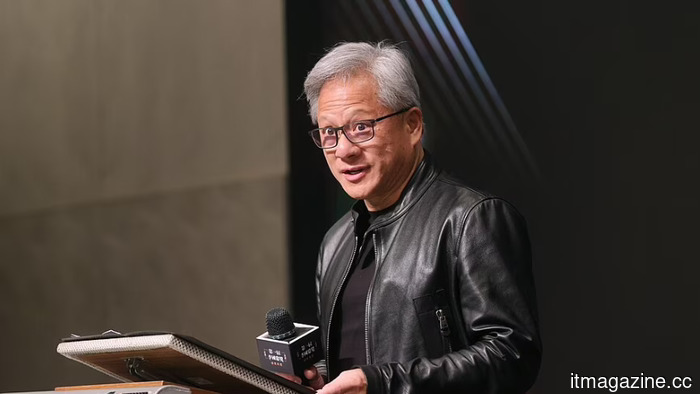 Jensen Huang describes the concern over job losses due to AI as 'utter nonsense.'
Nvidia's Jensen Huang stated to Axios that concerns over widespread job losses due to AI are 'utter nonsense'. He explained that it's important not to confuse your specific tasks with your overall job.
Jensen Huang describes the concern over job losses due to AI as 'utter nonsense.'
Nvidia's Jensen Huang stated to Axios that concerns over widespread job losses due to AI are 'utter nonsense'. He explained that it's important not to confuse your specific tasks with your overall job.
 OpenAI is planning to build a $30 billion, 3.2GW data center in Georgia.
OpenAI plans to invest more than $30 billion in a 3.2-gigawatt data center located near Savannah, Georgia. The company is currently designing Stargate sites independently and engaging with cautious neighboring communities.
OpenAI is planning to build a $30 billion, 3.2GW data center in Georgia.
OpenAI plans to invest more than $30 billion in a 3.2-gigawatt data center located near Savannah, Georgia. The company is currently designing Stargate sites independently and engaging with cautious neighboring communities.
 The US military acquires its inaugural Nvidia GB300 AI supercomputer.
Nvidia has contributed a DGX GB300 supercomputer to the Naval Postgraduate School, marking a military first, to educate officers on the applications and limitations of AI.
The US military acquires its inaugural Nvidia GB300 AI supercomputer.
Nvidia has contributed a DGX GB300 supercomputer to the Naval Postgraduate School, marking a military first, to educate officers on the applications and limitations of AI.
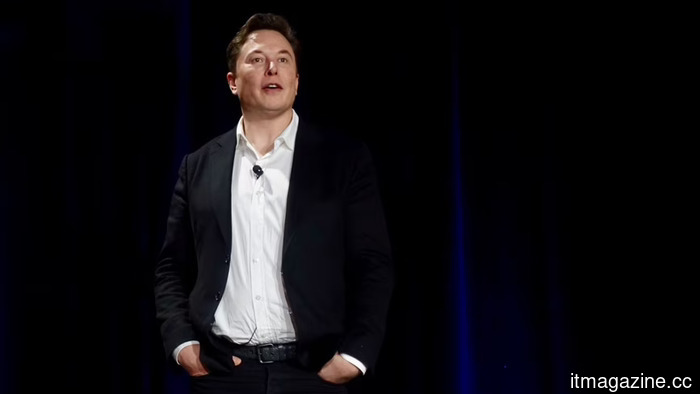 Musk expresses gratitude to Micron for the chips and establishes a fabrication facility to take its place.
Elon Musk expressed gratitude to Micron for a 'substantial' memory-chip allocation during Tesla's earnings call, while simultaneously developing Terafab, a $55 billion chip manufacturing facility for Tesla and SpaceX.
Musk expresses gratitude to Micron for the chips and establishes a fabrication facility to take its place.
Elon Musk expressed gratitude to Micron for a 'substantial' memory-chip allocation during Tesla's earnings call, while simultaneously developing Terafab, a $55 billion chip manufacturing facility for Tesla and SpaceX.
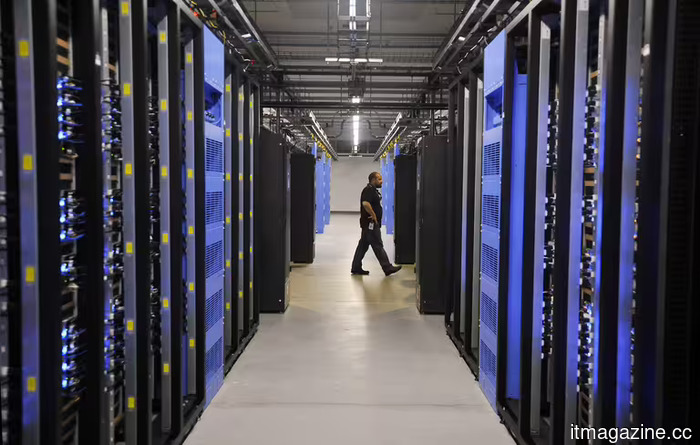 Within the data centers driving the AI surge
An unusual visit to a server hall in Virginia uncovers the tangible existence of AI: the sound of powerful fans, rows of gold Nvidia racks, and 40 diesel generators, along with the reason why the doors remain closed.
Within the data centers driving the AI surge
An unusual visit to a server hall in Virginia uncovers the tangible existence of AI: the sound of powerful fans, rows of gold Nvidia racks, and 40 diesel generators, along with the reason why the doors remain closed.
 Your preferred Android applications may soon perform more effectively on foldable devices.
Google has launched new tools for Android developers, providing adaptive layout guidance and Wear OS 7 widgets to enhance app compatibility with foldable devices and wearables.
Your preferred Android applications may soon perform more effectively on foldable devices.
Google has launched new tools for Android developers, providing adaptive layout guidance and Wear OS 7 widgets to enhance app compatibility with foldable devices and wearables.
The postponement of Google's Gemini highlights a more significant issue: employee morale.
Insiders informed Axios that low morale, a disputed Pentagon agreement, and a talent drain are hindering Google's AI models, leading to negative cash flow. Google refutes these claims.