
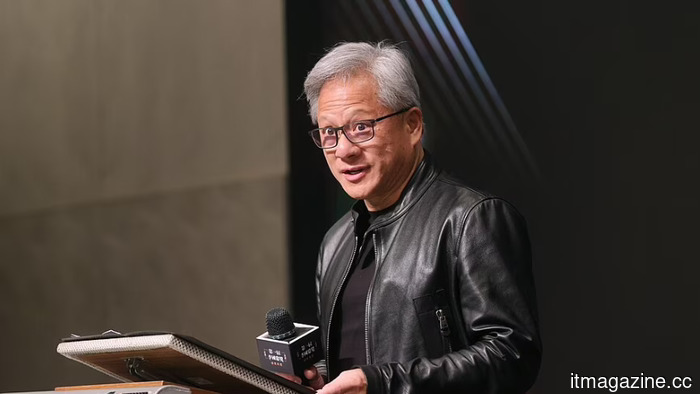
Jensen Huang describes the concern over job losses due to AI as 'utter nonsense.'
Jensen Huang is aware of the warnings but remains unconvinced by them. The Nvidia CEO leads the most valuable company in the world due to the AI surge. Therefore, when he describes the bleak predictions regarding this surge as “complete nonsense,” it prompts a consideration of whether he is indeed correct or simply promoting his interests.
In a comprehensive Axios interview with Mike Allen, Huang addressed two major assertions: that AI poses a threat to humanity and that it will result in the loss of half of American jobs. He dismissed both as “complete nonsense,” asserting that “all of the evidence points exactly to the opposite.”
His argument is more nuanced than a simple soundbite. It’s not that job roles won’t change; the misunderstanding lies in confusing a task with a job.
Don't confuse your task with your job
This is a point Huang often shares with younger individuals.
“Don’t mistake your task for the job.” For example, the task of a radiologist is to read scans, a function that AI can largely perform. However, Huang argues, the essence of the job is to alleviate suffering and support patients, which doesn’t disappear even if scan interpretation becomes automated. While some positions may still be eliminated, he acknowledges that call-center jobs are “very likely to be highly automated,” yet he believes the human element of judgment remains essential.
He backed his views with data. He mentioned that the number of radiologists is increasing by about 20% because AI enables each one to handle more patients, a statement supported by others in the field. Paralegal jobs have seen roughly a 10% rise. He further claimed that manufacturing jobs have increased by 50% in recent years due to a surge in data center construction. His rephrasing of the prevailing anxiety is straightforward: “AI is not going to destroy all of our jobs,” he stated. “Someone who uses AI is going to take your jobs.”
A jab at his own colleagues
Huang’s critique was directed at his peers. When asked why Asia appears to have a more optimistic view of AI, he suggested that those who warn about doom “spend too much time theorizing about these science fiction outcomes,” which he feels makes them seem more intelligent. When pressed about whether he was referring to fellow AI leaders, he softened his stance, but his intentions were evident.
He described discussions about singularity, simulations, or machine consciousness as “all made up,” asserting, “It’s fine to warn people; it’s absolutely inappropriate to fabricate things.”
He conveyed the same idea to Washington, noting that AI is not a “100-metre dash” with one winner, and warned that policymakers risk overreacting if they “fall for these narratives.” He advised the Trump administration to engage with numerous scientists rather than just one or two, and he dismissed the notion of the government acquiring a stake in Nvidia as “unnecessary.”
The optimistic viewpoint
Huang has a broad vision, anticipating a trillion AI agents operating simultaneously. He believes the “ChatGPT moment” for robots is already here, suggesting that practical machines might be just three to four years away. While he acknowledged that an AI bubble “will come someday,” he emphasized that it won’t happen today or likely within the next five years.
This perspective offers a refreshing counter-narrative, and Huang has ample reason to promote it, as increased AI utilization translates to higher demand for Nvidia chips. His job statistics are framed in a way unique to him, especially as competitors like Anthropic’s Dario Amodei predict a contrary outcome.
Yet, his fundamental distinction is difficult to dismiss. Automation has previously altered the nature of work without eliminating it, and the concern that “someone who uses AI is going to take your jobs” feels more grounded than the imminent threat of an uprising by robots.
Huang believes the perceived catastrophe is simply a narrative. The key question is whether the public will take his view seriously before resorting to the alternate one.
Other articles
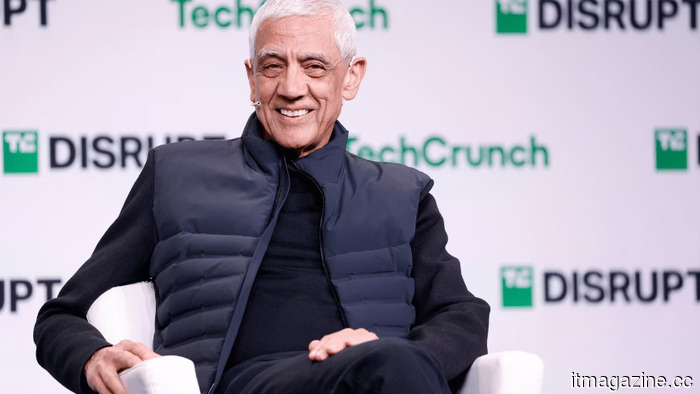 Khosla Ventures is seeking to raise as much as $5.5 billion, marking its largest fundraising effort to date.
Khosla Ventures, the initial investor in OpenAI, is negotiating to raise as much as $5.5 billion, which would be its largest fund to date, as venture capitalists in the AI sector pursue unprecedented amounts of funding.
Khosla Ventures is seeking to raise as much as $5.5 billion, marking its largest fundraising effort to date.
Khosla Ventures, the initial investor in OpenAI, is negotiating to raise as much as $5.5 billion, which would be its largest fund to date, as venture capitalists in the AI sector pursue unprecedented amounts of funding.
 AI is increasingly becoming the outlet for our emotions, and that concerns me.
A study revealed that top AI chatbots can surpass humans in alleviating anger and fear, prompting unsettling inquiries about who we are progressively relying on during challenging times.
AI is increasingly becoming the outlet for our emotions, and that concerns me.
A study revealed that top AI chatbots can surpass humans in alleviating anger and fear, prompting unsettling inquiries about who we are progressively relying on during challenging times.
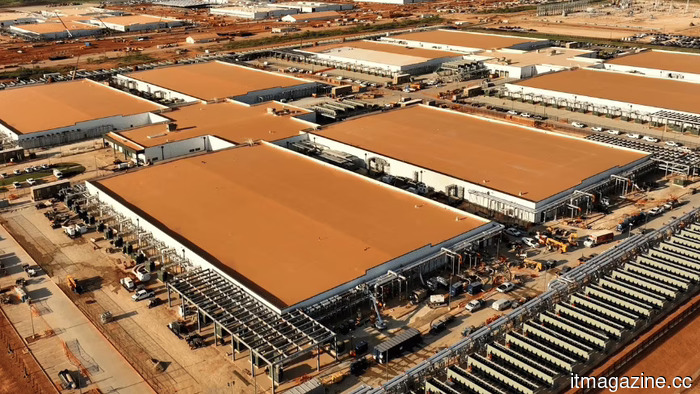 OpenAI is set to invest $30 billion in a 3.2GW data center in Georgia.
OpenAI plans to invest more than $30 billion in a 3.2-gigawatt data center located near Savannah, Georgia. The company is currently designing Stargate sites on its own and reaching out to cautious neighbors.
Apple is revamping all its Macs, starting with the introduction of a touchscreen.
Apple is revamping its entire Mac lineup throughout this autumn and into next year, introducing its first touchscreen OLED MacBook. The catalyst for this change is the growing demand for AI.
OpenAI is set to invest $30 billion in a 3.2GW data center in Georgia.
OpenAI plans to invest more than $30 billion in a 3.2-gigawatt data center located near Savannah, Georgia. The company is currently designing Stargate sites on its own and reaching out to cautious neighbors.
Apple is revamping all its Macs, starting with the introduction of a touchscreen.
Apple is revamping its entire Mac lineup throughout this autumn and into next year, introducing its first touchscreen OLED MacBook. The catalyst for this change is the growing demand for AI.
 The surge in artificial intelligence has led to an 80% increase in investment proposals in Thailand.
Foreign investors sought to invest $40.6 billion in Thailand in the first half of the year, an increase of 80%, with artificial intelligence and data centers accounting for three-quarters of the total investment.
The surge in artificial intelligence has led to an 80% increase in investment proposals in Thailand.
Foreign investors sought to invest $40.6 billion in Thailand in the first half of the year, an increase of 80%, with artificial intelligence and data centers accounting for three-quarters of the total investment.
 Lenovo's newest LOQ is better suited for playing the latest AAA games.
Lenovo has refreshed the LOQ 17IRX10 by adding Nvidia's GeForce RTX 5070 12GB, providing increased VRAM while keeping its current hardware configuration.
Lenovo's newest LOQ is better suited for playing the latest AAA games.
Lenovo has refreshed the LOQ 17IRX10 by adding Nvidia's GeForce RTX 5070 12GB, providing increased VRAM while keeping its current hardware configuration.
Jensen Huang describes the concern over job losses due to AI as 'utter nonsense.'
Nvidia's Jensen Huang stated to Axios that concerns over widespread job losses due to AI are 'utter nonsense'. He explained that it's important not to confuse your specific tasks with your overall job.