
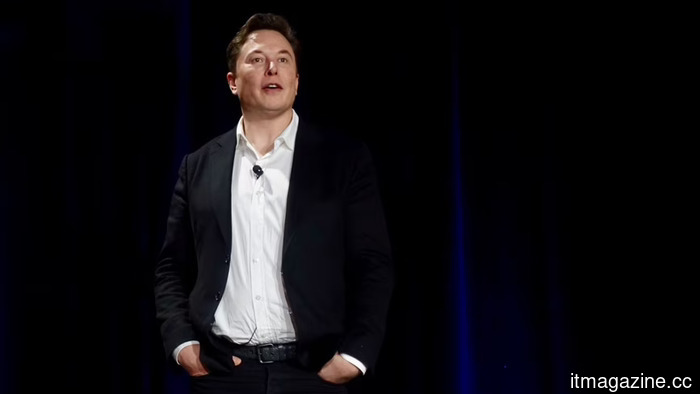
Musk expresses gratitude to Micron for the chips and establishes a fabrication facility to take its place.
Memory chips serve as the driving force behind the AI boom, and currently, they are hard to acquire. Therefore, when Elon Musk expressed his gratitude to Micron during Tesla's quarterly call, it was notable. Suppliers typically do not receive public acknowledgments, especially not those that are in short supply.
Musk stated that Micron had recently provided Tesla with a “significant allocation” of memory on “reasonable terms,” according to Bloomberg. This is significant, given the current scarcity of memory and the high prices. The global expansion of AI has consumed chips, leaving many industries in a scramble for resources.
However, this thank-you note feels out of place next to Musk's long-term vision, as he is quietly working on establishing the capability to become self-sufficient in chip production.
Introducing Terafab
The initiative, named Terafab, is a collaboration between Tesla and SpaceX aimed at producing computing and memory chips at an unprecedented scale, as Musk described it. A research fabrication facility is being constructed at Giga Texas, with an estimated cost of around $3 billion, which will be capable of producing a few thousand wafers per month.
The complete development could cost between $55 billion and $119 billion, as reported by CNBC, with Intel involved in the design and manufacturing process.
Musk candidly explained the reasoning behind this initiative. Terafab’s purpose is “not to gain leverage over our chip suppliers,” he stated. “It is to ensure that we have enough chips in the future.” He argued that the chip industry is not expanding quickly enough in either logic or memory to fulfill his requirements “unless we also make chips ourselves.”
A more modest reality
Beneath this, there is a more modest truth. Despite Tesla's renowned status, it is not a major player in the memory market. According to Bloomberg data, neither Tesla nor SpaceX is among Micron’s top ten customers.
Additionally, Tesla does not possess the financial power of hyperscalers that secure supply contracts for years. Although Micron did not respond to a request for comment, it has every incentive to keep a high-profile client satisfied.
Thus, the expression of gratitude towards Micron today, coupled with the creation of Terafab for the future, reflects a genuine concern. Tesla faces a need for chips that cannot be assuredly obtained from a supplier prioritizing larger customers, all while Micron's value has increased significantly.
Thanking Micron now while building Terafab for the future is not contradictory. It is part of the strategy. The real question is whether a car company and a rocket company can successfully venture into chip manufacturing, a challenge that may require up to $119 billion to resolve.
Other articles
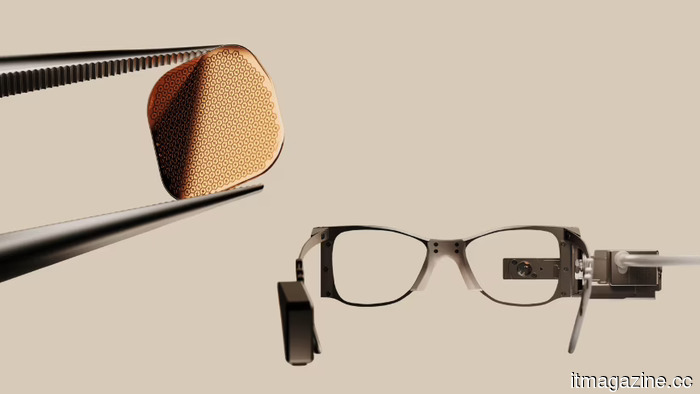 A retina chip designed to restore vision is now available for purchase in Europe.
Science Corp's Prima retina implant has regained partial vision and has received EU approval, marking it as the first brain-implant device from the US to be available to regular patients.
A retina chip designed to restore vision is now available for purchase in Europe.
Science Corp's Prima retina implant has regained partial vision and has received EU approval, marking it as the first brain-implant device from the US to be available to regular patients.
 AI is increasingly becoming the outlet for our emotions, and that concerns me.
A study revealed that top AI chatbots can surpass humans in alleviating anger and fear, prompting unsettling inquiries about who we are progressively relying on during challenging times.
AI is increasingly becoming the outlet for our emotions, and that concerns me.
A study revealed that top AI chatbots can surpass humans in alleviating anger and fear, prompting unsettling inquiries about who we are progressively relying on during challenging times.
 AI is starting to be the source of our emotional support, and that concerns me.
A study revealed that top AI chatbots can surpass humans in alleviating anger and fear, prompting unsettling questions about whom we rely on more during challenging times.
AI is starting to be the source of our emotional support, and that concerns me.
A study revealed that top AI chatbots can surpass humans in alleviating anger and fear, prompting unsettling questions about whom we rely on more during challenging times.
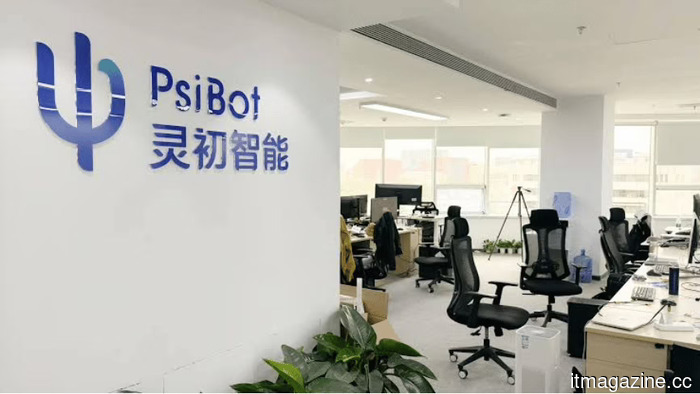 China's Psibot reaches $1.48 billion investment in 'world models.'
Shanghai's Psibot has achieved a valuation of $1.48 billion by creating 'world models' for robots. The founder claims that the 'GPT-2 moment' for embodied AI is two years off.
China's Psibot reaches $1.48 billion investment in 'world models.'
Shanghai's Psibot has achieved a valuation of $1.48 billion by creating 'world models' for robots. The founder claims that the 'GPT-2 moment' for embodied AI is two years off.
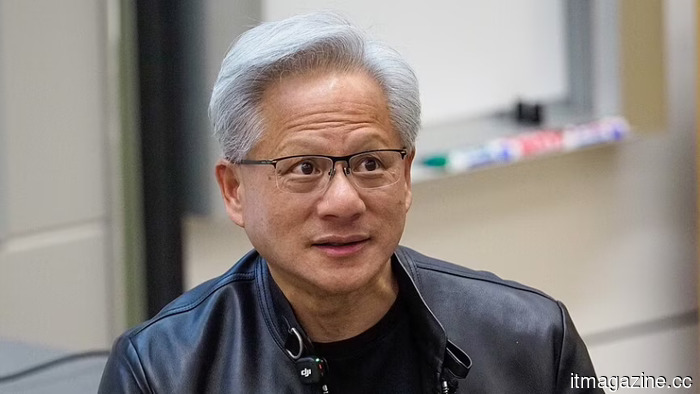 Jensen Huang earned $172 billion from selling AI chips. He has just donated $75 million to an art school.
Nvidia CEO Jensen Huang contributed $75 million to Vanderbilt for a college focused on art, architecture, and design in San Francisco. It is set to open next year at the former CCA campus.
Jensen Huang earned $172 billion from selling AI chips. He has just donated $75 million to an art school.
Nvidia CEO Jensen Huang contributed $75 million to Vanderbilt for a college focused on art, architecture, and design in San Francisco. It is set to open next year at the former CCA campus.
Musk expresses gratitude to Micron for the chips and establishes a fabrication facility to take its place.
Elon Musk expressed gratitude to Micron for a 'substantial' memory-chip allocation during Tesla's earnings call, while simultaneously developing Terafab, a $55 billion chip manufacturing facility for Tesla and SpaceX.