

The surge in artificial intelligence has led to an 80% increase in investment proposals in Thailand.
Thailand is not often included in discussions about the AI boom; however, this year marks a change. According to the country’s Board of Investment, foreign companies sought to invest 1.37 trillion baht, approximately $40.6 billion, in the first half of 2026, reflecting an 80% increase compared to the previous year.
A significant portion of this investment can be attributed to one sector—digital initiatives, particularly AI and data centers, which attracted 1.12 trillion baht, accounting for over three-quarters of the total applications, as reported by Bloomberg. The board recorded 1,299 applications across various industries, with foreign investment aimed at 877 projects.
These figures indicate a shift that extends beyond a single country's accounts. Major global tech companies are seeking land, energy, and permits, and Southeast Asia continues to express willingness to accommodate them. Google, Amazon Web Services, and Microsoft have all announced plans for cloud expansions within Thailand. In May, the board approved TikTok’s 842 billion baht investment in data infrastructure.
The underlying value of this investment lies in job creation and the nation's prestige. The projects are expected to create over 82,000 jobs, generate annual exports exceeding 1.24 trillion baht, and utilize 386 billion baht worth of local materials each year, according to board secretary-general Narit Therdsteerasukdi. He emphasized, "Investment value is not the only goal. Genuine success translates to quality jobs, enhanced skills, and better wages for Thai workers."
This investment surge arrives at a crucial time, as Prime Minister Anutin Charnvirakul aims to boost an economy lagging behind neighboring countries such as Indonesia, Malaysia, and Vietnam. Despite rising energy costs due to the conflict in the Middle East, investment has continued to flow in.
Narit noted, “Thailand’s investment growth remained steady even amidst global economic challenges,” as reported by TNGlobal.
There are, however, two important caveats to consider. Applications do not equate to actual spending, and the board cautions that not all proposed projects will materialize. Additionally, data centers require a significant amount of electricity, which Thailand must secure, as is the case with other regions undergoing such expansions.
In comparison to the massive projects proposed in other countries and the substantial investments China is making domestically, Thailand's achievements may appear modest. Nonetheless, the trend is clear: the landscape of AI infrastructure is shifting, and Bangkok is eager to claim its share.
Other articles
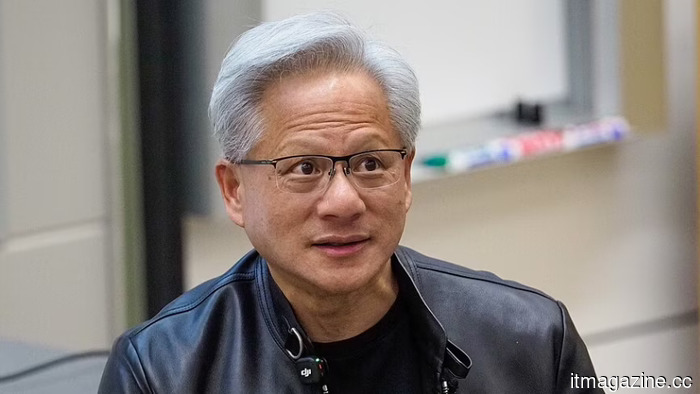 Jensen Huang earned $172 billion from the sale of AI chips. He recently donated $75 million to an art school.
Nvidia's CEO Jensen Huang contributed $75 million to Vanderbilt University for a college focusing on art, architecture, and design in San Francisco. The college is set to launch next year at the previous CCA campus.
Jensen Huang earned $172 billion from the sale of AI chips. He recently donated $75 million to an art school.
Nvidia's CEO Jensen Huang contributed $75 million to Vanderbilt University for a college focusing on art, architecture, and design in San Francisco. The college is set to launch next year at the previous CCA campus.
 Lenovo's newest LOQ is better suited for playing the latest AAA games.
Lenovo has refreshed the LOQ 17IRX10 by adding Nvidia's GeForce RTX 5070 12GB, providing increased VRAM while keeping its current hardware configuration.
Apple is revamping all its Macs, starting with the introduction of a touchscreen.
Apple is revamping its entire Mac lineup throughout this autumn and into next year, introducing its first touchscreen OLED MacBook. The catalyst for this change is the growing demand for AI.
Lenovo's newest LOQ is better suited for playing the latest AAA games.
Lenovo has refreshed the LOQ 17IRX10 by adding Nvidia's GeForce RTX 5070 12GB, providing increased VRAM while keeping its current hardware configuration.
Apple is revamping all its Macs, starting with the introduction of a touchscreen.
Apple is revamping its entire Mac lineup throughout this autumn and into next year, introducing its first touchscreen OLED MacBook. The catalyst for this change is the growing demand for AI.
 The postponement of Google's Gemini reveals a more significant issue: employee morale.
Insiders informed Axios that low morale, a disputed Pentagon agreement, and an exodus of talent are hindering the progress of Google's AI models, as the company's cash flow becomes negative. Google denies these claims.
The postponement of Google's Gemini reveals a more significant issue: employee morale.
Insiders informed Axios that low morale, a disputed Pentagon agreement, and an exodus of talent are hindering the progress of Google's AI models, as the company's cash flow becomes negative. Google denies these claims.
 Ford and Geely will collaborate to manufacture electric vehicles at Ford's facility in Spain. Ford holds a 66% stake, while Geely owns 34%.
Ford and Geely have revealed a partnership to manufacture electric vehicles at Ford's Valencia facility. Ford will retain a 66% stake. Four models are set to be launched starting in 2028, with operations commencing in the first half of 2027.
Ford and Geely will collaborate to manufacture electric vehicles at Ford's facility in Spain. Ford holds a 66% stake, while Geely owns 34%.
Ford and Geely have revealed a partnership to manufacture electric vehicles at Ford's Valencia facility. Ford will retain a 66% stake. Four models are set to be launched starting in 2028, with operations commencing in the first half of 2027.
 The postponement of Google's Gemini highlights a more significant issue: employee morale.
Insiders informed Axios that low morale, a disputed Pentagon agreement, and a talent drain are hindering Google's AI models, leading to negative cash flow. Google refutes these claims.
The postponement of Google's Gemini highlights a more significant issue: employee morale.
Insiders informed Axios that low morale, a disputed Pentagon agreement, and a talent drain are hindering Google's AI models, leading to negative cash flow. Google refutes these claims.
The surge in artificial intelligence has led to an 80% increase in investment proposals in Thailand.
Foreign investors sought to invest $40.6 billion in Thailand in the first half of the year, an increase of 80%, with artificial intelligence and data centers accounting for three-quarters of the total investment.