
AI is starting to be the source of our emotional support, and that concerns me.
Chatbots Are Learning to Provide Comfort Now
I anticipated that artificial intelligence would excel at calculations and data analysis compared to humans. However, emotional support was one aspect that I never expected it to surpass humans in. Recent research led by the University of Manchester in collaboration with Durham University discovered that leading AI chatbots could equal or even exceed human responses when addressing common emotional issues. The researchers completed five studies with 1,233 participants, evaluating responses from ChatGPT-4o, Claude 3.5 Sonnet, and Gemini 1.5 Pro.
Participants assessed messages that responded to situations such as being overlooked for a promotion or returning to a messy shared home. Initially, they were unaware of whether the responses were generated by a human or an AI.
AI showed particular strength in managing emotions like anger and fear.
Responses produced by the chatbots were found to be more emotionally supportive in scenarios involving anger and fear. They even aided participants in expressing positive emotions like calmness and happiness. In instances of sadness, both human and AI responses were similarly effective. Interestingly, simple validation did not account for the advantage observed. Merely stating that someone's feelings were valid had little impact on its own.
The study identified the most significant effect when responses included actionable support. Suggestions such as breathing exercises, practical next steps, or structured methods to reframe a situation proved beneficial. AI systems were more consistent in providing such detailed guidance compared to human participants. The findings also suggest ways in which individuals could improve their supportive responses; effective support often requires more concrete actions than just empathetic words.
A chatbot's assistance concludes with its message
The experiments centered around brief, written responses to everyday scenarios and did not explore therapy, other emergencies, or sustained distress. They also did not address the implications of depending on a chatbot over extended periods. The researchers stressed the importance of not viewing AI as a substitute for human interaction.
Dr. Sarah Walker from Durham University effectively illustrated the difference. A chatbot can advise you to take a walk, but a human can accompany you, providing presence and ongoing support even after the conversation ends.



Other articles
 China's Psibot reaches $1.48 billion investment in 'world models.'
Shanghai's Psibot has achieved a valuation of $1.48 billion by creating 'world models' for robots. The founder claims that the 'GPT-2 moment' for embodied AI is two years off.
China's Psibot reaches $1.48 billion investment in 'world models.'
Shanghai's Psibot has achieved a valuation of $1.48 billion by creating 'world models' for robots. The founder claims that the 'GPT-2 moment' for embodied AI is two years off.
 AI is increasingly becoming the outlet for our emotions, and that concerns me.
A study revealed that top AI chatbots can surpass humans in alleviating anger and fear, prompting unsettling inquiries about who we are progressively relying on during challenging times.
AI is increasingly becoming the outlet for our emotions, and that concerns me.
A study revealed that top AI chatbots can surpass humans in alleviating anger and fear, prompting unsettling inquiries about who we are progressively relying on during challenging times.
 Musk expresses gratitude to Micron for the chips and constructs a factory to take its place.
Elon Musk expressed gratitude to Micron for a 'substantial' memory-chip allocation during Tesla's earnings call, all while he is developing Terafab, a $55 billion chip manufacturing facility for Tesla and SpaceX.
Apple is revamping all of its Mac computers, starting with a touchscreen model.
Apple is updating its entire Mac lineup throughout this autumn and into next year, featuring its first-ever touchscreen OLED MacBook. The motivation behind this is the growing demand for AI.
Musk expresses gratitude to Micron for the chips and constructs a factory to take its place.
Elon Musk expressed gratitude to Micron for a 'substantial' memory-chip allocation during Tesla's earnings call, all while he is developing Terafab, a $55 billion chip manufacturing facility for Tesla and SpaceX.
Apple is revamping all of its Mac computers, starting with a touchscreen model.
Apple is updating its entire Mac lineup throughout this autumn and into next year, featuring its first-ever touchscreen OLED MacBook. The motivation behind this is the growing demand for AI.
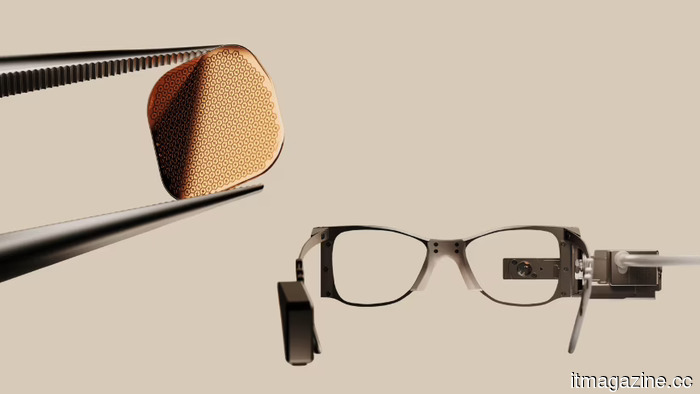 A retina chip designed to restore vision is now available for purchase in Europe.
Science Corp's Prima retina implant has regained partial vision and has received EU approval, marking it as the first brain-implant device from the US to be available to regular patients.
A retina chip designed to restore vision is now available for purchase in Europe.
Science Corp's Prima retina implant has regained partial vision and has received EU approval, marking it as the first brain-implant device from the US to be available to regular patients.
 Ford and Geely will collaborate on the production of electric vehicles at Ford's facility in Spain. Ford holds a 66% stake, while Geely owns 34%.
Ford and Geely have revealed a partnership to manufacture electric vehicles at Ford's Valencia facility, with Ford owning a 66% stake. Four models are expected to be launched by 2028, and operations are set to commence in the first half of 2027.
Ford and Geely will collaborate on the production of electric vehicles at Ford's facility in Spain. Ford holds a 66% stake, while Geely owns 34%.
Ford and Geely have revealed a partnership to manufacture electric vehicles at Ford's Valencia facility, with Ford owning a 66% stake. Four models are expected to be launched by 2028, and operations are set to commence in the first half of 2027.
AI is starting to be the source of our emotional support, and that concerns me.
A study revealed that top AI chatbots can surpass humans in alleviating anger and fear, prompting unsettling questions about whom we rely on more during challenging times.