

Narcissism, Machiavellianism, and those who heavily rely on AI
In 1914, Sigmund Freud took inspiration from Ovid, providing psychology with one of its most enduring concepts. In his essay On Narcissism, the tale of Narcissus, the young man enamored with his own reflection who eventually faded away, became a metaphor for a self that redirects its love inward. This term transcended the theory it originated from, evolving into a clinical diagnosis known as narcissistic personality disorder by 1980 and subsequently re-entered everyday language, now often describing those perceived as excessively self-centered.
Contemporary personality psychology adopts a more measured perspective on narcissism, viewing it as one of several dimensions along which individuals can vary. It is categorized alongside three other unflattering traits—Machiavellianism, psychopathy, and sadism—collectively referred to as the Dark Tetrad. Freud likely could not have predicted the association these traits would eventually have with technology. A century after he identified this condition, the self that adores its own reflection is now supported by a machine that mirrors, flatters, and responds on cue, without ever pushing back.
An increasing amount of research indicates this is not a neutral phenomenon, and that certain personalities may become more deeply engaged than others. Personality psychologists, building on the work of Delroy Paulhus and his colleagues, consider these four traits as continuous variables present to varying degrees in the general population, rather than strict diagnoses.
Narcissism is characterized by grandiosity and a desire for admiration; Machiavellianism entails a calculating, utilitarian perspective on others; psychopathy is marked by low empathy coupled with impulsiveness; and sadism involves deriving pleasure from others' distress. Researchers can empirically question whether higher scores on these traits predict an individual's chatbot usage.
In a study published in BMC Psychology in June, Kağan Kırcaburun from Düzce University in Turkey examined how these traits relate to what the literature describes as problematic generative AI use, modeled on established behavioral-addiction frameworks where engagement becomes compulsive and disrupts daily functioning. Utilizing 677 adult participants recruited through Prolific, averaging around 40 years in age with an equal gender distribution, he constructed a path model linking these dark traits to problematic AI use.
Narcissism emerged as the most reliable predictor, demonstrating both direct and indirect associations; sadism showed small, yet significant total effects; psychopathy exhibited less predictable behavior, with effects varying by gender. The study's main contribution lies in its mediators—variables that convey a trait's influence. Kırcaburun devised two constructs seen as sequential pathways between personality traits and problematic AI usage.
The first, vertical individualism, is a value orientation shaped by Harry Triandis's cross-cultural research, focusing on self-autonomy while emphasizing status and superiority over others. The second, intolerance of uncertainty, is a personal tendency, regarded as a transdiagnostic "fundamental fear," to experience ambiguity as distressing, necessitating immediate resolution.
Within the entire sample and among both genders, these two variables consistently correlated with problematic use. For women, the link between narcissism and problematic use was entirely mediated by vertical individualism; for men, both individualism and intolerance of uncertainty played roles. This interpretation suggests that the traits influence through the values and intolerances they embody rather than directly, presenting a more nuanced and testable hypothesis than the simpler assertion that difficult individuals misuse chatbots.
Caution is essential here, as Kırcaburun acknowledges. The study's design is cross-sectional, meaning that its mediational language reflects covariance rather than established causal relationships; longitudinal or experimental data would be necessary to establish causal mechanisms over time. All measures were self-reported, raising familiar concerns about common-method variance. Measurement invariance across sexes was not fully confirmed, underscoring the need for careful consideration of the gender-specific findings. Additionally, the prevalence of genuinely problematic use in the sample was low, reminding readers that this study examines subclinical variance, not a clinical population.
Why the technology is such a good fit is revealed through the mechanism of uncertainty avoidance. An anxious mind seeks certainty, and a chatbot primarily serves as a certainty machine. Kırcaburun's findings align with a separate analysis by psychiatrists Ashleigh Golden and Elias Aboujaoude, who argue that ordinary chatbots can quietly exacerbate the cycles of obsessive-compulsive disorder and anxiety.
The appeal here is not what is typically blamed for our screen habits. It is not simply the pleasure that keeps us scrolling; rather, it is relief. Anxiety prompts a user to question the machine, which provides reassurance that alleviates worry, fostering a habit of repeated inquiry. With each interaction, the question-asking becomes increasingly automatic.
However, this relief comes at a cost. Typically, anxiety dissipates if one can tolerate it long enough to realize that their fears do not materialize. This process is crucial for recovery, representing a substantial
Other articles
 What Characteristics Should You Seek in an AI-Enhanced Laptop or Copilot+ PC?
Laptops equipped with AI and Copilot+ PCs are gaining importance as the usage of laptops has evolved considerably in recent years. Current workflows are centered on multitasking, collaborating in the cloud, video conferencing, streaming, and utilizing productivity tools that are consistently in use throughout the day. The majority of professionals now rely on laptops for more than just word processing and […]
What Characteristics Should You Seek in an AI-Enhanced Laptop or Copilot+ PC?
Laptops equipped with AI and Copilot+ PCs are gaining importance as the usage of laptops has evolved considerably in recent years. Current workflows are centered on multitasking, collaborating in the cloud, video conferencing, streaming, and utilizing productivity tools that are consistently in use throughout the day. The majority of professionals now rely on laptops for more than just word processing and […]
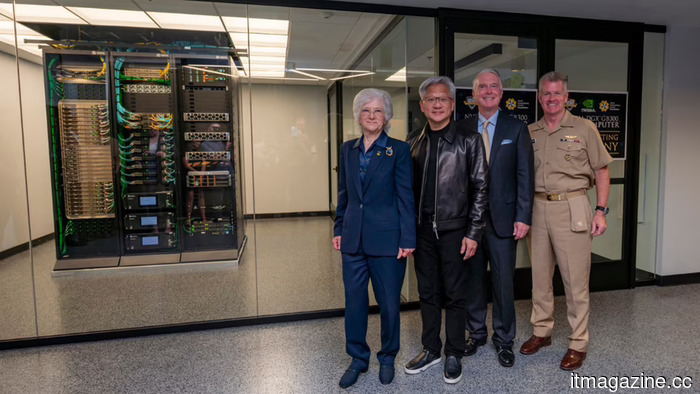 Nvidia has provided a DGX GB300 as a donation to the leading science school of the US military.
Nvidia has contributed a DGX GB300 AI supercomputer to the Naval Postgraduate School, marking it as the first system of its type within the US military.
Nvidia has provided a DGX GB300 as a donation to the leading science school of the US military.
Nvidia has contributed a DGX GB300 AI supercomputer to the Naval Postgraduate School, marking it as the first system of its type within the US military.
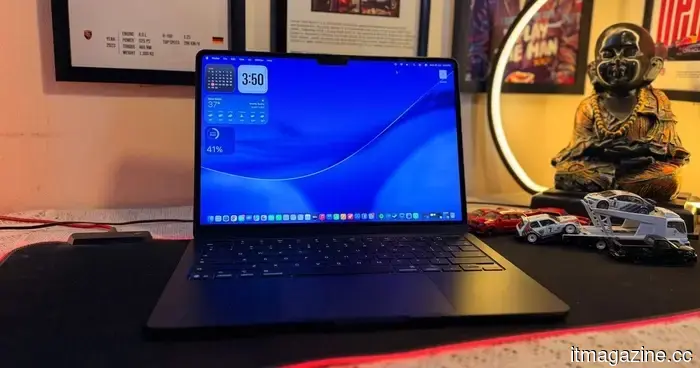 The MacBook Air and iMac are the next devices set to feature OLED technology from Apple.
According to reports, Apple is working on OLED versions of the MacBook Air and iMac, but both of these models are expected to launch significantly later than the first OLED MacBook Pro.
The MacBook Air and iMac are the next devices set to feature OLED technology from Apple.
According to reports, Apple is working on OLED versions of the MacBook Air and iMac, but both of these models are expected to launch significantly later than the first OLED MacBook Pro.
 According to Adecco’s CEO, AI is transforming jobs rather than eliminating them.
Adecco's CEO Denis Machuel states that AI is transforming the workplace without causing a significant loss of jobs, despite employers attributing a quarter of US layoffs to it.
According to Adecco’s CEO, AI is transforming jobs rather than eliminating them.
Adecco's CEO Denis Machuel states that AI is transforming the workplace without causing a significant loss of jobs, despite employers attributing a quarter of US layoffs to it.
 Samsung simplifies the process of running multiple applications on the cover screen of the Galaxy Z Flip 8.
Samsung enhanced the Z Flip 8's cover display by introducing a native app drawer that accommodates 16 apps right from the start, tackling years of user dissatisfaction with its previously restricted widget-only capabilities.
Samsung simplifies the process of running multiple applications on the cover screen of the Galaxy Z Flip 8.
Samsung enhanced the Z Flip 8's cover display by introducing a native app drawer that accommodates 16 apps right from the start, tackling years of user dissatisfaction with its previously restricted widget-only capabilities.
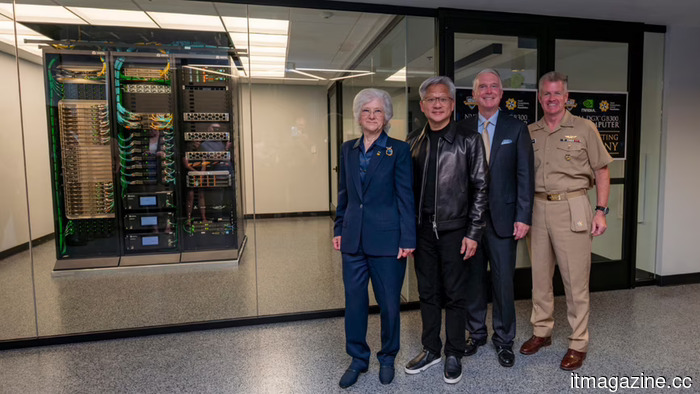 Nvidia has donated a DGX GB300 to the leading science institution of the US military.
Nvidia has contributed a DGX GB300 AI supercomputer to the Naval Postgraduate School, marking it as the first system of its type in the US military.
Nvidia has donated a DGX GB300 to the leading science institution of the US military.
Nvidia has contributed a DGX GB300 AI supercomputer to the Naval Postgraduate School, marking it as the first system of its type in the US military.
Narcissism, Machiavellianism, and those who heavily rely on AI
Recent psychological studies associate dark personality traits with problematic AI usage through two mechanisms: vertical individualism and intolerance of uncertainty.