

According to Adecco’s CEO, AI is transforming jobs rather than eliminating them.
Denis Machuel leads the largest staffing company in the world, making his insights into the labour market noteworthy. This week, the chief executive of the Adecco Group made it clear: while artificial intelligence is transforming the nature of work, it is not leading to empty offices. “AI is causing a significant evolution in the workplace, but a job apocalypse is not imminent,” Machuel stated to Reuters.
This reassurance comes in a year that has seemed far from stable, with rising tech layoffs and many employers citing AI as the reason. His argument is based not on optimism but on a lack of evidence supporting any catastrophic changes.
Nearly three and a half years post-ChatGPT, employment rates in the OECD’s 38 member countries are near record levels, and joblessness is close to historic lows, according to the group’s data. Even with AI altering desk jobs, the overall employment figures have remained robust.
Machuel pointed out that past transformations, such as steam, electricity, computing, and the internet, followed a similar trajectory—they changed the nature of work without causing the widespread unemployment predicted by critics. “It’s more about altering roles and responsibilities than eliminating jobs,” he explained. “Based on the data we have, there is no indication that AI will lead to a different outcome.”
He emphasized that the responsibility lies with employers to reshape roles so AI complements workers rather than replaces them, a process that is more gradual and less sensational than conducting layoffs.
Machuel did concede that some entry-level positions are vanishing, even as new AI-based roles emerge, cautioning employers that cutting junior positions for short-term savings could deplete future talent. In his view, companies that cease hiring and mentoring new graduates are jeopardizing their future pool of managers and specialists.
There is also a subtle accusation in his comments; he suggested that some firms might be using AI as an excuse for cuts prompted by underperformance or routine restructuring, masking simple cost-cutting as an unavoidable technological shift. This perspective is particularly relevant for recent graduates entering a job market where lower-tier positions are dwindling.
The statistics support claims from both sides. Employers attributed nearly 25% of job cuts in the US this year to AI, according to the outplacement firm Challenger, Gray & Christmas, which has identified this technology as a leading reason for layoffs for months. They report that AI has been referenced in more American layoffs in 2026 than in all of 2025. Microsoft has reduced its workforce by about 2.1%, while HSBC, Amazon, and Standard Chartered have also made their own cuts.
However, the data does not clarify the reasons behind these layoffs. A job loss labeled as AI-related in a press release does not equate to a job eliminated by AI. Machuel argues that the staffing market, where Adecco places hundreds of thousands of workers globally, has not yet changed in the catastrophic manner that the apocalyptic narrative suggests.
In other words, while the layoffs are real, they appear to be part of turnover and restructuring rather than a fundamental shift in demand for labor.
It is important to note a degree of self-interest; Adecco's business is predicated on selling human labor, and their strategy heavily incorporates the very technology they downplay, with a target for agentic AI to account for over half of revenues by the end of 2026.
Investors haven't been entirely reassured either; last November, shares dropped sharply amid concerns regarding that strategy and its dividends.
Currently, the employment data supports Machuel's position, even if the layoff statistics do not. The critical question is not whether AI is altering work—this is evident—but whether the executives issuing redundancy notices are anticipating the future or simply attributing blame.
Other articles
 Electrified vehicles are driving Europe's automotive market as Chinese brands achieve a record share.
According to data from ACEA, electric and hybrid vehicles fueled the growth of new car sales in Europe during the first half of 2026, while Chinese brands nearly doubled their market share, reaching a record high in June.
Electrified vehicles are driving Europe's automotive market as Chinese brands achieve a record share.
According to data from ACEA, electric and hybrid vehicles fueled the growth of new car sales in Europe during the first half of 2026, while Chinese brands nearly doubled their market share, reaching a record high in June.
 Trump declares approximately $1.4 billion in cryptocurrency earnings as digital assets surpass real estate.
Donald Trump's financial disclosure for 2025 indicates approximately $1.4 billion in cryptocurrency earnings, primarily driven by the $TRUMP memecoin and World Liberty Financial.
Trump declares approximately $1.4 billion in cryptocurrency earnings as digital assets surpass real estate.
Donald Trump's financial disclosure for 2025 indicates approximately $1.4 billion in cryptocurrency earnings, primarily driven by the $TRUMP memecoin and World Liberty Financial.
 The LG C6 OLED performs excellently right from the start. These adjustments enhance its performance even further.
The LG C6 OLED offers an outstanding experience right from the start, but some easy modifications can enhance it further. After a month of testing, I consistently return to these picture, motion, and sound settings, along with the adjustments that clearly improved the overall viewing experience.
The LG C6 OLED performs excellently right from the start. These adjustments enhance its performance even further.
The LG C6 OLED offers an outstanding experience right from the start, but some easy modifications can enhance it further. After a month of testing, I consistently return to these picture, motion, and sound settings, along with the adjustments that clearly improved the overall viewing experience.
 Getlink cautions that unreliable EU software may postpone the implementation of biometric borders at the Channel Tunnel.
Getlink reports that unreliable software supplied by the EU may slow down the biometric registration process for vehicles at the Channel Tunnel, despite the EES being operational across Schengen.
Getlink cautions that unreliable EU software may postpone the implementation of biometric borders at the Channel Tunnel.
Getlink reports that unreliable software supplied by the EU may slow down the biometric registration process for vehicles at the Channel Tunnel, despite the EES being operational across Schengen.
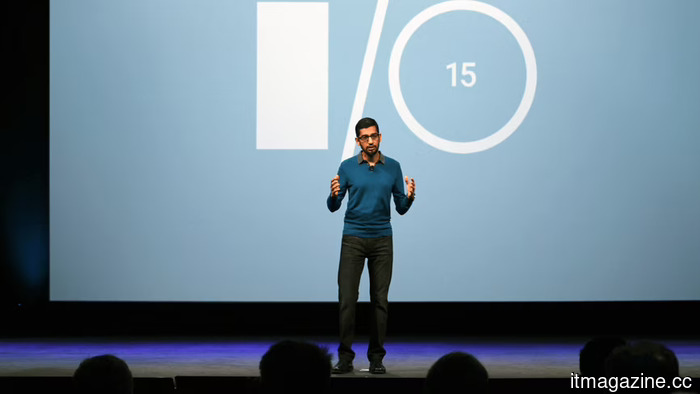 Alphabet raises its capex forecast to $205 billion as Google Cloud surges by 82%.
Alphabet exceeded revenue expectations and reported an 82% growth in Google Cloud, but a record capital expenditure guidance of $205 billion and negative free cash flow caused its shares to drop by approximately 5%.
Alphabet raises its capex forecast to $205 billion as Google Cloud surges by 82%.
Alphabet exceeded revenue expectations and reported an 82% growth in Google Cloud, but a record capital expenditure guidance of $205 billion and negative free cash flow caused its shares to drop by approximately 5%.
 Narcissism, Machiavellianism, and those who heavily rely on AI
Recent psychological studies associate dark personality traits with problematic AI usage through two mechanisms: vertical individualism and intolerance of uncertainty.
Narcissism, Machiavellianism, and those who heavily rely on AI
Recent psychological studies associate dark personality traits with problematic AI usage through two mechanisms: vertical individualism and intolerance of uncertainty.
According to Adecco’s CEO, AI is transforming jobs rather than eliminating them.
Adecco's CEO Denis Machuel states that AI is transforming the workplace without causing a significant loss of jobs, despite employers attributing a quarter of US layoffs to it.