
The University of Tennessee is filing a lawsuit against Anthropic regarding patents related to neural networks.
The University of Tennessee Research Foundation filed a lawsuit against Anthropic on Monday in the US District Court for the District of Delaware, alleging that the AI company developed its models using patented neural network techniques without authorization.
The complaint, which was made public on Tuesday, is believed to be the first patent infringement case against Anthropic, and it comes shortly after a California judge approved the company’s $1.5 billion settlement regarding book piracy with a group of authors.
The foundation, responsible for managing patents related to the Knoxville campus, portrayed the case as part of a broader pattern. It claimed that Anthropic's "careless attitude towards others' intellectual property rights in product development goes beyond merely using copyrighted materials," according to the filing.
This framing connects the patent allegations to the copyright case that led to the settlement and to additional complaints against the company, including a lawsuit regarding restrictions on its Claude Max plans.
The lawsuit involves two patents that the foundation asserts pertain to advancements in machine learning, neuromorphic computing, and computing inspired by neuroscience, all developed by professors at the University of Tennessee.
Bloomberg Law reported that the patents in question are numbered 10,019,470 and 10,095,718, and the complaint highlights Claude Code, Anthropic's agentic coding tool, as well as its underlying software architecture.
The technology originates from TENNLab, a University of Tennessee group focused on brain-inspired computing since 2014. The lab, run by professors Garrett Rose, James Plank, Catherine Schuman, and Ahmedullah Aziz, holds seven granted patents and numerous pending applications, with research that covers spiking neural networks and custom neuromorphic hardware.
Its initial frameworks, known as NIDA and DANNA, form a significant part of that portfolio. Schuman has previously remarked on the collaborative nature of the field, stating that it is "virtually impossible to conduct research in this field alone."
The backdrop of the case is the copyright settlement. Initially, a federal judge in San Francisco hesitated on the $1.5 billion agreement due to concerns regarding author compensation but later approved it, marking it as the largest of its type in US copyright history.
The patent lawsuit addresses different aspects, focusing on the design of the models rather than the training data.
The foundation is seeking unspecified monetary damages and an injunction to prevent further infringement by Anthropic. It has not disclosed the valuation of the technology and the complaint does not indicate whether any licensing discussions occurred prior to the lawsuit.
Bloomberg Law's interpretation of the complaint suggests that the foundation claims Anthropic's products utilize patented methods for building neuromorphic networks, which include a background execution scheduling system and a memory consolidation engine associated with one of the patents.
This level of detail could not be independently verified based on public reporting, and the exact correlation of patent claims to Anthropic’s code will be disputed as the case advances.
Representatives from Anthropic and the foundation did not immediately respond to requests for comments. Anthropic has yet to submit a formal response and has generally been reticent about the details of ongoing litigation.
The future proceedings will be procedural and gradual. Anthropic will need to respond to the complaint in Delaware, a court that handles a significant portion of the nation’s patent disputes. The case will likely focus on claim construction, the meticulous process during which a judge determines the actual coverage of the patents. Only after that will the potential infringement by Claude be assessed.
For a company striving to expand its Claude partner network and that has spent the past year resolving an intellectual property dispute, this lawsuit serves as a reminder that the materials used to train a model are just one type of property that a competitor can contest. In this case, the patents explain how a machine learns, rather than what it has read.
Other articles
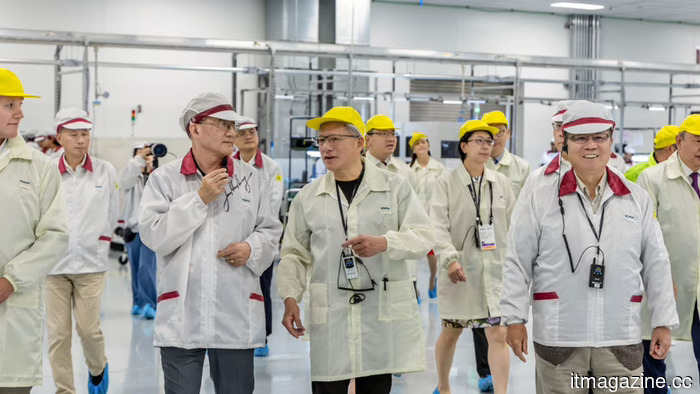 Nvidia's supplier Wistron has inaugurated a $700 million manufacturing facility in Texas to produce Grace Blackwell superchips.
Wistron has inaugurated its first factory in the US located in Fort Worth, a $700 million facility that is already in large-scale production of Nvidia's GB300 Grace Blackwell Ultra superchips.
Nvidia's supplier Wistron has inaugurated a $700 million manufacturing facility in Texas to produce Grace Blackwell superchips.
Wistron has inaugurated its first factory in the US located in Fort Worth, a $700 million facility that is already in large-scale production of Nvidia's GB300 Grace Blackwell Ultra superchips.
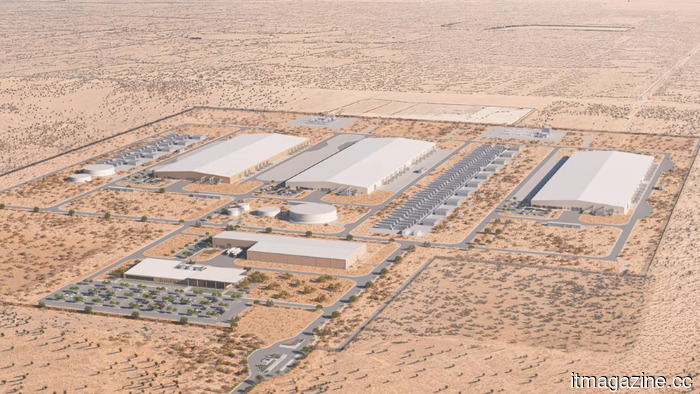 BlackRock secures $12 billion for Meta's data center in El Paso.
BlackRock is spearheading a $12 billion debt issuance to construct Meta's data center in El Paso, holding 80% of the ownership and allowing Meta to retain the majority of the expenses off its balance sheet.
BlackRock secures $12 billion for Meta's data center in El Paso.
BlackRock is spearheading a $12 billion debt issuance to construct Meta's data center in El Paso, holding 80% of the ownership and allowing Meta to retain the majority of the expenses off its balance sheet.
 Google and Ford are investing in trading as artificial intelligence takes over office roles.
Google, Ford, Carhartt, and BlackRock have formed a partnership aimed at filling 2.1 million skilled-trade positions by 2030, focusing on jobs that cannot be automated by AI.
Google and Ford are investing in trading as artificial intelligence takes over office roles.
Google, Ford, Carhartt, and BlackRock have formed a partnership aimed at filling 2.1 million skilled-trade positions by 2030, focusing on jobs that cannot be automated by AI.
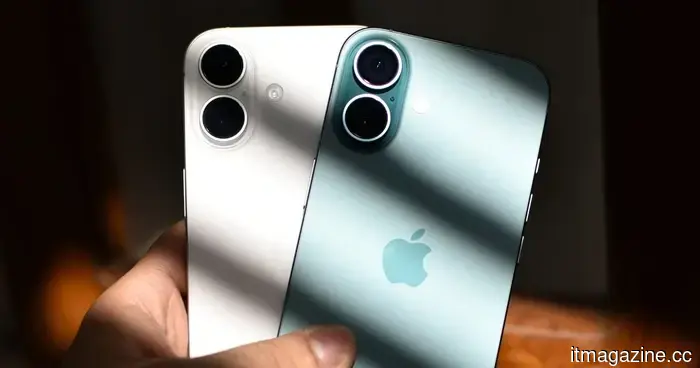 Apple is said to be collaborating with Klarna to allow customers to pay for new devices in installments.
Apple is said to be launching a new financing initiative named Apple Upgrade in collaboration with Klarna later this month.
Apple is said to be collaborating with Klarna to allow customers to pay for new devices in installments.
Apple is said to be launching a new financing initiative named Apple Upgrade in collaboration with Klarna later this month.
 The University of Tennessee has filed a lawsuit against Anthropic regarding patents related to neural networks.
The University of Tennessee has filed a lawsuit against Anthropic in Delaware regarding two neural network patents, marking what is believed to be the firm's inaugural patent litigation.
The University of Tennessee has filed a lawsuit against Anthropic regarding patents related to neural networks.
The University of Tennessee has filed a lawsuit against Anthropic in Delaware regarding two neural network patents, marking what is believed to be the firm's inaugural patent litigation.
 Bloomsbury is one of the publishers set to receive a payout from Anthropic's $1.5 billion copyright settlement.
Bloomsbury reports that 14,087 of its titles are included in Anthropic's $1.5 billion author settlement, with approximately $3,000 allocated for each work shared among the authors.
Bloomsbury is one of the publishers set to receive a payout from Anthropic's $1.5 billion copyright settlement.
Bloomsbury reports that 14,087 of its titles are included in Anthropic's $1.5 billion author settlement, with approximately $3,000 allocated for each work shared among the authors.
The University of Tennessee is filing a lawsuit against Anthropic regarding patents related to neural networks.
The University of Tennessee has filed a lawsuit against Anthropic in Delaware concerning two neural network patents, marking what is believed to be the first patent lawsuit involving the company.