
The University of Tennessee has filed a lawsuit against Anthropic regarding patents related to neural networks.
The University of Tennessee Research Foundation filed a lawsuit against Anthropic on Monday in the U.S. District Court for the District of Delaware, alleging that the artificial intelligence firm developed its models using patented neural network methods for which it never obtained a license.
The complaint, made public on Tuesday, is believed to be the first patent infringement action taken against Anthropic and comes just days after a California judge approved the company's $1.5 billion settlement regarding book piracy with a group of authors.
The foundation, which handles patents for the Knoxville campus, presented the case as part of a broader pattern of behavior. It asserted that Anthropic's "cavalier approach to others’ intellectual property rights in the development of its products extends beyond the use of copyrighted material," as stated in the legal filing.
The lawsuit links the patent claims to the copyright dispute that resulted in the settlement, as well as to a growing list of complaints against the company, including a lawsuit concerning usage restrictions on its Claude Max plans.
The foundation is contesting two patents that it claims pertain to advancements in machine learning, neuromorphic computing, and neuroscience-inspired computing, all developed by professors at the University of Tennessee.
Bloomberg Law reported that the patents in question are numbered 10,019,470 and 10,095,718, and the complaint specifically mentions Claude Code, Anthropic's agentic coding tool, along with its foundational software architecture.
This technology originates from TENNLab, a University of Tennessee organization that has been focusing on brain-inspired computing since 2014. The lab, led by professors Garrett Rose, James Plank, Catherine Schuman, and Ahmedullah Aziz, holds seven granted patents and several pending applications, concentrating on spiking neural networks and custom neuromorphic hardware.
The lab's early frameworks, referred to as NIDA and DANNA, support much of its patent portfolio. Schuman has previously discussed the collaborative nature of the field, remarking that it is "basically impossible to do research in this field in isolation."
The copyright case serves as a backdrop. A federal judge in San Francisco had initially hesitated on the $1.5 billion agreement over concerns regarding author compensation but eventually approved it, which is regarded as the largest settlement of its kind in U.S. copyright history.
The patent lawsuit explores different grounds, shifting the focus from training data to the models' design.
The foundation seeks unspecified monetary damages and a court order to prevent Anthropic from further infringements. It has not specified the value it assigns to the technology, and the complaint does not reveal whether discussions for a license took place before the lawsuit was initiated.
According to Bloomberg Law’s interpretation of the complaint, the foundation claims that Anthropic’s products utilize patented methods for creating neuromorphic networks, including a background execution scheduling system and a memory consolidation engine related to one of the two patents.
The accuracy of these details could not be independently verified from public reports, and the precise correlation between patent claims and Anthropic’s code will be contested as the litigation advances.
Spokespeople for both Anthropic and the foundation did not immediately respond to inquiries for comment. Anthropic has yet to submit a formal answer, and the company has previously provided minimal information regarding the specifics of ongoing legal matters.
The upcoming proceedings are expected to be procedural and slow. Anthropic will need to respond to the complaint in Delaware, a court that handles a significant portion of the nation's patent cases, and the outcome may hinge on claim construction, the meticulous process through which a judge determines the actual coverage of the patents. Only after this will the issue of whether Claude infringes on them come into play.
For a company eager to expand its Claude partner network and having spent the previous year settling an intellectual property dispute, this lawsuit serves as a reminder that the materials used to train a model represent only one aspect of the intellectual property that a competitor may assert. The patents in this case address how a machine learns, rather than what information it has consumed.
Other articles
 Big Tech's expenditure on AI is beginning to align with its cash flow.
The total capital expenditure on AI by the largest cloud companies is expected to surpass the cash generated by their main operations, with free cash flow being impacted first.
Big Tech's expenditure on AI is beginning to align with its cash flow.
The total capital expenditure on AI by the largest cloud companies is expected to surpass the cash generated by their main operations, with free cash flow being impacted first.
 Apple has addressed a bug in the Hide My Email feature that revealed the actual email addresses of users.
A bug in Hide My Email revealed actual addresses through bounced spam messages for more than a year before Apple fixed it, mere days after it became publicly known.
Apple has addressed a bug in the Hide My Email feature that revealed the actual email addresses of users.
A bug in Hide My Email revealed actual addresses through bounced spam messages for more than a year before Apple fixed it, mere days after it became publicly known.
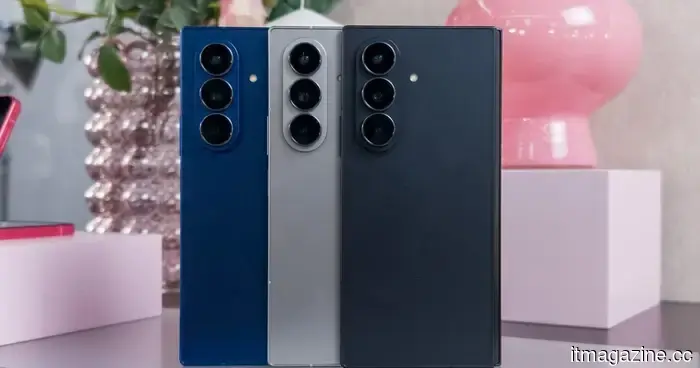 Samsung's promotion of doubling storage for preorders has ended in Austria, and the new offer is not as appealing.
Samsung has eliminated its traditional pre-order benefit of double storage at no extra cost for Austria, substituting it with discounted upgrade options for the Galaxy Z Fold 8 and Z Flip 8.
Samsung's promotion of doubling storage for preorders has ended in Austria, and the new offer is not as appealing.
Samsung has eliminated its traditional pre-order benefit of double storage at no extra cost for Austria, substituting it with discounted upgrade options for the Galaxy Z Fold 8 and Z Flip 8.
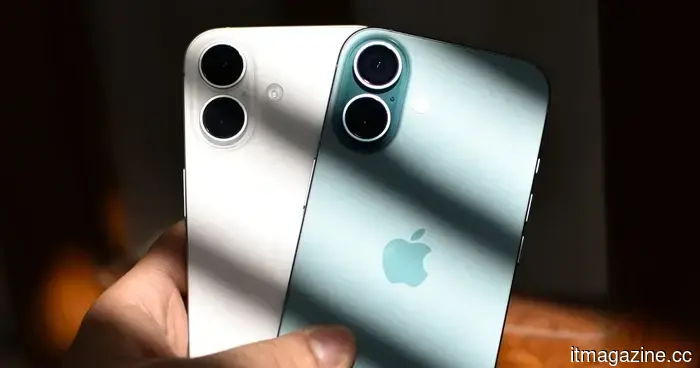 Apple is said to be collaborating with Klarna to allow customers to spread out payments for new devices over a period of time.
Apple is said to be launching a new financing initiative named Apple Upgrade in collaboration with Klarna later this month.
Apple is said to be collaborating with Klarna to allow customers to spread out payments for new devices over a period of time.
Apple is said to be launching a new financing initiative named Apple Upgrade in collaboration with Klarna later this month.
 Samsung's latest AI assistant aims to clarify the significance of your health data.
Samsung Health Assistant analyzes data gathered from your Galaxy devices and transforms fragmented information about sleep, activity, nutrition, and vital signs into interactive wellness advice.
Samsung's latest AI assistant aims to clarify the significance of your health data.
Samsung Health Assistant analyzes data gathered from your Galaxy devices and transforms fragmented information about sleep, activity, nutrition, and vital signs into interactive wellness advice.
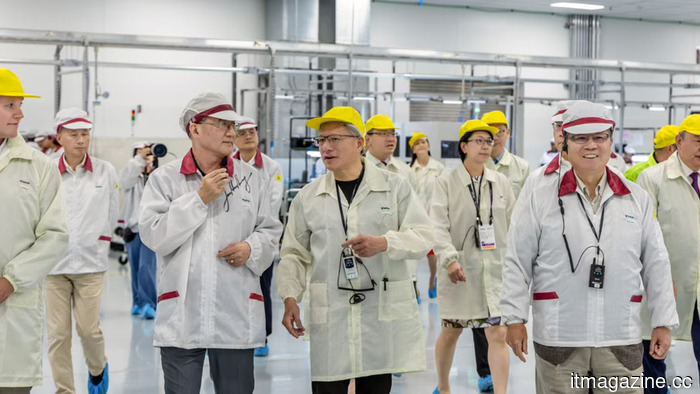 Nvidia supplier Wistron has launched a $700 million factory in Texas to manufacture Grace Blackwell superchips.
Wistron has inaugurated its inaugural factory in the US, located in Fort Worth, a $700 million facility that is already in mass production of Nvidia’s GB300 Grace Blackwell Ultra superchips.
Nvidia supplier Wistron has launched a $700 million factory in Texas to manufacture Grace Blackwell superchips.
Wistron has inaugurated its inaugural factory in the US, located in Fort Worth, a $700 million facility that is already in mass production of Nvidia’s GB300 Grace Blackwell Ultra superchips.
The University of Tennessee has filed a lawsuit against Anthropic regarding patents related to neural networks.
The University of Tennessee has filed a lawsuit against Anthropic in Delaware regarding two neural network patents, marking what is believed to be the firm's inaugural patent litigation.