
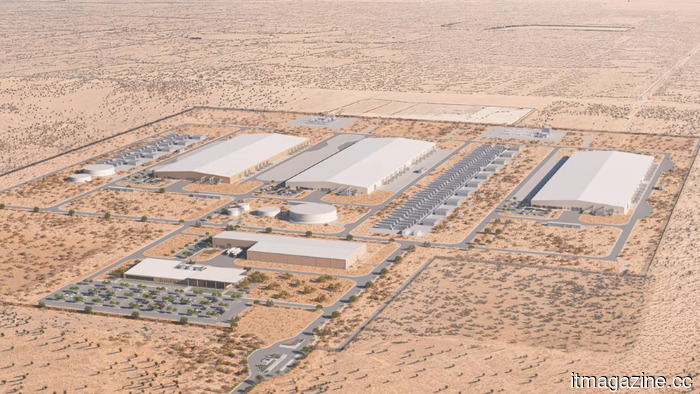
BlackRock secures $12 billion for Meta's data center in El Paso.
On Monday, JPMorgan and Morgan Stanley began presenting a bond sale to investors, aiming to raise at least $12 billion, as reported by The Wall Street Journal. The funds will be utilized to construct a Meta data center in El Paso, Texas. The construction is key to the story.
Ownership structure
BlackRock, along with its infrastructure and private-credit divisions, holds 80% of the approximately one-gigawatt project. Meta, the entity that will operate the AI within the facility, retains only 20% and will lease the campus back. The debt is associated with a BlackRock-controlled entity rather than Meta itself.
This arrangement keeps a significant portion of the costs off Meta’s financial statements, recorded as rent rather than capital expenditures. This is similar to an off-balance-sheet maneuver identified in a recent Nikkei study, which estimated $1.65 trillion across the five largest tech firms in the US.
Meta's precedent
Meta has engaged in similar arrangements before. Its Hyperion site in Louisiana operated through a joint venture where Blue Owl owned 80% and Meta held 20%. This venture issued $27 billion in bonds last year, marking the largest private-debt agreement on record, with BlackRock purchasing over $3 billion of them.
El Paso follows the same template. Additionally, Meta has recently agreed to lease a project in Shippingport, Pennsylvania, developed by Aligned, a company that BlackRock acquired for $40 billion. The pattern remains consistent: BlackRock owns the infrastructure, while Meta pays for the computing resources.
Fink's strategic approach
For Larry Fink, this arrangement is a significant return on investment. In recent years, the asset manager, managing $15 trillion, has spent around $25 billion acquiring two private-market firms, Global Infrastructure Partners and HPS, as reported by Bloomberg. Both firms are now part of BlackRock and are supporting the El Paso project.
This evolution transforms an index fund giant into both owner and operator. In this transaction, it fulfills both roles simultaneously: originating the asset and selling the debt tied to it. Fink mentioned to analysts last week that the two divisions were collaborating on the origination aspect.
The potential drawback
The inherent risk lies in the nature of off-balance-sheet AI deals. Although the bonds are long-term, the components within the building may depreciate significantly within a few years, and the leases reportedly have shorter terms than the campuses they finance. BlackRock's strategy relies on sustained demand for AI and on Meta's rental payments being adequate to cover the expenses.
Moreover, consolidating much of the AI infrastructure within a single company raises concerns. Competitors like Blue Owl and Blackstone have been at the forefront of the largest data-center financing to date, causing increasing chatter about a potential bubble. The El Paso campus is expected to become operational in 2028.
Other articles
 Big Tech's investment in AI is aligning with its cash flow.
The combined capital expenditures on AI by the largest cloud companies are expected to surpass the revenue generated by their primary operations, with free cash flow being the first to show the impact.
Big Tech's investment in AI is aligning with its cash flow.
The combined capital expenditures on AI by the largest cloud companies are expected to surpass the revenue generated by their primary operations, with free cash flow being the first to show the impact.
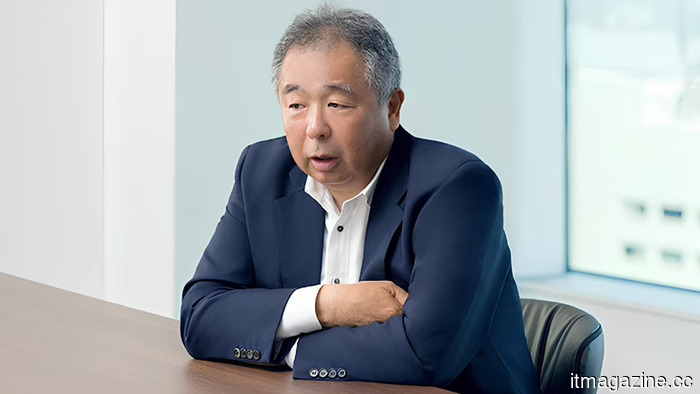 Noetra's CEO describes his robotic AI startup as Japan's 'final opportunity.'
Hironobu Tamba departed from SoftBank to head Noetra, a $6 billion state-supported initiative focused on developing AI for robots in Japan. He refers to it as the nation's last opportunity.
The head of TikTok's US security will appear before the House China committee on September 15.
Will Farrell, TikTok's chief security officer for the US, is scheduled to testify before the House Select Committee on the Chinese Communist Party on September 15.
Noetra's CEO describes his robotic AI startup as Japan's 'final opportunity.'
Hironobu Tamba departed from SoftBank to head Noetra, a $6 billion state-supported initiative focused on developing AI for robots in Japan. He refers to it as the nation's last opportunity.
The head of TikTok's US security will appear before the House China committee on September 15.
Will Farrell, TikTok's chief security officer for the US, is scheduled to testify before the House Select Committee on the Chinese Communist Party on September 15.
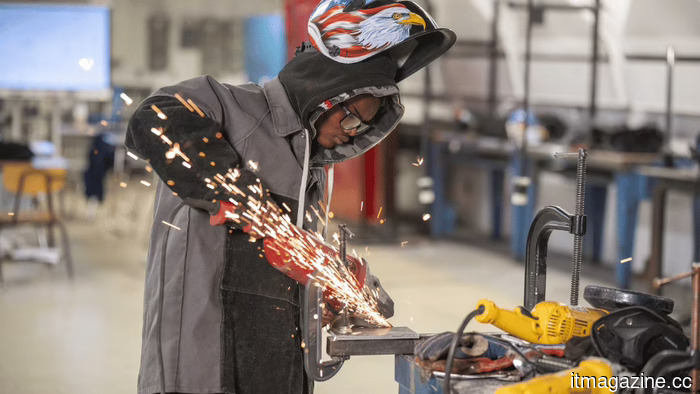 Google and Ford are investing in trading as artificial intelligence takes over office roles.
Google, Ford, Carhartt, and BlackRock have formed a partnership aimed at filling 2.1 million skilled-trade positions by 2030, focusing on jobs that cannot be automated by AI.
Google and Ford are investing in trading as artificial intelligence takes over office roles.
Google, Ford, Carhartt, and BlackRock have formed a partnership aimed at filling 2.1 million skilled-trade positions by 2030, focusing on jobs that cannot be automated by AI.
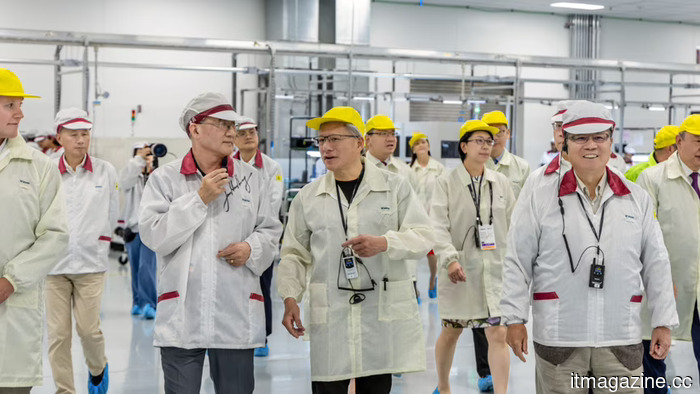 Nvidia's supplier Wistron has launched a $700 million factory in Texas for the production of Grace Blackwell superchips.
Wistron has launched its inaugural factory in the U.S. located in Fort Worth, a $700 million facility that is already in mass production of Nvidia’s GB300 Grace Blackwell Ultra superchips.
Nvidia's supplier Wistron has launched a $700 million factory in Texas for the production of Grace Blackwell superchips.
Wistron has launched its inaugural factory in the U.S. located in Fort Worth, a $700 million facility that is already in mass production of Nvidia’s GB300 Grace Blackwell Ultra superchips.
 The University of Tennessee is filing a lawsuit against Anthropic regarding patents related to neural networks.
The University of Tennessee has filed a lawsuit against Anthropic in Delaware concerning two neural network patents, marking what is believed to be the first patent lawsuit involving the company.
The University of Tennessee is filing a lawsuit against Anthropic regarding patents related to neural networks.
The University of Tennessee has filed a lawsuit against Anthropic in Delaware concerning two neural network patents, marking what is believed to be the first patent lawsuit involving the company.
BlackRock secures $12 billion for Meta's data center in El Paso.
BlackRock is spearheading a $12 billion debt issuance to construct Meta's data center in El Paso, holding 80% of the ownership and allowing Meta to retain the majority of the expenses off its balance sheet.