
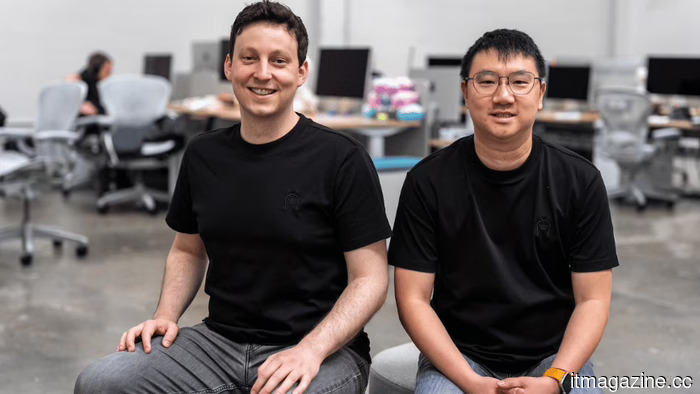
Ollama secures $65 million to support its open-model AI platform.
Ollama has secured $65 million in a Series B funding round, led by Theory Ventures. Other participants included Benchmark, 8VC, Y Combinator, and others. This round brings the company’s total funding to $88 million, just three years after its launch, and Ollama outlined its plans in a blog post on Thursday.
Founder and CEO Jeff Morgan shared the details with TechCrunch, which was the first to report the funding.
The concept is straightforward. Ollama allows developers to download an open-weight model and execute it locally using a single command. If a laptop is unable to manage a larger model, Ollama’s cloud service can run it instead, maintaining the same setup. Billing for the cloud is based on GPU usage rather than per token.
The Docker team is back at it. Morgan and co-founder Michael Chiang previously created Kitematic, which was acquired by Docker in 2015. Their contributions there evolved into Docker Desktop, now used by over ten million developers. Ollama represents a similar advancement for AI, simplifying the setup process so users can easily run their applications.
The growth figures are impressive. Ollama reports that 8.9 million developers utilize its services monthly, a significant increase from around 4.5 million in January. The platform adds nearly a million installations each week and is used by 85% of the Fortune 500 companies across government, healthcare, and finance sectors. The team comprises 14 members.
The investment hinges on a transition from proprietary AI models to open ones. “Open-weight models will generate the majority of tokens within the next 18 to 24 months,” remarked Peter Fenton, the Benchmark partner who led Ollama’s previous funding round and is a board member. Tomasz Tunguz from Theory positions Ollama as a foundational platform that integrates with other systems, making it a valuable asset.
Fenton emphasizes that this is a shift, not a conflict. He noted that the choice between open and closed systems is “not an either/or” scenario. Companies with substantial inference costs have strong incentives to adopt open models, allowing them to leverage closed models like Anthropic when necessary. Morgan mentioned that the pivotal moment occurred around January when open models became proficient enough to handle complex tasks like coding.
Ollama’s cloud is designed to host large open models such as Nemotron, GLM, DeepSeek, Kimi, and MiniMax. It operates as a distribution partner for these labs, as well as for chip manufacturers Nvidia, AMD, Intel, and Qualcomm. This arrangement ensures that users gain access to new models right from their launch. Ollama is part of a wave of open-source projects transitioning into venture-backed entities.
However, not all feedback has been positive. About a year ago, some supporters accused Ollama of allowing its paid cloud service to overshadow the free project, labeling it part of the “enshittification” of developer tools. In response, Morgan and Fenton assert that the free desktop application remains unchanged, while the cloud service simply provides access to larger models not feasible for local execution.
The significance of this development lies in the rapid evolution of open models from experimental tools to production-ready applications. If the affordable, self-hosted option indeed dominates the AI token generation landscape, the infrastructure supporting these models becomes an essential asset. Ollama has positioned itself effectively in this space, with a lean team and a streamlined installation process.
Other articles
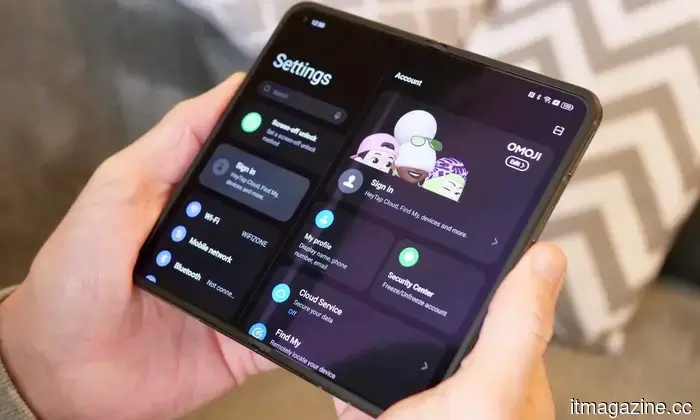 Following Samsung and Apple, Oppo may be the next to enter the expanding foldable market.
Oppo might enter the competition in the growing wide foldable market alongside Samsung and Apple, featuring a device powered by the Snapdragon 8 Gen 6 and equipped with a notably large 6,500mAh battery.
Following Samsung and Apple, Oppo may be the next to enter the expanding foldable market.
Oppo might enter the competition in the growing wide foldable market alongside Samsung and Apple, featuring a device powered by the Snapdragon 8 Gen 6 and equipped with a notably large 6,500mAh battery.
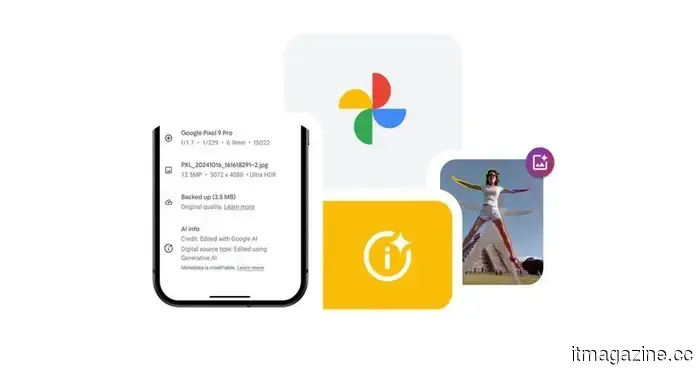 Google's Photos app has just provided Android users with yet another reason to be envious of iPhone users.
Google Photos for Android is now receiving the floating redesign that iPhone users have enjoyed for several months, resulting in a cleaner interface and a more prominent placement for the Gemini-powered Ask Photos feature.
Google's Photos app has just provided Android users with yet another reason to be envious of iPhone users.
Google Photos for Android is now receiving the floating redesign that iPhone users have enjoyed for several months, resulting in a cleaner interface and a more prominent placement for the Gemini-powered Ask Photos feature.
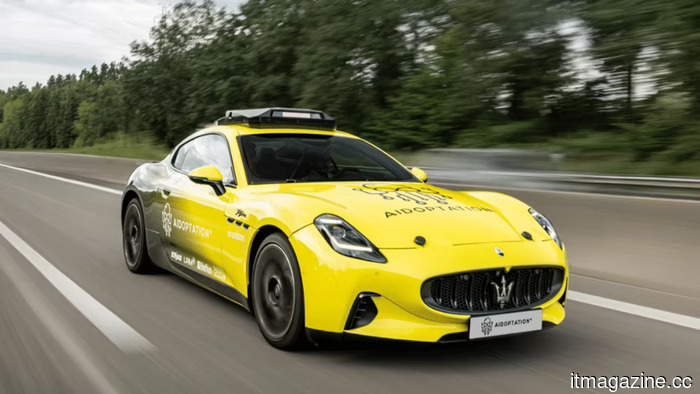 EU's inaugural Level 4 autonomous driving highway test: Aidoptation
Belgium's Aidoptation has secured the EU's inaugural permit to test a Level 4 self-driving vehicle on highways at a speed of 120 km/h, employing deterministic models rather than AI.
EU's inaugural Level 4 autonomous driving highway test: Aidoptation
Belgium's Aidoptation has secured the EU's inaugural permit to test a Level 4 self-driving vehicle on highways at a speed of 120 km/h, employing deterministic models rather than AI.
 Self-driving vehicles are increasingly obstructing first responders, and the federal government has finally lost its patience.
The head of NHTSA reports that autonomous vehicles are repeatedly obstructing ambulances and fire trucks, and he is setting a deadline for companies to address the issue.
Self-driving vehicles are increasingly obstructing first responders, and the federal government has finally lost its patience.
The head of NHTSA reports that autonomous vehicles are repeatedly obstructing ambulances and fire trucks, and he is setting a deadline for companies to address the issue.
 John Deere's victory regarding the right-to-repair primarily concerns software.
The settlement between the FTC and John Deere marks the largest right-to-repair victory in the US so far, serving as a cautionary tale regarding software lock-in for all the devices you possess.
John Deere's victory regarding the right-to-repair primarily concerns software.
The settlement between the FTC and John Deere marks the largest right-to-repair victory in the US so far, serving as a cautionary tale regarding software lock-in for all the devices you possess.
 Mark Hura from Oracle: your advantage with AI lies in your data.
During the RAISE Summit, Oracle's Mark Hura stated that the true advantage of AI lies in your own proprietary data and business results, rather than the AI model that you purchase.
Mark Hura from Oracle: your advantage with AI lies in your data.
During the RAISE Summit, Oracle's Mark Hura stated that the true advantage of AI lies in your own proprietary data and business results, rather than the AI model that you purchase.
Ollama secures $65 million to support its open-model AI platform.
Ollama has secured $65 million in a Series B funding round led by Theory Ventures, bringing its total funding to $88 million, as its open-model runner approaches 9 million developers.