

Samsung aims to incorporate its own chip into your next PC, focusing on enhancing AI tasks.
Samsung
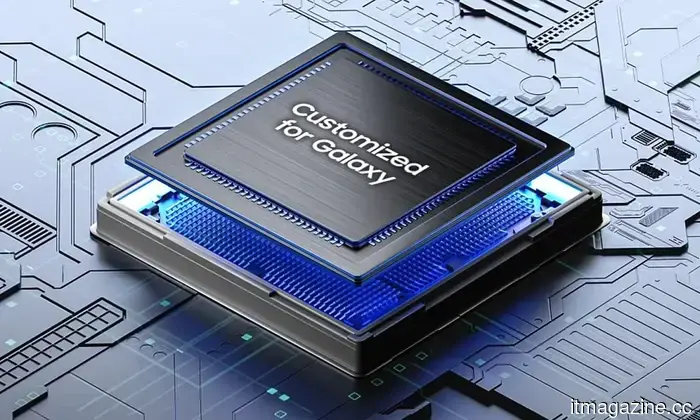
Samsung appears to be planning a new foray into the PC chip market. A report from the Korea Economic Daily indicates that Samsung’s System LSI division is working on a dedicated AI accelerator for PCs known as Gaia. The company has reportedly provided early samples to Lenovo and HP for performance evaluation, with mass production anticipated to start as early as 2027.
Notable Samsung leaker Ice Universe has described this initiative as the company's return to the PC processor sector after nearly 13 years. However, the details suggest that it may differ from a conventional laptop processor. Gaia is likely a specialized companion chip intended to manage artificial intelligence tasks rather than serve as a full substitute for Intel, AMD, or Qualcomm CPUs.
BREAKING! Samsung Electronics is getting ready to re-enter the PC market with a fresh strategy. A report from South Korean news outlet News1 states that Samsung’s System LSI Business is independently creating a new System-on-Chip (SoC) codenamed “Gaia.” Primarily…— Ice Universe (@UniverseIce) July 9, 2026
Gaia will function alongside your PC’s primary processor.
Samsung plans to manufacture Gaia with a 4-nanometer process. Its design focuses on an optimized neural processing unit (NPU) that can accelerate generative AI and other on-device tasks without continuous dependence on cloud servers. Additionally, the company is looking into integrating processing-in-memory technology.
PIM allows certain calculations to occur inside the memory itself, thereby reducing the data transfer between the processor and RAM. Consequently, Samsung could potentially combine Gaia with its own memory products, allowing for greater control over critical components of the AI computing process.
Many significant details remain undisclosed. The report does not mention Gaia’s AI performance, power consumption, or any other essential specifications. This means a direct comparison with Qualcomm’s Snapdragon X2 processors or Nvidia’s more powerful RTX Spark platform isn't possible yet. Nevertheless, a dedicated discrete accelerator could enable PC manufacturers to enhance local AI capabilities without reconstructing an entire laptop around a new processor architecture.
This is not the first time Samsung has ventured into PC chips.
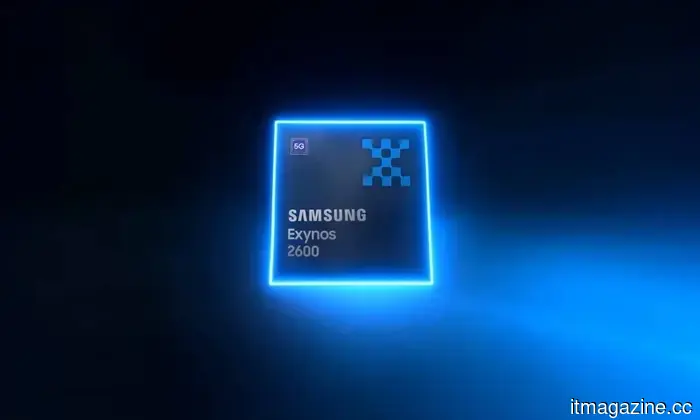
Samsung’s Exynos 2600 includes a specialized NPU for managing on-device AI tasks Samsung.
In addition to being a chip supplier for major companies like Nvidia and AMD, Samsung has a longstanding history in PC silicon that goes back over ten years. The company had its Exynos 5 chips powering some Chromebooks during the early 2010s.
Currently, Samsung’s Galaxy Book laptops predominantly utilize processors from Intel and Qualcomm. For instance, the newly announced Galaxy Book6 Edge uses Qualcomm’s Snapdragon X2 Elite. Gaia could eventually provide Samsung with a proprietary component of that hardware stack once more.
Vikhyaat Vivek is a technology journalist and reviewer with seven years of experience focused on consumer hardware.
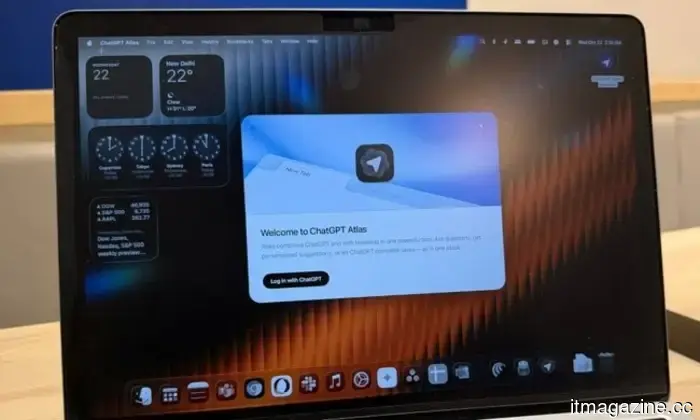
OpenAI is discontinuing the ChatGPT Atlas browser, which I enjoyed, but it was a tough climb to the top.
It was innovative in several aspects, before being replicated to its core.
When OpenAI released its own web browser, there was substantial skepticism regarding why a leading AI lab would venture into browser development in the first place. Nevertheless, the company launched ChatGPT Atlas with a significant array of integrated AI features. However, the ambitions for the browser are coming to an end, with plans to discontinue it in September this year.
OpenAI has announced it will retire the relatively short-lived browser in favor of promoting the new ChatGPT work desktop application, which already has an in-built browser along with a cloud browser for AI agents. With ChatGPT being accessible on other browsers like Chrome as an extension, there is less need for maintaining a dedicated browser project.
Windows 11 Search is expanding, but only by 4 pixels.
This modification may be in preparation for the forthcoming Ask Copilot feature.
If you've used Windows 11 Search after the June update, you may have noticed it's become somewhat more user-friendly. Microsoft recently improved the responsiveness of the Start menu and Search, and resolved one of Search’s unusual limitations by allowing it to search for local files using just two characters.
It seems the company is now implementing a minor adjustment. According to Windows Central, it was accidentally revealed that the search box in the Taskbar and Start menu is increasing in height by 4 pixels. Four pixels might seem like a change that only a UI/UX designer would appreciate, but screenshots from the Insider Preview build indicate that it is noticeable once you know where to look.
Claude Reflect has arrived. It's your typical yearly Wrapped feature, but from Anthropic’s AI.
It also prompts you to review your usage and encourages taking breaks.
Anthropic has introduced a usage analytics dashboard for Claude. It resembles the 'Wrapped' feature that many major streaming or AI services announce at the end of the year, although it isn’t called Claude Wrapped. The feature, termed Claude Reflect, does more than simply report your interactions with the AI. Now available in beta for free, Pro,



Other articles
 Following Samsung and Apple, Oppo may be the next company to enter the growing foldable market.
Oppo might enter the expanding competition of wide foldable devices alongside Samsung and Apple, with a Snapdragon 8 Gen 6-equipped device that features a notably large 6,500mAh battery.
Following Samsung and Apple, Oppo may be the next company to enter the growing foldable market.
Oppo might enter the expanding competition of wide foldable devices alongside Samsung and Apple, with a Snapdragon 8 Gen 6-equipped device that features a notably large 6,500mAh battery.
 France intends to increase penalties for disinformation related to elections driven by AI by three times.
PM Lecornu aims to increase penalties for misleading election content threefold and establish a public information commission, reigniting the discussion on who determines what is false.
France intends to increase penalties for disinformation related to elections driven by AI by three times.
PM Lecornu aims to increase penalties for misleading election content threefold and establish a public information commission, reigniting the discussion on who determines what is false.
 Samsung aims to incorporate its own chip into your next PC, with a focus on enhancing the speed of AI tasks.
Samsung's rumored Gaia accelerator may introduce specialized on-device AI hardware for upcoming PCs, putting the company in a more competitive landscape alongside Nvidia and Qualcomm.
Samsung aims to incorporate its own chip into your next PC, with a focus on enhancing the speed of AI tasks.
Samsung's rumored Gaia accelerator may introduce specialized on-device AI hardware for upcoming PCs, putting the company in a more competitive landscape alongside Nvidia and Qualcomm.
 Google's Photos app has just provided Android users with yet another reason to be envious of iPhone users.
Google Photos for Android is now receiving the floating redesign that iPhone users have enjoyed for several months, resulting in a cleaner interface and a more prominent placement for the Gemini-powered Ask Photos feature.
Google's Photos app has just provided Android users with yet another reason to be envious of iPhone users.
Google Photos for Android is now receiving the floating redesign that iPhone users have enjoyed for several months, resulting in a cleaner interface and a more prominent placement for the Gemini-powered Ask Photos feature.
 Google's Photos app has just provided Android users with yet another reason to feel envious of iPhone users.
Google Photos for Android is finally receiving the floating redesign that iPhone users have enjoyed for several months, resulting in a cleaner interface and placing Gemini-powered Ask Photos in a more noticeable position.
Google's Photos app has just provided Android users with yet another reason to feel envious of iPhone users.
Google Photos for Android is finally receiving the floating redesign that iPhone users have enjoyed for several months, resulting in a cleaner interface and placing Gemini-powered Ask Photos in a more noticeable position.
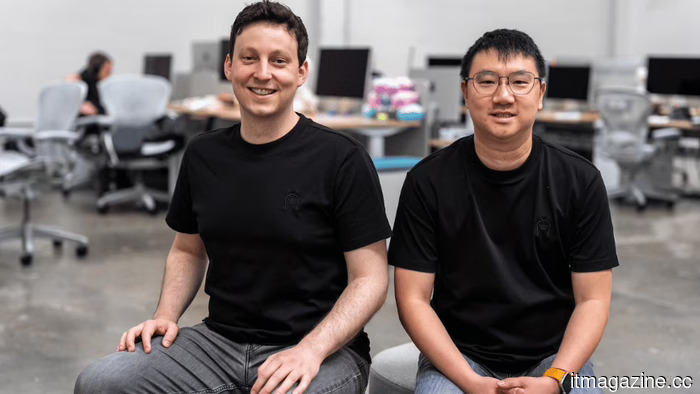 Ollama secures $65 million to support its open-model AI platform.
Ollama has secured $65 million in a Series B funding round led by Theory Ventures, bringing its total funding to $88 million, as its open-model runner approaches 9 million developers.
Ollama secures $65 million to support its open-model AI platform.
Ollama has secured $65 million in a Series B funding round led by Theory Ventures, bringing its total funding to $88 million, as its open-model runner approaches 9 million developers.
Samsung aims to incorporate its own chip into your next PC, focusing on enhancing AI tasks.
Samsung's rumored Gaia accelerator may introduce specialized on-device AI hardware to upcoming PCs, positioning the company in a competitive landscape alongside Nvidia and Qualcomm.