
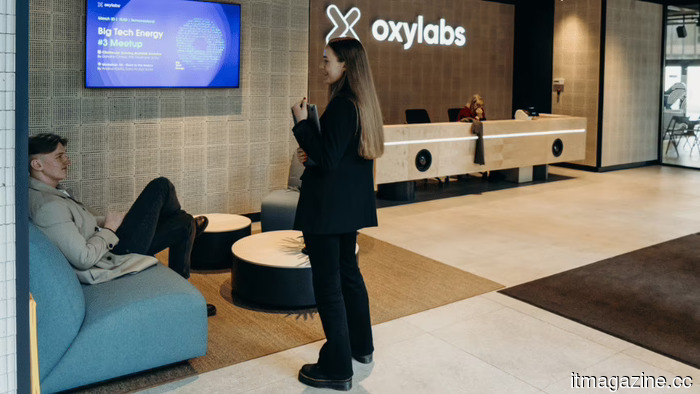
Oxylabs secures $130 million from Warburg Pincus, achieving a valuation of $3.6 billion.
Oxylabs has secured $130 million from the private equity firm Warburg Pincus. This marks the company's first external investment since its inception in 2015. The agreement values the Vilnius-based data infrastructure company at approximately $3.6 billion. Oxylabs announced the funding on Thursday.
This figure is remarkable for a company that has self-funded its growth. Oxylabs reports an annual recurring revenue of $350 million and serves over 350,000 customers. It is the second unicorn to emerge from the Tesonet accelerator, following Nord Security, the creator of NordVPN. Furthermore, it is among the most valuable companies in the history of Lithuania.
Providing tools for the agentic web
Oxylabs offers the infrastructure for large-scale public web data collection. Initially, it operated as a premium proxy service, which allows a company to route its requests through multiple addresses to gather prices, listings, or threat data without being blocked. Today, it markets itself as a comprehensive web-data platform with over 160 patents and manages billions of requests daily.
The timing is crucial. AI agents are increasingly navigating the web more than humans, requiring a live feed of available data rather than outdated indexes. “The next generation of AI won’t be powered by static indexes,” stated CEO Vytautas Savickas, suggesting that this is the market Oxylabs has been developing for the past decade.
Warburg’s second investment in Lithuania
The investment comes from the Warburg Pincus Capital Solutions Founders Fund, which closed in 2024 with over $4 billion. This isn’t Warburg Pincus’s first venture in Vilnius, as the firm also supports Nord Security, providing it with stakes in Lithuania’s emerging yet influential cluster of data companies.
“Oxylabs has positioned itself as a leader in web intelligence,” remarked Allison Ross, a principal at Warburg Pincus. For Oxylabs, this deal signifies a milestone for European technology, with Savickas emphasizing that it demonstrates Europe's capability to develop world-class technology essential for AI developers.
An industry with a complex reputation
The web-data sector comes with challenges. Large-scale scraping often occupies a legal grey area, and the residential proxy networks involved face scrutiny regarding the sources of their home connections. Oxylabs emphasizes compliance to distinguish itself in the market. The company co-founded an ethical web-data initiative and references audits at its trust center. Additionally, it differentiates itself from what it terms “providers with low or collapsing reputations.”
The funding will be used for ongoing operations, as well as potential acquisitions. Oxylabs acquired Webshare in 2022 and ScrapingBee in 2025, indicating that this investment will enhance its capacity for future partnerships and purchases. Goldman Sachs provided advisory services for the fundraising.
Why this is significant
This investment illustrates where investors believe AI value is concentrating. It's not merely in the models themselves, but also in the infrastructure supporting them. As AI agents conduct shopping, booking, and research on our behalf, there must be a reliable source of real-time web data. Oxylabs is betting on the notion that this foundational layer will prove to be enduring.
Other articles
 Samsung aims to incorporate its own chip into your next PC, focusing on enhancing AI tasks.
Samsung's rumored Gaia accelerator may introduce specialized on-device AI hardware to upcoming PCs, positioning the company in a competitive landscape alongside Nvidia and Qualcomm.
Samsung aims to incorporate its own chip into your next PC, focusing on enhancing AI tasks.
Samsung's rumored Gaia accelerator may introduce specialized on-device AI hardware to upcoming PCs, positioning the company in a competitive landscape alongside Nvidia and Qualcomm.
 EU's inaugural Level 4 self-driving highway trial: Aidoptation
Belgium's Aidoptation has secured the EU's initial permit to conduct tests of a Level 4 self-driving vehicle on motorways at speeds of 120 km/h, employing deterministic models rather than artificial intelligence.
EU's inaugural Level 4 self-driving highway trial: Aidoptation
Belgium's Aidoptation has secured the EU's initial permit to conduct tests of a Level 4 self-driving vehicle on motorways at speeds of 120 km/h, employing deterministic models rather than artificial intelligence.
 Following Samsung and Apple, Oppo may be the next to enter the expanding foldable market.
Oppo might enter the competition in the growing wide foldable market alongside Samsung and Apple, featuring a device powered by the Snapdragon 8 Gen 6 and equipped with a notably large 6,500mAh battery.
Following Samsung and Apple, Oppo may be the next to enter the expanding foldable market.
Oppo might enter the competition in the growing wide foldable market alongside Samsung and Apple, featuring a device powered by the Snapdragon 8 Gen 6 and equipped with a notably large 6,500mAh battery.
 Securing Shadow IT within the corporate setting.
Shadow IT introduces security vulnerabilities within enterprises that go unmonitored, unpatched, and lack proper access controls. This article explores the increasing risks associated with unsanctioned SaaS, shadow AI, and geopolitical data sovereignty issues, as well as how vendor risk assessments tackle the third-party aspect on a large scale.
Securing Shadow IT within the corporate setting.
Shadow IT introduces security vulnerabilities within enterprises that go unmonitored, unpatched, and lack proper access controls. This article explores the increasing risks associated with unsanctioned SaaS, shadow AI, and geopolitical data sovereignty issues, as well as how vendor risk assessments tackle the third-party aspect on a large scale.
 Self-driving vehicles are increasingly obstructing first responders, and the federal government has finally lost its patience.
The head of NHTSA reports that autonomous vehicles are repeatedly obstructing ambulances and fire trucks, and he is setting a deadline for companies to address the issue.
Self-driving vehicles are increasingly obstructing first responders, and the federal government has finally lost its patience.
The head of NHTSA reports that autonomous vehicles are repeatedly obstructing ambulances and fire trucks, and he is setting a deadline for companies to address the issue.
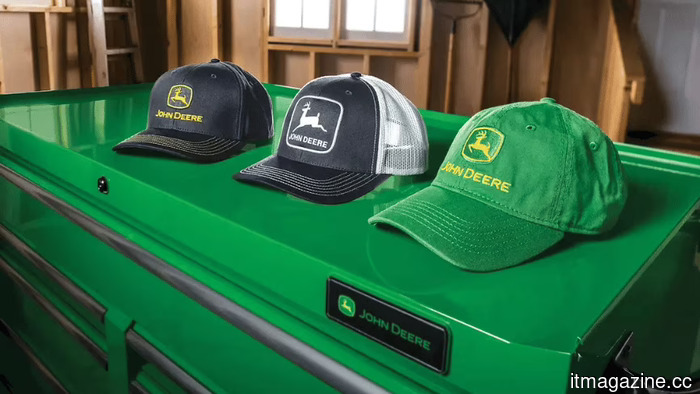 John Deere's victory regarding the right-to-repair primarily concerns software.
The settlement between the FTC and John Deere marks the largest right-to-repair victory in the US so far, serving as a cautionary tale regarding software lock-in for all the devices you possess.
John Deere's victory regarding the right-to-repair primarily concerns software.
The settlement between the FTC and John Deere marks the largest right-to-repair victory in the US so far, serving as a cautionary tale regarding software lock-in for all the devices you possess.
Oxylabs secures $130 million from Warburg Pincus, achieving a valuation of $3.6 billion.
Oxylabs of Lithuania has secured $130 million from Warburg Pincus, achieving a valuation of $3.6 billion to develop web data infrastructure for the era of agentic AI.