
Ollama secures $65 million for its open-model AI platform.
Ollama has secured $65 million in a Series B funding round led by Theory Ventures, with participation from Benchmark, 8VC, Y Combinator, and others. This round brings the company’s total funding to $88 million, occurring three years post-launch, with Ollama outlining its strategy in a blog post on Thursday.
Founder and CEO Jeff Morgan shared details with TechCrunch, which first reported the funding news. The concept is straightforward: Ollama allows developers to download an open-weight model and execute it locally with a single command. If a laptop struggles with a larger model, Ollama’s cloud service runs it, maintaining the same setup. Charges for cloud usage are based on GPU time rather than per token.
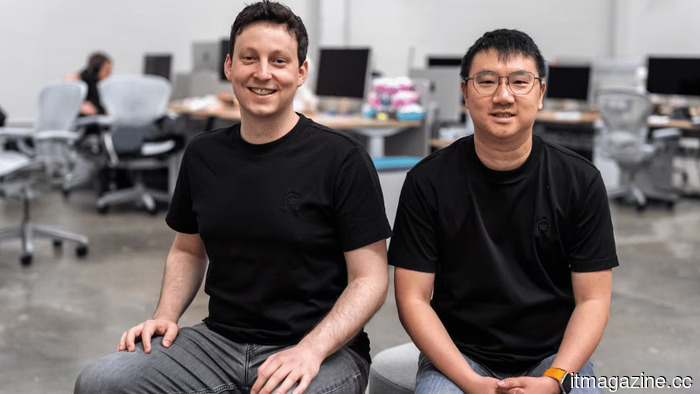
The founding team has experience in this area, as Morgan and co-founder Michael Chiang previously created Kitematic, which was acquired by Docker in 2015. Their contributions there evolved into Docker Desktop, used by over ten million developers today. Ollama aims to simplify AI usage by removing complex setups, allowing users to simply run their models.
Ollama's growth is noteworthy, claiming 8.9 million monthly users—up from 4.5 million in January—adding nearly a million new installations each week. It is utilized by 85% of Fortune 500 companies, spanning sectors like government, healthcare, and finance. The team comprises 14 members.
The investment is based on a anticipated transition from closed to open AI models. Peter Fenton, the Benchmark partner who led Ollama’s prior funding round and serves on its board, stated, “Open-weight models will generate the supermajority of tokens within the next 18 to 24 months.” Theory’s Tomasz Tunguz views Ollama as the foundational layer that integrates with other technologies, which is a strategically important position.
Fenton emphasizes this transition as a shift rather than a conflict, stating that open versus closed is “not an either/or” scenario. Companies burdened by high inference costs are likely to adopt open models while leveraging closed models like Anthropic as necessary. Morgan noted that a pivotal moment occurred around January when open models became sufficiently advanced to perform complex tasks like coding.
Ollama’s cloud features heavy-duty open models, including Nemotron, GLM, DeepSeek, Kimi, and MiniMax. It acts as a distribution partner for those labs, alongside chipmakers Nvidia, AMD, Intel, and Qualcomm, ensuring users receive new models immediately upon release. Ollama is part of a larger trend of open-source initiatives evolving into venture-backed enterprises.
However, not all feedback has been positive. Approximately a year ago, some supporters accused Ollama of allowing its paid cloud services to overshadow the free project, labeling it as part of the “enshittification” of developer tools. Morgan and Fenton counter that the free desktop application remains unchanged, and the cloud service accommodates models that are too large to execute on personal devices.
This development is significant as Ollama exemplifies the rapid evolution of open models from experimental projects to viable production tools. If the accessible, ownable alternative indeed becomes the primary source of AI tokens, the infrastructure that supports them will gain considerable value. Ollama has positioned itself at the forefront of this movement, with a compact team and a seamless installation process.
Other articles
 Securing Shadow IT within the corporate setting.
Shadow IT introduces security vulnerabilities within enterprises that go unmonitored, unpatched, and lack proper access controls. This article explores the increasing risks associated with unsanctioned SaaS, shadow AI, and geopolitical data sovereignty issues, as well as how vendor risk assessments tackle the third-party aspect on a large scale.
Securing Shadow IT within the corporate setting.
Shadow IT introduces security vulnerabilities within enterprises that go unmonitored, unpatched, and lack proper access controls. This article explores the increasing risks associated with unsanctioned SaaS, shadow AI, and geopolitical data sovereignty issues, as well as how vendor risk assessments tackle the third-party aspect on a large scale.
 John Deere's victory regarding the right to repair primarily concerns software.
The settlement between the FTC and John Deere represents the largest right-to-repair victory in the US thus far, serving as a caution regarding software restrictions in all your devices.
John Deere's victory regarding the right to repair primarily concerns software.
The settlement between the FTC and John Deere represents the largest right-to-repair victory in the US thus far, serving as a caution regarding software restrictions in all your devices.
 EU's inaugural Level 4 self-driving highway trial: Aidoptation
Belgium's Aidoptation has secured the EU's initial permit to conduct tests of a Level 4 self-driving vehicle on motorways at speeds of 120 km/h, employing deterministic models rather than artificial intelligence.
EU's inaugural Level 4 self-driving highway trial: Aidoptation
Belgium's Aidoptation has secured the EU's initial permit to conduct tests of a Level 4 self-driving vehicle on motorways at speeds of 120 km/h, employing deterministic models rather than artificial intelligence.
 Google's Photos app has just provided Android users with yet another reason to be envious of iPhone users.
Google Photos for Android is now receiving the floating redesign that iPhone users have enjoyed for several months, resulting in a cleaner interface and a more prominent placement for the Gemini-powered Ask Photos feature.
Google's Photos app has just provided Android users with yet another reason to be envious of iPhone users.
Google Photos for Android is now receiving the floating redesign that iPhone users have enjoyed for several months, resulting in a cleaner interface and a more prominent placement for the Gemini-powered Ask Photos feature.
 A survey reveals that parents are concerned that AI is becoming a dependency for their children, while schools are finding it challenging to adapt.
A recent survey conducted by Deloitte discovered that 49% of parents are concerned their child depends too heavily on AI, whereas only 33% of schools have established any AI-related guidelines.
A survey reveals that parents are concerned that AI is becoming a dependency for their children, while schools are finding it challenging to adapt.
A recent survey conducted by Deloitte discovered that 49% of parents are concerned their child depends too heavily on AI, whereas only 33% of schools have established any AI-related guidelines.
 Ensuring the security of Shadow IT in the corporate setting
Shadow IT introduces security vulnerabilities for enterprises that are not covered by monitoring, patching, and access controls. This article explores the increasing exposure of shadow IT, including unauthorized SaaS, shadow AI, and risks related to geopolitical data sovereignty, and discusses how vendor risk assessment manages third-party risks on a broader scale.
Ensuring the security of Shadow IT in the corporate setting
Shadow IT introduces security vulnerabilities for enterprises that are not covered by monitoring, patching, and access controls. This article explores the increasing exposure of shadow IT, including unauthorized SaaS, shadow AI, and risks related to geopolitical data sovereignty, and discusses how vendor risk assessment manages third-party risks on a broader scale.
Ollama secures $65 million for its open-model AI platform.
Ollama has secured $65 million in a Series B funding round led by Theory Ventures, bringing its total funding to $88 million, as its open-model runner approaches nearly 9 million developers.