
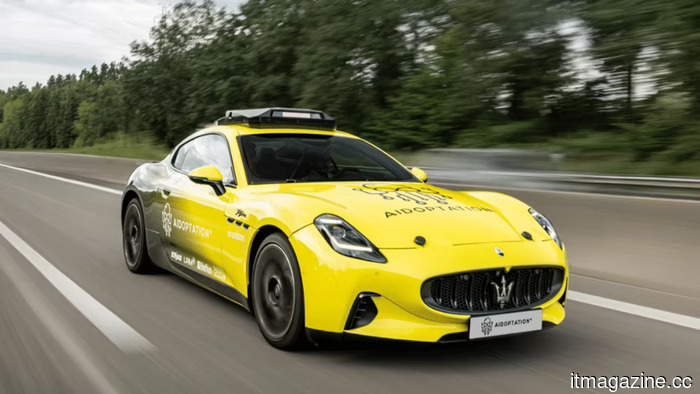
EU's inaugural Level 4 autonomous driving highway test: Aidoptation
Aidoptation has received approval to test a fully self-driving car at highway speeds on public roads in Belgium. This represents the first Level 4 permit of its kind within the European Union. The company disclosed that the approval encompasses 100 km of the E313 and E314 motorways in Limburg.
Level 4 indicates that the car manages all functions independently, without requiring human oversight. This distinguishes it from the driver-assist systems that have been utilized in Europe to date. For instance, Tesla's Full Self-Driving (FSD) operates at Level 2, keeping the human driver legally responsible. The vehicle used in Aidoptation’s tests is a Maserati GranTurismo Folgore, an electric coupe equipped with lidar, radar, cameras, and robotic technology.
Focusing on the high-speed sector
While much of the attention on self-driving technology is directed at slow city robotaxis, Aidoptation is targeting the opposite spectrum. The company is concentrated on highways, where accidents occur less frequently but tend to be deadlier. At a speed of 120 km/h, a car covers over 50 meters in the typical 1.5 seconds it takes for an average driver to react.
Born from the Indy Autonomous Challenge, a driverless racing competition, Aidoptation's engineers set a record for autonomous speed at 318 km/h using a driverless Maserati MC20 at the Kennedy Space Center. Their product, EdgeDrive, is designed for the rapid-response challenges that arise at high speeds, such as unexpected obstacles, emergency maneuvers, and low-traction surfaces.
The unique no-AI approach
What makes this development particularly noteworthy is that EdgeDrive does not utilize AI for its driving decisions. Instead, it operates based on what Aidoptation refers to as first-principles deterministic models. The company asserts that every decision made by the vehicle is traceable and audit-friendly, providing reassurance to regulators and insurers that a neural network cannot offer.
This is a significant position to take. The majority of the robotaxi sector relies heavily on machine learning, which has led to challenging situations when vehicles act unpredictably. A system that can be understood step-by-step is more appealing to safety regulators.
Cautious testing
Testing will not be conducted randomly. A human safety driver will be positioned behind the wheel at all times, prepared to take control if necessary. The process adheres to a phased plan developed in collaboration with the Federal Public Service Mobility and the Flemish roads agency. The Belgian insurer Ethias is financing the project and supporting the company as well.
Flanders views this as a significant milestone. Local officials are promoting the permit as evidence that the region can take the lead in autonomous driving technology rather than merely following others. Aidoptation was established in 2025 and counts LRM, SFPIM, Ethias Ventures, and Belfius Bank among its supporters.
The significance of this development
Europe has lagged behind the US and China in terms of public-road autonomy, hampered by caution and regulatory hurdles. The issuance of the first Level 4 highway permit, even with the presence of a safety driver, marks a significant achievement. The ongoing tests will determine whether a deterministic, non-AI system can effectively navigate the complexities of real-world driving at 120 km/h.
Other articles
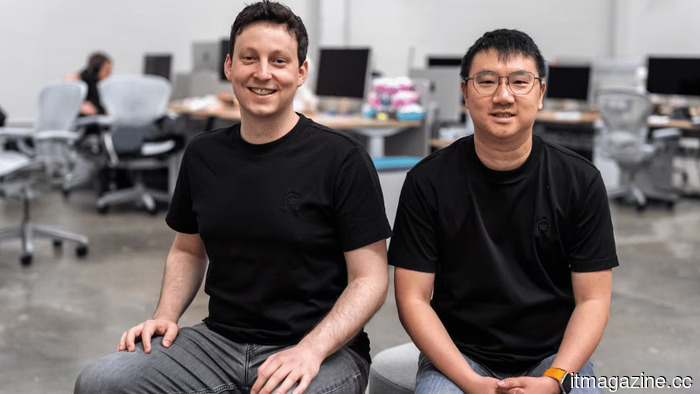 Ollama secures $65 million for its open-model AI platform.
Ollama has secured $65 million in a Series B funding round led by Theory Ventures, bringing its total funding to $88 million, as its open-model runner approaches nearly 9 million developers.
Ollama secures $65 million for its open-model AI platform.
Ollama has secured $65 million in a Series B funding round led by Theory Ventures, bringing its total funding to $88 million, as its open-model runner approaches nearly 9 million developers.
 Google's Photos app has just provided Android users with yet another reason to feel envious of iPhone users.
Google Photos for Android is finally receiving the floating redesign that iPhone users have enjoyed for several months, resulting in a cleaner interface and placing Gemini-powered Ask Photos in a more noticeable position.
Google's Photos app has just provided Android users with yet another reason to feel envious of iPhone users.
Google Photos for Android is finally receiving the floating redesign that iPhone users have enjoyed for several months, resulting in a cleaner interface and placing Gemini-powered Ask Photos in a more noticeable position.
 AI image generators have moved beyond their troubling beginnings and entered a phase of artificial luxury.
I evaluated Meta Muse, Gemini Nano Banana 2, and ChatGPT Images 2.0. While the glaring AI errors are decreasing, the new issues are more challenging to dismiss.
AI image generators have moved beyond their troubling beginnings and entered a phase of artificial luxury.
I evaluated Meta Muse, Gemini Nano Banana 2, and ChatGPT Images 2.0. While the glaring AI errors are decreasing, the new issues are more challenging to dismiss.
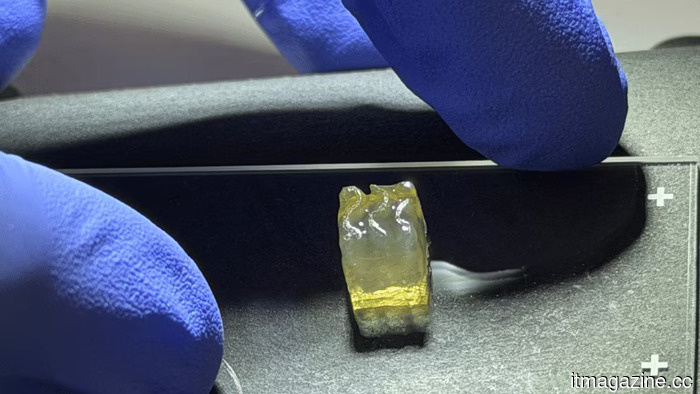 A startup manufactured 3D-printed kidney and liver tissues in space.
Auxilium claims it has bioprinted kidney and liver tissue aboard the ISS, marking a first in this area. The immediate benefit is in drug-testing organoids rather than creating transplantable organs.
A startup manufactured 3D-printed kidney and liver tissues in space.
Auxilium claims it has bioprinted kidney and liver tissue aboard the ISS, marking a first in this area. The immediate benefit is in drug-testing organoids rather than creating transplantable organs.
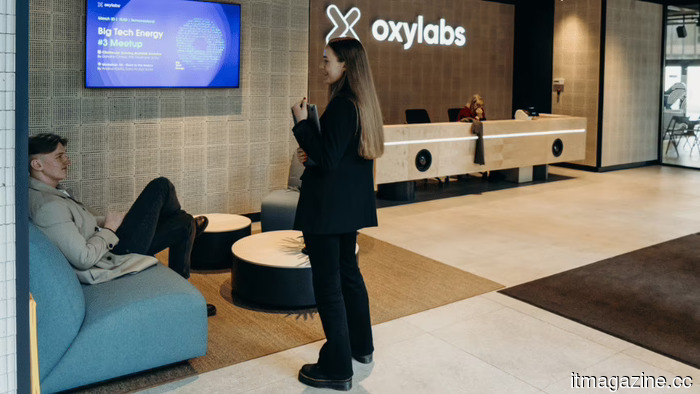 Oxylabs secures $130 million from Warburg Pincus, achieving a valuation of $3.6 billion.
Oxylabs of Lithuania has secured $130 million from Warburg Pincus, achieving a valuation of $3.6 billion to develop web data infrastructure for the era of agentic AI.
Oxylabs secures $130 million from Warburg Pincus, achieving a valuation of $3.6 billion.
Oxylabs of Lithuania has secured $130 million from Warburg Pincus, achieving a valuation of $3.6 billion to develop web data infrastructure for the era of agentic AI.
 Samsung aims to incorporate its own chip into your next PC, with a focus on enhancing the speed of AI tasks.
Samsung's rumored Gaia accelerator may introduce specialized on-device AI hardware for upcoming PCs, putting the company in a more competitive landscape alongside Nvidia and Qualcomm.
Samsung aims to incorporate its own chip into your next PC, with a focus on enhancing the speed of AI tasks.
Samsung's rumored Gaia accelerator may introduce specialized on-device AI hardware for upcoming PCs, putting the company in a more competitive landscape alongside Nvidia and Qualcomm.
EU's inaugural Level 4 autonomous driving highway test: Aidoptation
Belgium's Aidoptation has secured the EU's inaugural permit to test a Level 4 self-driving vehicle on highways at a speed of 120 km/h, employing deterministic models rather than AI.