

Mark Hura from Oracle: your data is your competitive advantage in AI.
The pitch for enterprise AI typically begins with the model. However, Mark Hura, Oracle's president of global field operations, aims to change that perspective. Speaking at the RAISE Summit in Paris, he asserted that the companies excelling in AI aren't looking to purchase an AI stack; instead, they are focused on achieving specific outcomes.
For instance, consider a hotel group. It manages property operations, guest services, food and beverage, staffing, finance, and supply chains. "They’re not considering buying an AI stack," Hura noted. Their primary concerns are enhancing the guest experience, encouraging repeat bookings, and liberating their staff's time. In this context, AI is merely a tool, not the objective.
He provided concrete industry examples. In banking, the emphasis is on quick fraud detection. In healthcare, Oracle’s clinical AI prepares a patient summary prior to appointments, retrieves medical history, and converts verbal conversations into notes. It can also recommend medications, follow-ups, and referrals.
Hura claimed that the significant benefit is time savings. Patients interact with a doctor focused on them rather than a computer screen. Clinicians recover hours, allowing them to see more patients and alleviating job-related stress. In construction and engineering, he asserted that AI has reduced certain processes by 72 percent, with one client saving over $130,000 annually. In the energy sector, AI combines outage and weather data to forecast failures and manage crew deployment.
At the core of Hura’s argument is that with advancements in frontier models, the competitive edge now lies in a company’s proprietary data integrated into those models. He emphasized that this data is where valuable intellectual property resides.
This perspective aligns well with Oracle’s history of selling databases for the past fifty years. Hura's point is that Oracle can integrate AI where the data is already stored, rather than copying or moving it, which he argues minimizes both costs and the risk of data leaks. He portrayed the critical data stored in Oracle systems as a strategic benefit, with partner models utilized to analyze it.
Hura's most pointed observation concerned strategy. He noted that businesses have accumulated complexity over years through acquisitions and partially migrated systems, without anyone being at fault. Simply adding AI from the ground up may improve efficiency but risks overlooking the ultimate goal.
"If you begin at the bottom," he cautioned, you may achieve efficiency, but could miss critical industry outcomes such as improved guest experiences, reduced hospital readmission rates, or decreased fraud. His recommendation was to identify the most significant business problem, approach it as a decision for the chief executive, and ensure that the results are quantifiable.
Regarding the European audience, Hura highlighted the importance of sovereignty. He mentioned that banks, hospitals, and utilities prefer to have control over their data, a requirement that is constantly evolving. Oracle’s solution involves a single architecture scalable to all sizes. It operates large data centers capable of training frontier models, as well as smaller setups consisting of three or four racks within a client’s premises, maintaining all operational features.
Hura is clearly promoting Oracle’s offerings. The assertion that a company's data provides an advantage and should remain within Oracle's infrastructure works well for the company. However, his focus on outcome-first strategies resonates at a crucial time when many enterprise AI initiatives have stalled between demonstration and implementation. He believes that projects linked to concrete business metrics are the ones likely to succeed.
Other articles
 Following Samsung and Apple, Oppo may be the next company to enter the growing foldable market.
Oppo might enter the expanding competition of wide foldable devices alongside Samsung and Apple, with a Snapdragon 8 Gen 6-equipped device that features a notably large 6,500mAh battery.
Following Samsung and Apple, Oppo may be the next company to enter the growing foldable market.
Oppo might enter the expanding competition of wide foldable devices alongside Samsung and Apple, with a Snapdragon 8 Gen 6-equipped device that features a notably large 6,500mAh battery.
 EU's inaugural Level 4 autonomous driving highway test: Aidoptation
Belgium's Aidoptation has secured the EU's inaugural permit to test a Level 4 self-driving vehicle on highways at a speed of 120 km/h, employing deterministic models rather than AI.
EU's inaugural Level 4 autonomous driving highway test: Aidoptation
Belgium's Aidoptation has secured the EU's inaugural permit to test a Level 4 self-driving vehicle on highways at a speed of 120 km/h, employing deterministic models rather than AI.
 Following Samsung and Apple, Oppo may be the next to enter the expanding foldable market.
Oppo might enter the competition in the growing wide foldable market alongside Samsung and Apple, featuring a device powered by the Snapdragon 8 Gen 6 and equipped with a notably large 6,500mAh battery.
Following Samsung and Apple, Oppo may be the next to enter the expanding foldable market.
Oppo might enter the competition in the growing wide foldable market alongside Samsung and Apple, featuring a device powered by the Snapdragon 8 Gen 6 and equipped with a notably large 6,500mAh battery.
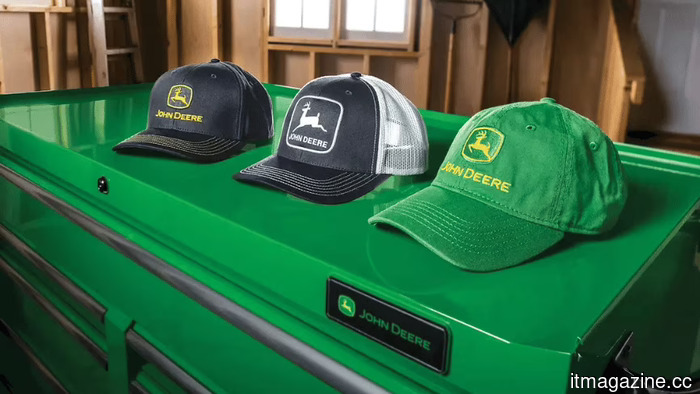 John Deere's victory regarding the right-to-repair primarily concerns software.
The settlement between the FTC and John Deere marks the largest right-to-repair victory in the US so far, serving as a cautionary tale regarding software lock-in for all the devices you possess.
John Deere's victory regarding the right-to-repair primarily concerns software.
The settlement between the FTC and John Deere marks the largest right-to-repair victory in the US so far, serving as a cautionary tale regarding software lock-in for all the devices you possess.
 Self-driving vehicles are increasingly obstructing first responders, and the federal government has finally lost its patience.
The head of NHTSA reports that autonomous vehicles are repeatedly obstructing ambulances and fire trucks, and he is setting a deadline for companies to address the issue.
Self-driving vehicles are increasingly obstructing first responders, and the federal government has finally lost its patience.
The head of NHTSA reports that autonomous vehicles are repeatedly obstructing ambulances and fire trucks, and he is setting a deadline for companies to address the issue.
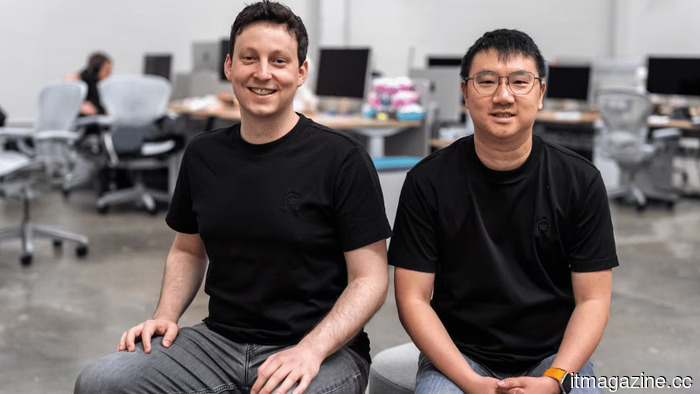 Ollama secures $65 million for its open-model AI platform.
Ollama has secured $65 million in a Series B funding round led by Theory Ventures, bringing its total funding to $88 million, as its open-model runner approaches nearly 9 million developers.
Ollama secures $65 million for its open-model AI platform.
Ollama has secured $65 million in a Series B funding round led by Theory Ventures, bringing its total funding to $88 million, as its open-model runner approaches nearly 9 million developers.
Mark Hura from Oracle: your data is your competitive advantage in AI.
During the RAISE Summit, Mark Hura from Oracle stated that the true advantage of AI lies in your private data and business results, rather than the model you purchase.