
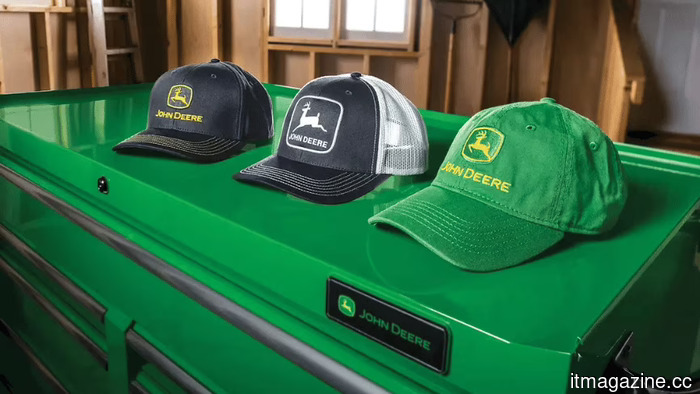
John Deere's victory regarding the right-to-repair primarily concerns software.
Owners of John Deere machinery can now repair their own equipment. According to the Associated Press, the US Federal Trade Commission (FTC) and five states have come to a settlement with the tractor company that requires it to provide the software and tools necessary for repairs. This marks the largest victory for the right-to-repair movement in the US to date.
The dispute was never merely about tools. Today's tractors operate like computers. As Deere integrated electronic control units into its equipment, a malfunctioning part often could not be repaired without software tools that only Deere possessed. Consequently, a farmer with extensive mechanical experience could find themselves unable to access their own harvest.
Details of the settlement
The settlement is straightforward. Deere is obligated to provide farmers and independent repair shops with the same diagnostic and repair tools made available to its authorized dealers. Additionally, it cannot impose penalties on those who choose to repair their own equipment. The agreement includes ten years of oversight and requires Deere to pay $1 million to the five states involved, though the company does not admit to any wrongdoing.
The FTC, along with the attorneys general from Arizona, Illinois, Michigan, Minnesota, and Wisconsin, initiated the case in January 2025, arguing that Deere’s control over repair tools constituted a monopoly, funneling repair business into Deere's dealer network and allowing the company to charge higher prices. FTC representative Daniel Guarnera stated, "The settlement will help lower costs for American farmers." This is Deere's second concession regarding repairs this year, following a $99 million class action settlement in April.
The tractor as a case study
This issue reflects a broader concern present in various devices equipped with chips. The same limitations that affected farmers can also be found in smartphones, gaming consoles, and medical equipment. Continued advocacy has led some manufacturers to become more open to repairs. The group US PIRG referred to the Deere settlement as "a win for farmers and all of us who want a more fixable world."
As new equipment becomes increasingly expensive, the right to repair one's possessions moves beyond being a niche concern. A shortage of memory has driven up prices for phones and laptops, making the right to fix one's own devices a more pressing issue.
Europe's proactive approach
The US and Europe have taken differing paths on this matter. The US addresses the issue on a case-by-case basis, typically through legal action, while Europe takes a legislative approach. The EU established repair regulations for appliances several years ago and in 2024 adopted a right-to-repair directive, which member states are required to implement into national law by 2026. Germany, for instance, has advocated for the design of phones that last up to seven years.
This discrepancy highlights the difference in approach. European manufacturers must design products with repairability in mind due to regulation, while their American counterparts often wait for regulatory action. The Deere case demonstrates that while the US approach can be effective, it tends to be slower and follows years of complaints.
Importance of the issue
Deere claims it was already increasing access to repairs and presents the settlement as a form of innovation instead of a defeat. Whether that's true or not, the broader implication is clear. As software becomes integrated into tractors, cars, refrigerators, and other products, the question of "who has the authority to fix it" raises important concerns about control. The tractor merely served as the most prominent test case.
Other articles
 Following Samsung and Apple, Oppo may be the next company to enter the growing foldable market.
Oppo might enter the expanding competition of wide foldable devices alongside Samsung and Apple, with a Snapdragon 8 Gen 6-equipped device that features a notably large 6,500mAh battery.
Following Samsung and Apple, Oppo may be the next company to enter the growing foldable market.
Oppo might enter the expanding competition of wide foldable devices alongside Samsung and Apple, with a Snapdragon 8 Gen 6-equipped device that features a notably large 6,500mAh battery.
 Securing Shadow IT within the corporate setting.
Shadow IT introduces security vulnerabilities within enterprises that go unmonitored, unpatched, and lack proper access controls. This article explores the increasing risks associated with unsanctioned SaaS, shadow AI, and geopolitical data sovereignty issues, as well as how vendor risk assessments tackle the third-party aspect on a large scale.
Securing Shadow IT within the corporate setting.
Shadow IT introduces security vulnerabilities within enterprises that go unmonitored, unpatched, and lack proper access controls. This article explores the increasing risks associated with unsanctioned SaaS, shadow AI, and geopolitical data sovereignty issues, as well as how vendor risk assessments tackle the third-party aspect on a large scale.
 Ensuring the security of Shadow IT in the corporate setting
Shadow IT introduces security vulnerabilities for enterprises that are not covered by monitoring, patching, and access controls. This article explores the increasing exposure of shadow IT, including unauthorized SaaS, shadow AI, and risks related to geopolitical data sovereignty, and discusses how vendor risk assessment manages third-party risks on a broader scale.
Ensuring the security of Shadow IT in the corporate setting
Shadow IT introduces security vulnerabilities for enterprises that are not covered by monitoring, patching, and access controls. This article explores the increasing exposure of shadow IT, including unauthorized SaaS, shadow AI, and risks related to geopolitical data sovereignty, and discusses how vendor risk assessment manages third-party risks on a broader scale.
 AI image generators have moved beyond their troubling beginnings and entered a phase of artificial luxury.
I evaluated Meta Muse, Gemini Nano Banana 2, and ChatGPT Images 2.0. While the glaring AI errors are decreasing, the new issues are more challenging to dismiss.
AI image generators have moved beyond their troubling beginnings and entered a phase of artificial luxury.
I evaluated Meta Muse, Gemini Nano Banana 2, and ChatGPT Images 2.0. While the glaring AI errors are decreasing, the new issues are more challenging to dismiss.
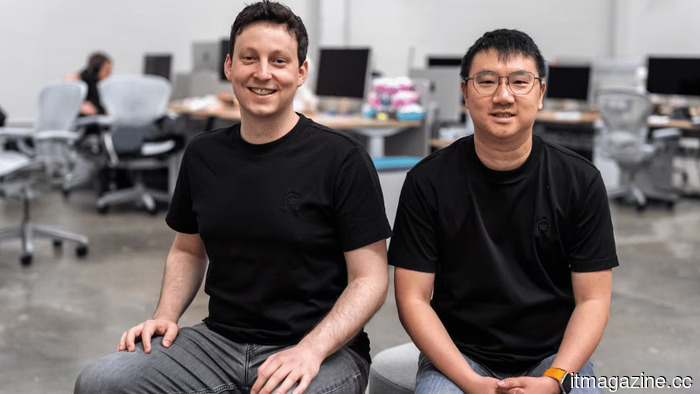 Ollama secures $65 million for its open-model AI platform.
Ollama has secured $65 million in a Series B funding round led by Theory Ventures, bringing its total funding to $88 million, as its open-model runner approaches nearly 9 million developers.
Ollama secures $65 million for its open-model AI platform.
Ollama has secured $65 million in a Series B funding round led by Theory Ventures, bringing its total funding to $88 million, as its open-model runner approaches nearly 9 million developers.
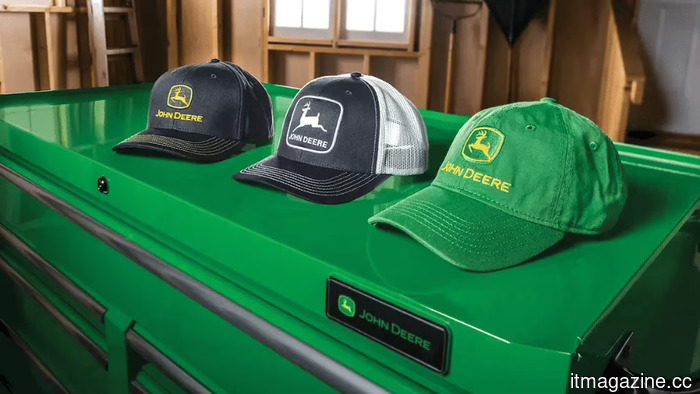 John Deere's victory regarding the right to repair primarily concerns software.
The settlement between the FTC and John Deere represents the largest right-to-repair victory in the US thus far, serving as a caution regarding software restrictions in all your devices.
John Deere's victory regarding the right to repair primarily concerns software.
The settlement between the FTC and John Deere represents the largest right-to-repair victory in the US thus far, serving as a caution regarding software restrictions in all your devices.
John Deere's victory regarding the right-to-repair primarily concerns software.
The settlement between the FTC and John Deere marks the largest right-to-repair victory in the US so far, serving as a cautionary tale regarding software lock-in for all the devices you possess.