

AI image generators have moved beyond their troublesome beginnings and entered a phase of deceptive sophistication.
I anticipated this comparison to be more severe. Meta Muse, Gemini Nano Banana 2, and ChatGPT Images 2.0 seemed like a recipe for distorted faces, misshapen hands, fake merchandise, and posters created in a jumbled alphabet. However, they mostly performed competently, which somehow made the overall outcome more dubious.
These tools are not just different brands of the same product. Meta promotes Muse Image as a social image model integrated within Meta AI and its applications. Google emphasizes speed, editing capabilities, and Gemini's extensive knowledge in its Nano Banana 2. OpenAI markets ChatGPT Images 2.0 on its text rendering, visual control, and enhanced prompt responsiveness. Different objectives, yet they all present a sleek polished display.
The uncanny valley seemed less pronounced.
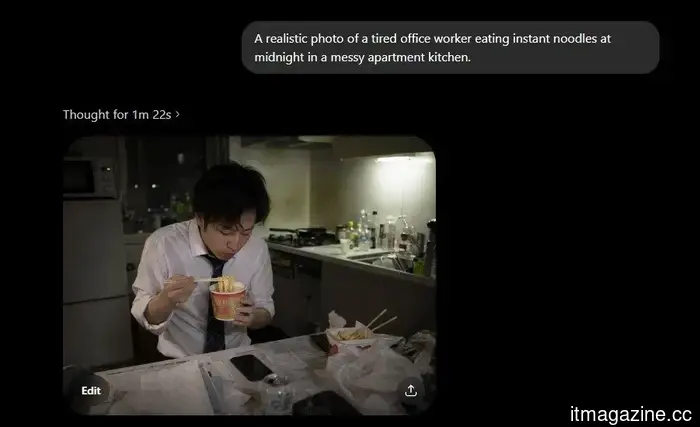
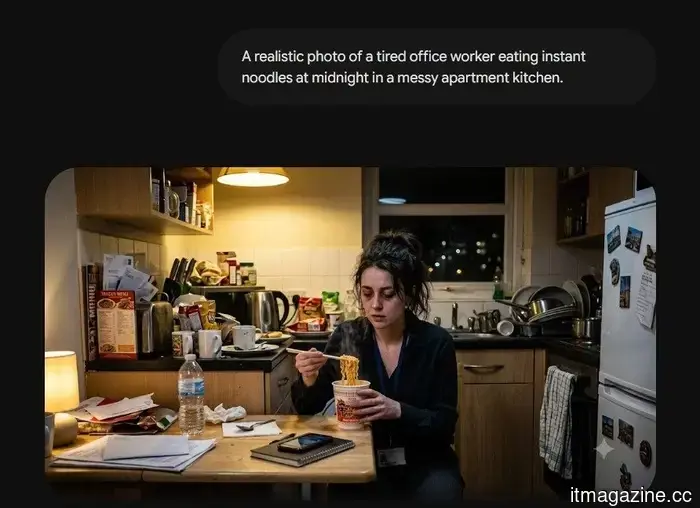
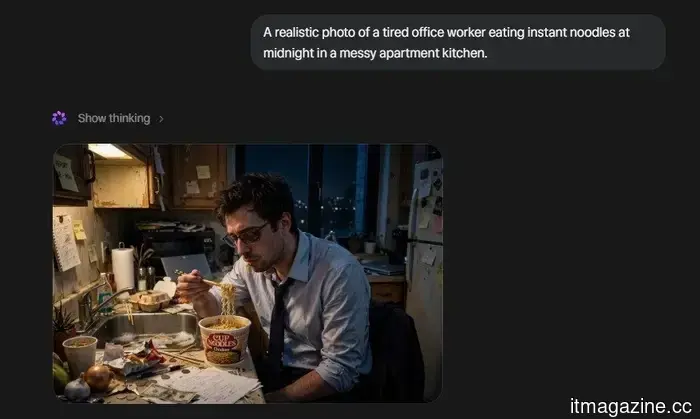
The first prompt was for a weary office worker consuming instant noodles at midnight. The detailed version added a cluttered kitchen, a laptop, dirty dishes in the sink, and bright refrigerator light. Meta and Gemini produced results quickly. ChatGPT delivered a notably clear image, but when I added more details, it primarily repeated that initial vibe.
ChatGPT Paulo Vargas / Digital Trends
Gemini Paulo Vargas / Digital Trends
Meta Paulo Vargas / Digital Trends
This wasn’t a failure per se; it complied. The issue was that all three appeared more focused on aesthetics than on realism. The rooms were well arranged. The lighting was attractive. The portrayal of exhaustion seemed crafted by someone unfamiliar with the reality of eating noodles over the sink at midnight.
Readable text emerged as an easy achievement.
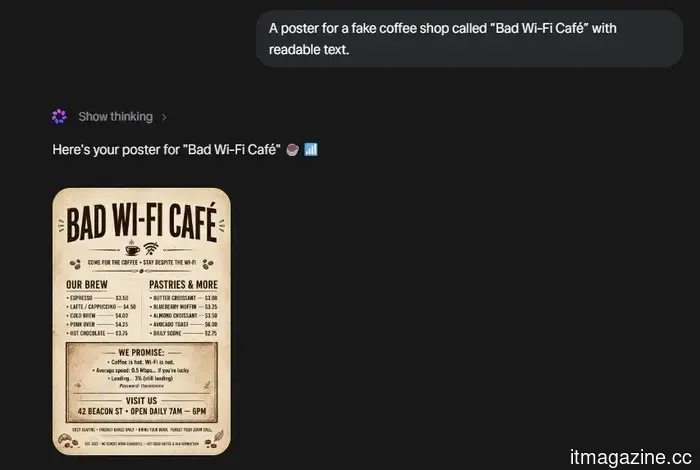
The poster test was expected to be chaotic. I requested a fictional coffee shop poster for “Bad Wi-Fi Café,” then provided specific text for inclusion. All three generated decent posters, and the text was clear enough to be considered an improvement. AI image tools previously treated letters like unwanted embellishments, so that’s commendable.
However, the finish still had its usual flaws. Everything exhibited that warm AI yellow hue, as if every café, kitchen, and bedroom was illuminated by a well-timed sunset. Gemini created what appeared to be a photo of a poster rather than the poster itself. ChatGPT had the roughest performance, taking more than three minutes, struggling three times, and only succeeding after I initiated a new chat.
Poster created by Meta AI Paulo Vargas / Digital Trends
The prompt featuring a cat, suitcase, and umbrella yielded better results. The models adhered well to placement guidelines. Product imagery was less consistent. A sleek picture of earbuds was straightforward, but attempting “open-ear wireless earbuds” resulted in a generic premium earbud mush from all three.
Manila appeared familiar through a filter.
The Manila street food prompt could have deteriorated into bland tourist visuals. Meta and Gemini performed better during the iterations I conducted. They included plastic chairs, wet streets, motorcycles, steam, tarps, and the casual vibe of outdoor dining amidst a bustling city.
Gemini Paulo Vargas / Digital Trends
Meta Paulo Vargas / Digital Trends
This highlighted the shortcomings more clearly. The elements were accurate, but the finish felt overly polished, as if the street had been cleaned for a brochure shoot just moments before the rain started.
If we were to integrate this image into a series of real photographs, would you be able to differentiate? Paulo Vargas / Digital Trends
None of these tools faltered in the old amusing ways. The scenes were coherent. The text was legible. The items mostly adhered to my placement requests. The failures transitioned from issues of competence to those of style.
This raises a stranger question than which model “prevails.” In today’s post-truth world, does it even matter which tool is the most realistic, or which one follows instructions better, when all three can create something sufficiently believable to go unnoticed in a brief scroll?
These models have adeptly learned how to produce images that appear high-end before they understand how to make them convey a sense of lived experience. The era of fake luxury is less amusing than distorted fingers, but it is likely more practical, making it all the more difficult to overlook.



Other articles
 Mark Hura from Oracle: your data is your competitive advantage in AI.
During the RAISE Summit, Mark Hura from Oracle stated that the true advantage of AI lies in your private data and business results, rather than the model you purchase.
Mark Hura from Oracle: your data is your competitive advantage in AI.
During the RAISE Summit, Mark Hura from Oracle stated that the true advantage of AI lies in your private data and business results, rather than the model you purchase.
 Jack Dorsey's Block resolves Cash App fraud allegations with 46 states for $45 million.
Block will pay $45 million to 46 U.S. states regarding its handling of Cash App fraud, as state regulators step in to fill the gap left by the diminished CFPB.
Jack Dorsey's Block resolves Cash App fraud allegations with 46 states for $45 million.
Block will pay $45 million to 46 U.S. states regarding its handling of Cash App fraud, as state regulators step in to fill the gap left by the diminished CFPB.
 AI image generators have moved beyond their troubling beginnings and entered a phase of artificial luxury.
I evaluated Meta Muse, Gemini Nano Banana 2, and ChatGPT Images 2.0. While the glaring AI errors are decreasing, the new issues are more challenging to dismiss.
AI image generators have moved beyond their troubling beginnings and entered a phase of artificial luxury.
I evaluated Meta Muse, Gemini Nano Banana 2, and ChatGPT Images 2.0. While the glaring AI errors are decreasing, the new issues are more challenging to dismiss.
 New EU regulations require the installation of a driver-monitoring camera in each vehicle.
The second phase of the EU's vehicle safety regulations requires all new cars and vans to be equipped with driver-attention cameras and pedestrian-detecting brakes starting from 7 July 2026.
New EU regulations require the installation of a driver-monitoring camera in each vehicle.
The second phase of the EU's vehicle safety regulations requires all new cars and vans to be equipped with driver-attention cameras and pedestrian-detecting brakes starting from 7 July 2026.
 Following Samsung and Apple, Oppo may be the next to enter the expanding foldable market.
Oppo might enter the competition in the growing wide foldable market alongside Samsung and Apple, featuring a device powered by the Snapdragon 8 Gen 6 and equipped with a notably large 6,500mAh battery.
Following Samsung and Apple, Oppo may be the next to enter the expanding foldable market.
Oppo might enter the competition in the growing wide foldable market alongside Samsung and Apple, featuring a device powered by the Snapdragon 8 Gen 6 and equipped with a notably large 6,500mAh battery.
 Samsung aims to incorporate its own chip into your next PC, focusing on enhancing AI tasks.
Samsung's rumored Gaia accelerator may introduce specialized on-device AI hardware to upcoming PCs, positioning the company in a competitive landscape alongside Nvidia and Qualcomm.
Samsung aims to incorporate its own chip into your next PC, focusing on enhancing AI tasks.
Samsung's rumored Gaia accelerator may introduce specialized on-device AI hardware to upcoming PCs, positioning the company in a competitive landscape alongside Nvidia and Qualcomm.
AI image generators have moved beyond their troublesome beginnings and entered a phase of deceptive sophistication.
I evaluated Meta Muse, Gemini Nano Banana 2, and ChatGPT Images 2.0. While the clear AI failures are diminishing, the new issues are more challenging to overlook.