

A survey reveals that fifty percent of parents are concerned that their children depend excessively on AI.
Artificial intelligence has expanded beyond the office and university settings to primary school classrooms, and a recent survey indicates that many parents are apprehensive about this shift. According to Deloitte's annual back-to-school study, half of the respondents expressed concerns that their child “relies on AI too much.”
This statistic comes from a survey of 1,150 parents of school-aged children, contributing to an ongoing discussion about the appropriate amount of technology in a child's daily life. It reflects previous findings that children are adapting to AI more quickly than adults and reignites an older debate regarding screen time and where appropriate limits should be established.
What heightens the concern is that this anxiety is ahead of the educational framework. Only 22% of parents reported that their child's school offers approved generative AI resources, and just 33% stated that their school has established guidelines for technology use in general. Nevertheless, these tools are already present in children's activities; nearly 30% of parents indicated that their children were utilizing generative AI in their school assignments, showing a level of adoption that has surpassed the regulatory measures intended to manage it.
This concern is double-edged, complicating the resolution of these worries. More than a third of parents are anxious that schools are not equipping children with sufficient AI skills, while one in eight have considered funding AI tutoring or camps themselves to bridge this gap. Parents are thus balancing two fears: that their children are overly dependent on AI and that they are not receiving adequate training to use it effectively. For many families, both concerns are evidently valid.
The classroom is currently undergoing significant changes. This situation adds a new dimension to the ongoing debate surrounding technology in education, which has existed long before the rise of chatbots. Business Insider’s Katie Notopolous reported in May on her third grader and his friends using Google’s Gemini on school-issued Chromebooks to create amusing images of poop and dinosaurs, exemplifying how easily these tools are accessible to young learners.
School districts are contending with this related tension, evaluating the allure of platforms like YouTube in light of a long-term decline in math and reading scores. The emergence of AI adds another layer to this ongoing conversation rather than replacing it.
In response, some educators are opting to revert to more traditional methods. A physics teacher in Canada shared with Business Insider last year that the use of AI by his students has driven him to incorporate more handwritten assignments to ensure that he can verify that the work reflects the students’ own thinking. “I've tried to sort of shift back toward some handwritten assignments, instead of having them do it on the computer,” explained the teacher, Ward. “That way, I can tell this is how they’re writing. I know it’s theirs.”
This instinct aligns with research indicating that the situation is not entirely negative. Studies concerning children and screens have consistently shown that the quality of screen time is more crucial than the sheer amount of time spent on screens, especially when an adult is involved. When applied to AI, this perspective shifts the focus from whether children are using the tools to how they are doing so and what guidance they are receiving. For instance, a student who uses a chatbot to bypass challenging thinking is in a markedly different situation from one who utilizes it to verify their work or to explore new ideas.
At this point, the survey primarily reflects a moment of concern rather than a definitive conclusion. Parents are witnessing AI transform the environment their children are growing up in more rapidly than schools or families have been able to establish guidelines for its use.
What the data fails to reveal is how this anxiety influences behavior at home—whether it results in stricter limits or eases as these tools become commonplace. Based on current indications, most parents are still navigating these dynamics in real time.
Other articles
 Meta plans to construct a C$13 billion data center in Alberta, marking its inaugural facility in Canada.
Meta is set to construct its inaugural data centre in Canada, a C$13 billion, 1-gigawatt facility located in Sturgeon County, Alberta, which will be powered by a new natural gas plant.
Meta plans to construct a C$13 billion data center in Alberta, marking its inaugural facility in Canada.
Meta is set to construct its inaugural data centre in Canada, a C$13 billion, 1-gigawatt facility located in Sturgeon County, Alberta, which will be powered by a new natural gas plant.
 Xiaomi introduces Sky Nomad, a square-shaped SUV lineup targeting the family vehicle market in China.
Xiaomi has announced the Sky Nomad, a new SUV series that features an extended-range N90 equipped with a rooftop tent, aiming to compete with Li Auto and Aito in the Chinese market.
Xiaomi introduces Sky Nomad, a square-shaped SUV lineup targeting the family vehicle market in China.
Xiaomi has announced the Sky Nomad, a new SUV series that features an extended-range N90 equipped with a rooftop tent, aiming to compete with Li Auto and Aito in the Chinese market.
 My top choice for a multiplayer survival sandbox is finally receiving the mobile version it truly merits.
Don’t Starve Together will be available on mobile starting July 21, offering players a mobile option to endure The Constant alongside their friends.
My top choice for a multiplayer survival sandbox is finally receiving the mobile version it truly merits.
Don’t Starve Together will be available on mobile starting July 21, offering players a mobile option to endure The Constant alongside their friends.
 Sonos experiences a loss of ten years' worth of design expertise as layoffs affect its upper management.
Sonos has let go of senior design and product leaders who have been with the company for ten years or longer, in what the CEO describes as a move for greater speed, while some employees refer to it as a cost-cutting measure.
Alchemab secures £25 million from the British Business Bank in a groundbreaking investment in life sciences.
Cambridge biotech firm Alchemab has expanded its Series A financing by securing a £25 million investment from the British Business Bank, marking the lender's largest contribution to a life sciences company.
Sonos experiences a loss of ten years' worth of design expertise as layoffs affect its upper management.
Sonos has let go of senior design and product leaders who have been with the company for ten years or longer, in what the CEO describes as a move for greater speed, while some employees refer to it as a cost-cutting measure.
Alchemab secures £25 million from the British Business Bank in a groundbreaking investment in life sciences.
Cambridge biotech firm Alchemab has expanded its Series A financing by securing a £25 million investment from the British Business Bank, marking the lender's largest contribution to a life sciences company.
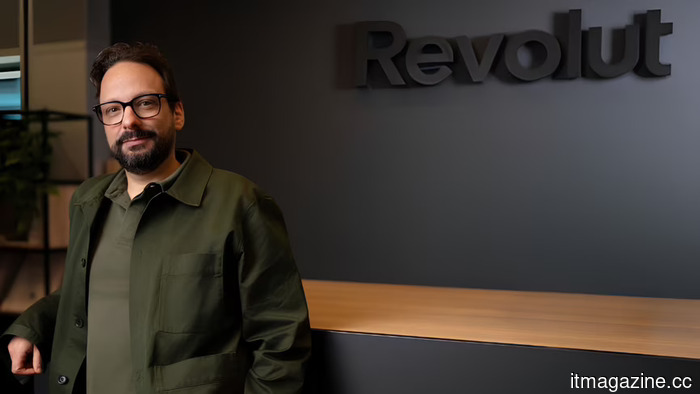 Revolut appoints former Chase UK chief Kuba Fast to head its European banking operations.
Revolut has appointed Kuba Fast, the former head of Chase UK, as the CEO of Revolut Bank UAB and its European operations, taking over from Joe Heneghan.
Revolut appoints former Chase UK chief Kuba Fast to head its European banking operations.
Revolut has appointed Kuba Fast, the former head of Chase UK, as the CEO of Revolut Bank UAB and its European operations, taking over from Joe Heneghan.
A survey reveals that fifty percent of parents are concerned that their children depend excessively on AI.
A Deloitte survey conducted with 1,150 parents regarding back-to-school concerns reveals that half of them are worried their child depends too heavily on AI, while many also believe schools do not teach enough AI skills.