
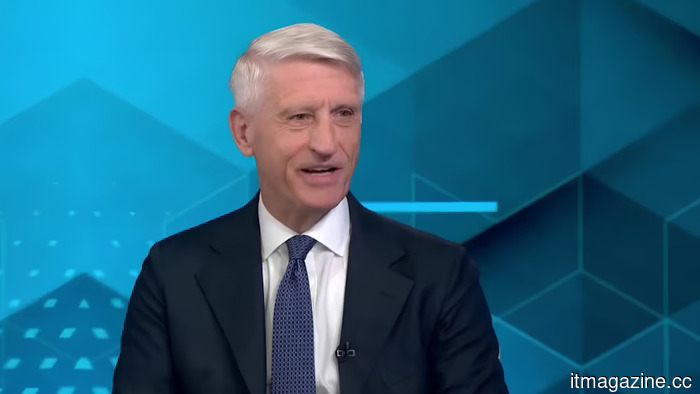
Recruiters pursue specialized AI positions as their own roles face potential risks.
The recruitment sector, one of the initial white-collar industries anticipated to be diminished by automation, is attempting to transform itself by offering the very tools that pose a threat. In response to AI technologies capable of swiftly screening candidates and crafting job descriptions, staffing agencies are focusing on the specialized and difficult-to-fill positions within the AI-driven economy, as reported by Bloomberg.
The rationale is that scarcity, rather than volume, is where human recruiters still provide value. As generative AI has altered the recruitment dynamics for both employers and candidates, the routine task of reviewing resumes has become inexpensive, whereas successfully connecting a rare AI architect to a company in urgent need remains highly valuable. Sander van ’t Noordende, CEO of Randstad, shared with Bloomberg that initial fears about complete job displacement have evolved into a more intricate scenario where new and specialized roles are proliferating more rapidly than they are disappearing.
Randstad's research indicates a concentration of demand in specific areas. The company has observed a significant rise in interest for positions like AI solutions leads, which surged by 226%, process automation specialists, increasing by 196%, and AI architects, which rose by 152%. Many of these roles barely existed a few years ago, and few recruiters have the expertise to fill them.
However, filling these positions proves challenging. Companies are investing heavily in AI but are finding it difficult to create a workforce to manage it, with demand for developers possessing AI skills skyrocketing by several hundred percent, surpassing the supply of qualified individuals. This gap is exactly where recruiters aim to position themselves.
The shift isn’t solely about technology. Randstad has also highlighted increasing demand for human-centric skills that AI struggles to replicate, noting rises in emotional intelligence and creativity by 173% and 168%, respectively, indicating that employers are progressively seeking judgment alongside technical prowess.
Additionally, there is a tangible aspect to this trend. Randstad argues that the expansion of data centers and power infrastructure is causing a demand for skilled trades to grow three times faster than for professional roles, work that no model can undertake. Recruiters who once focused on placing office personnel are now targeting electricians, technicians, and construction teams.
For staffing firms, the stakes are nearly existential. Randstad, being the largest HR services organization globally, reported around €23 billion in revenue in 2025 but has faced years of weak demand. It is restructuring around a digital talent platform and a “specialization” model aimed at encouraging consultants to develop niche expertise instead of general placements.
This transformation is occurring against a harsh backdrop, with tech companies alone shedding tens of thousands of jobs in 2026, many directly related to AI. Surveys of hiring managers reveal that many anticipate further layoffs due to automation being identified as a contributing factor.
Recruiters are banking on the premise that the same technology that is diminishing routine hiring will also create roles that are too new, too specialized, or too human for machines to handle independently. This is a bet on their own necessity at a moment when clients are questioning the need for intermediaries.
Startups are already entering this space. AI-focused companies like Dex, which creates agents to connect machine-learning engineers with employers, are targeting the same lucrative niche from a different angle, raising concerns about whether established firms can adapt faster than they are disrupted.
The lingering question is whether specialization is a sustainable strategy or merely a temporary solution. As AI continues to advance, today's rare AI positions could evolve into tomorrow's automated tasks, possibly resulting in a contraction of the long tail that van ’t Noordende mentions. For now, recruiters are gravitating toward tasks that are the hardest to automate, as this is the only domain where they can still compete effectively.
Other articles
 Thick phone or depleted nervous system?
Imagine you are in an unfamiliar city, a bill rustles in your pocket, but the smartphone screen is dead, like a mammoth. A power outlet is a myth, the power bank was left at home. For 48.7% of Russians, this nightmare is comparable in stress level to having no money at all.
Thick phone or depleted nervous system?
Imagine you are in an unfamiliar city, a bill rustles in your pocket, but the smartphone screen is dead, like a mammoth. A power outlet is a myth, the power bank was left at home. For 48.7% of Russians, this nightmare is comparable in stress level to having no money at all.
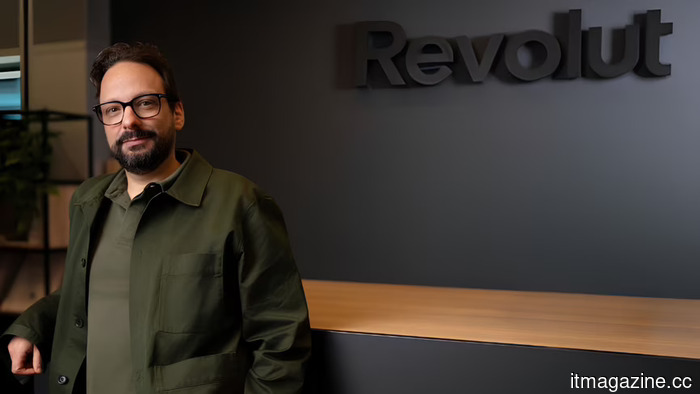 Revolut appoints former Chase UK chief Kuba Fast to head its European banking operations.
Revolut has appointed Kuba Fast, the former chief of Chase UK, as the CEO of Revolut Bank UAB and its European operations, taking over from Joe Heneghan.
Revolut appoints former Chase UK chief Kuba Fast to head its European banking operations.
Revolut has appointed Kuba Fast, the former chief of Chase UK, as the CEO of Revolut Bank UAB and its European operations, taking over from Joe Heneghan.
 Recruiters pursue specialized AI positions as their own roles face challenges.
Confronted with tools that can evaluate and select candidates in just seconds, staffing agencies are shifting their focus to the limited, difficult-to-fill positions in the AI sector to maintain their relevance.
Recruiters pursue specialized AI positions as their own roles face challenges.
Confronted with tools that can evaluate and select candidates in just seconds, staffing agencies are shifting their focus to the limited, difficult-to-fill positions in the AI sector to maintain their relevance.
 Sonos experiences the departure of a decade’s worth of design expertise as layoffs affect its upper management.
Sonos has let go of senior design and product leaders who had been with the company for ten years or longer, in a restructuring that the CEO describes as a move towards greater speed, while some employees refer to it as cost-cutting.
Alchemab secures £25 million from the British Business Bank in its largest investment in life sciences to date.
Cambridge-based biotech firm Alchemab has broadened its Series A funding with a £25 million investment from the British Business Bank, marking the lender's largest investment in a life sciences company.
Sonos experiences the departure of a decade’s worth of design expertise as layoffs affect its upper management.
Sonos has let go of senior design and product leaders who had been with the company for ten years or longer, in a restructuring that the CEO describes as a move towards greater speed, while some employees refer to it as cost-cutting.
Alchemab secures £25 million from the British Business Bank in its largest investment in life sciences to date.
Cambridge-based biotech firm Alchemab has broadened its Series A funding with a £25 million investment from the British Business Bank, marking the lender's largest investment in a life sciences company.
Recruiters pursue specialized AI positions as their own roles face potential risks.
Confronted with tools capable of screening and shortlisting in mere seconds, staffing agencies are shifting their focus to the limited and difficult-to-fill positions in the AI economy to maintain their relevance.