
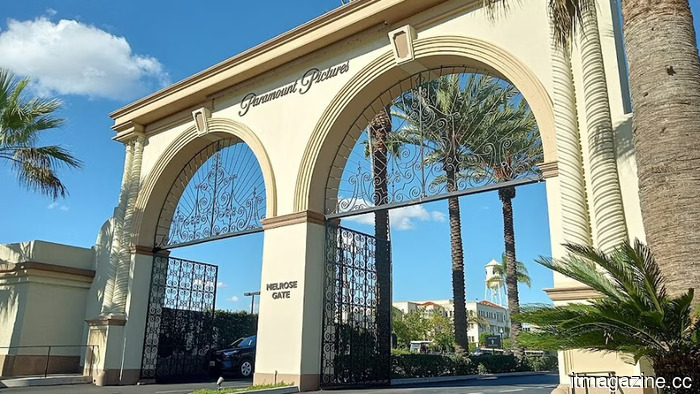
US states may file a lawsuit next week to prevent Paramount's $110 billion merger with Warner Bros.
A coalition of US states may file a lawsuit as early as next week to prevent Paramount's $110 billion acquisition of Warner Bros. Discovery, according to two sources familiar with the situation, as reported by Reuters. This move could open a new front against a deal that has already been approved by federal regulators.
The potential lawsuit comes weeks after the Justice Department cleared the merger without stipulations, and it could still postpone Hollywood's largest consolidation in years. The states are concerned that the merger could negatively impact competition, though the specific nature of the competition that worries officials was not disclosed in the Reuters article by Dawn Chmielewski and Jody Godoy, published on July 8.
Advocacy groups and some state regulators have expressed that subscription costs for streaming services might increase, and that the merged entity could reduce jobs and provide a limited selection of films, news, and other content. These worries reflect objections from actors, writers, and cinema owners since the merger was announced, with cinema operators in particular claiming that a combined studio might approve fewer films.
The proposed transaction would unite two of Hollywood's four major studios, and its magnitude has attracted the regulators' scrutiny. Under the proposed agreement, Paramount is set to pay $31.00 per share in cash for Warner Bros. Discovery, a valuation that totals approximately $110 billion, including debt.
California has taken the initiative in this matter. Attorney General Rob Bonta is examining whether the transaction breaches US laws that prohibit mergers that could unlawfully damage competition, and in early June, Reuters reported that California, New York, and other states were preparing a joint lawsuit.
This state-level action signifies a broader trend, with attorneys general intensifying their examination of significant mergers as federal antitrust authorities adopt a more lenient approach. A spokesperson for Bonta’s office declined to comment, and Paramount has yet to respond to Reuters.
A court challenge could impose significant financial burdens on Paramount, which is expected to have around $80 billion in debt once the deal is finalized. Any postponement would exacerbate that financial strain. Chief executive David Ellison, son of Oracle co-founder Larry Ellison, has already committed to paying Warner Bros. Discovery shareholders a "ticking fee" of 25 cents per share if the deal does not close before October, summing up to about $650 million in cash each quarter. This provision incentivizes both parties to finalize the merger promptly.
The deal has progressed rapidly. Paramount Skydance, led by Ellison, won a bidding contest for Warner Bros. Discovery after Netflix withdrew, leading the streaming competitor to authorize a $25 billion share repurchase as it shifted focus back to its strategy.
Last month, federal clearance was granted when the Justice Department concluded an eight-month examination and determined that the merger was "not likely to harm competition or American consumers." State attorneys general retain the authority to sue to block a merger even after federal approval, and they have become more assertive in doing so.
Other officials have also taken action. Oregon's attorney general has requested a 60-day delay and sought a court order to compel Paramount to comply with a records request, while in the UK, the culture secretary has indicated she is "minded to intervene" in the acquisition.
Currently, the timeline is procedural. If the multistate lawsuit is filed next week, it would initiate a court battle that could delay the closing past October, entering a period where the ticking fee would take effect. A federal judge will ultimately decide whether to grant an injunction to block the merger while the case is considered, and states have previously succeeded in such actions even when federal authorities opted not to intervene.
Meanwhile, Paramount has been laying the groundwork for operations by integrating the technology for Paramount+, Pluto TV, and BET+ into a unified streaming platform in preparation for incorporating HBO Max. Whether the states can hinder that strategy will now hinge on the courts.
Other articles
 Sonos experiences the departure of a decade’s worth of design expertise as layoffs affect its upper management.
Sonos has let go of senior design and product leaders who had been with the company for ten years or longer, in a restructuring that the CEO describes as a move towards greater speed, while some employees refer to it as cost-cutting.
Sonos experiences the departure of a decade’s worth of design expertise as layoffs affect its upper management.
Sonos has let go of senior design and product leaders who had been with the company for ten years or longer, in a restructuring that the CEO describes as a move towards greater speed, while some employees refer to it as cost-cutting.
 Spotify has finally allowed users to pin more than four items in their library, a change that has been a long time coming.
Spotify's library pin limit had been fixed at four for many years. It has now been increased to 20, making it the most generous pin limit among the leading music streaming services.
Spotify has finally allowed users to pin more than four items in their library, a change that has been a long time coming.
Spotify's library pin limit had been fixed at four for many years. It has now been increased to 20, making it the most generous pin limit among the leading music streaming services.
 Thick phone or depleted nervous system?
Imagine you are in an unfamiliar city, a bill rustles in your pocket, but the smartphone screen is dead, like a mammoth. A power outlet is a myth, the power bank was left at home. For 48.7% of Russians, this nightmare is comparable in stress level to having no money at all.
Thick phone or depleted nervous system?
Imagine you are in an unfamiliar city, a bill rustles in your pocket, but the smartphone screen is dead, like a mammoth. A power outlet is a myth, the power bank was left at home. For 48.7% of Russians, this nightmare is comparable in stress level to having no money at all.
 Criterion mentions that Burnout hasn't been overlooked, but that's precisely what concerns me.
Criterion states that Burnout is still a key aspect of the studio's identity, yet Battlefield represents its future. Although this decision is quite logical in light of Battlefield 6's success, it also underscores the scarcity of genuine arcade racing games in the current landscape.
Alchemab secures £25 million from the British Business Bank in a historic investment in life sciences.
Cambridge-based biotech company Alchemab has expanded its Series A funding with a £25 million investment from the British Business Bank, marking the lender's largest contribution to a life sciences firm.
Criterion mentions that Burnout hasn't been overlooked, but that's precisely what concerns me.
Criterion states that Burnout is still a key aspect of the studio's identity, yet Battlefield represents its future. Although this decision is quite logical in light of Battlefield 6's success, it also underscores the scarcity of genuine arcade racing games in the current landscape.
Alchemab secures £25 million from the British Business Bank in a historic investment in life sciences.
Cambridge-based biotech company Alchemab has expanded its Series A funding with a £25 million investment from the British Business Bank, marking the lender's largest contribution to a life sciences firm.
US states may file a lawsuit next week to prevent Paramount's $110 billion merger with Warner Bros.
Sources informed Reuters that California, New York, and other states may file a lawsuit as early as next week to prevent Paramount’s $110 billion deal with Warner Bros. Discovery.