

A survey reveals that half of parents are concerned that their children depend too heavily on AI.
Artificial intelligence has transitioned from offices and university lecture halls to primary school classrooms, and a new survey indicates that many parents are concerned about this development. According to Deloitte’s annual back-to-school study, half of the respondents expressed worries that their child "relies on AI too much."
This statistic comes from a survey of 1,150 parents with school-aged children and contributes to a broader discussion regarding the appropriate amount of technology in a child's daily life. It resonates with previous findings showing that children are adopting AI more quickly than adults, and it reignites a long-standing debate about screen time and where reasonable limits should be set.
What is particularly notable about these concerns is the significant gap between parental anxiety and the classroom setting. Only 22% of parents reported that their child’s school provides approved generative AI tools, and just 33% indicated that their school has established guidelines for using the technology at all. Despite this, nearly 30% of parents noted that their children were already utilizing generative AI in their schoolwork, highlighting that the adoption of these tools is outpacing the regulations intended to manage them.
The parents’ anxiety is multifaceted, making it challenging to address. More than a third expressed concern that schools aren’t equipping children with adequate AI skills, while one in eight parents mentioned plans to invest in AI tutoring or camps to bridge that gap themselves. Thus, parents find themselves grappling with two simultaneous fears: that their children lean too heavily on AI, and that they may not be effectively learning to use it. Both concerns can coexist, and for many families, they clearly do.
A continually evolving classroom
The statistics add a new dimension to an ongoing debate about technology in education, one that predates the current surge of chatbots. In May, Business Insider’s Katie Notopolous shared her experiences with her third grader and his classmates using Google’s Gemini on school-issued Chromebooks to create whimsical images of poop and dinosaurs, exemplifying how casually accessible these tools now are to young students.
School districts are already contending with a related challenge, balancing the allure of platforms like YouTube against a sustained decline in math and reading scores. AI complicates this existing debate without replacing it.
Some educators have responded by reverting to traditional methods. A physics teacher in Canada mentioned to Business Insider last year that his students' use of AI prompted him to incorporate more handwritten assignments, ensuring that the work being submitted truly reflected the students’ own thinking. “I’ve tried to sort of shift back toward some handwritten assignments, instead of having them do it on the computer,” explained the teacher, Ward. “That way, I can tell this is how they’re writing. I know it’s theirs.”
This instinct aligns with research indicating that the situation is not entirely negative. Studies regarding children and screen time have consistently found that the quality of what is viewed matters more than the amount of time spent, especially in the presence of an adult. When applied to AI, this perspective shifts the inquiry from whether children are using the tools to how they are being used and what guidance is provided. A student who relies on a chatbot to bypass challenging thinking is in a very different context than one who uses it to verify their work or to delve deeper into an idea.
Currently, the survey primarily reflects a moment of discomfort rather than a definitive conclusion. Parents recognize that AI is rapidly transforming the world their children are growing up in, far ahead of schools and families being able to establish guidelines for its use.
The data does not clarify how this anxiety impacts behavior at home—whether it leads to stricter limitations or eases as the tools become part of everyday life. Based on available evidence, most parents seem to be navigating this process in real time.
Other articles
 Thick phone or exhausted nervous system?
Imagine you are in an unfamiliar city, a bill rustling in your pocket, but the smartphone screen is dead, like a mammoth. A power outlet is a myth, and the power bank was left at home. For 48.7% of Russians, this nightmare is comparable in stress level to having no money at all.
Thick phone or exhausted nervous system?
Imagine you are in an unfamiliar city, a bill rustling in your pocket, but the smartphone screen is dead, like a mammoth. A power outlet is a myth, and the power bank was left at home. For 48.7% of Russians, this nightmare is comparable in stress level to having no money at all.
 Thick phone or depleted nervous system?
Imagine you are in an unfamiliar city, a bill rustles in your pocket, but the smartphone screen is dead, like a mammoth. A power outlet is a myth, the power bank was left at home. For 48.7% of Russians, this nightmare is comparable in stress level to having no money at all.
Thick phone or depleted nervous system?
Imagine you are in an unfamiliar city, a bill rustles in your pocket, but the smartphone screen is dead, like a mammoth. A power outlet is a myth, the power bank was left at home. For 48.7% of Russians, this nightmare is comparable in stress level to having no money at all.
 Meta's CTO stated that employee-tracking information ended up 'in places it shouldn't have.'
Meta's CTO Andrew Bosworth stated that a researcher incorrectly relocated keystroke-tracking data, which contributed to the company halting its Model Capability Initiative.
Meta's CTO stated that employee-tracking information ended up 'in places it shouldn't have.'
Meta's CTO Andrew Bosworth stated that a researcher incorrectly relocated keystroke-tracking data, which contributed to the company halting its Model Capability Initiative.
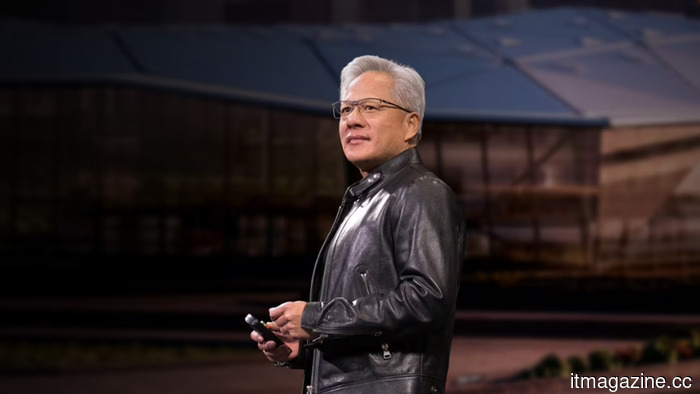 Jensen Huang mentions that his engineers prefer to create agents instead of writing code.
Nvidia's CEO Jensen Huang states that all of his engineers favor developing AI agents over coding in Python, and he emphasizes that AI is generating jobs rather than eliminating them.
Jensen Huang mentions that his engineers prefer to create agents instead of writing code.
Nvidia's CEO Jensen Huang states that all of his engineers favor developing AI agents over coding in Python, and he emphasizes that AI is generating jobs rather than eliminating them.
 Xiaomi introduces Sky Nomad, a square-shaped SUV lineup targeting the family vehicle market in China.
Xiaomi has announced the Sky Nomad, a new SUV series that features an extended-range N90 equipped with a rooftop tent, aiming to compete with Li Auto and Aito in the Chinese market.
Xiaomi introduces Sky Nomad, a square-shaped SUV lineup targeting the family vehicle market in China.
Xiaomi has announced the Sky Nomad, a new SUV series that features an extended-range N90 equipped with a rooftop tent, aiming to compete with Li Auto and Aito in the Chinese market.
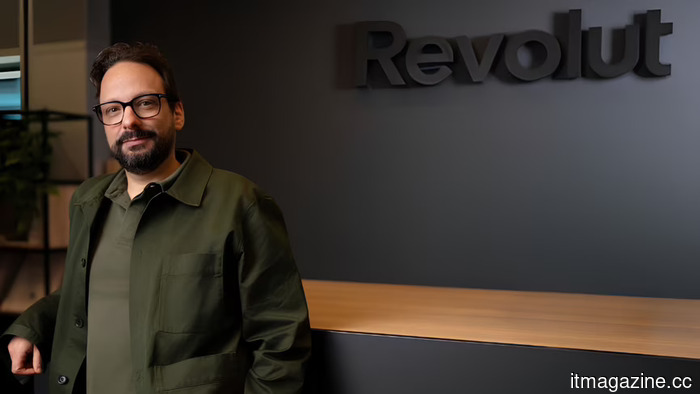 Revolut appoints former Chase UK chief Kuba Fast to head its European banking operations.
Revolut has appointed Kuba Fast, the former chief of Chase UK, as the new CEO of Revolut Bank UAB and its European operations, succeeding Joe Heneghan.
Revolut appoints former Chase UK chief Kuba Fast to head its European banking operations.
Revolut has appointed Kuba Fast, the former chief of Chase UK, as the new CEO of Revolut Bank UAB and its European operations, succeeding Joe Heneghan.
A survey reveals that half of parents are concerned that their children depend too heavily on AI.
A back-to-school survey conducted by Deloitte involving 1,150 parents reveals that half are concerned their child depends too heavily on AI, despite many stating that schools provide insufficient instruction on AI skills.