

Sonos experiences a loss of ten years' worth of design expertise as layoffs affect its upper management.
Senior design, product, and research leaders who have been with the company for ten years or more are being let go amid a restructuring that the chief executive describes as prioritizing speed, while some employees view it as a measure of cost-cutting.
"The design team has shrunk a bit," shared Edward Mitchell, a Sonos designer with approximately 12 years at the company, on LinkedIn, as the audio company parted ways with a significant number of its most senior product and design leaders. In recent weeks, Sonos has dismissed several long-tenured executives, with the cuts extending much higher up the organization than what would typically be expected.
Among those leaving are Dana Krieger, a vice president of design with 12 years at Sonos; Kate Wojogbe, a senior user-experience executive of nearly ten years; and Scott Fink, a veteran of 15 years who was instrumental in building the home-theater business that largely defined Sonos's identity in the living room.
These departures affect key teams responsible for the appearance and functionality of Sonos products. Michelle Enright, who managed packaging and product sustainability, exited after 14 years, and Sara Lincoln, a hardware product manager, also departed after 11 years. Rebecca Phillips, a user-experience researcher, noted that “almost the entire UX research team was let go,” with Kristen Leclerc, who oversaw user research, also among those affected.
These losses are part of a broader staff reduction, with Sonos confirming last month that it was eliminating about 3% of its workforce, particularly impacting the user-experience and product groups behind its application, which has been painstakingly rebuilt following a flawed 2024 revamp that led to customer dissatisfaction.
Chief executive Tom Conrad presented these changes as focused on speed rather than savings. In an internal memo obtained by Bloomberg, he expressed a desire for “a Sonos that moves with more conviction and velocity,” advocating for “fewer months in conference rooms” and “more prototypes in our labs.” His aim appears to be to eliminate layers of management to create a more agile organization.
A Sonos spokesperson stated that experienced leaders remain within the affected teams and that user-research efforts will continue, underscoring that the layoffs are not linked to artificial intelligence. However, this assertion feels somewhat inconsistent with Conrad’s own comments.
During a May earnings call, he mentioned that AI is “already transforming how we operate internally, from software development to marketing execution to my management of the company.” This insistence that the job cuts are unrelated to automation sets Sonos apart at a time when many companies are openly attributing layoffs to AI.
Not all employees agree with the official narrative. Some long-serving staff reportedly perceive the layoffs primarily as a cost-cutting move and express concern that the departure of seasoned designers and researchers could adversely affect future products and the culture that fosters innovation.
The timing is critical. Conrad stepped in for Patrick Spence, who resigned in early 2025 after the 2024 app redesign triggered an unusual consumer backlash and tarnished Sonos’s previously esteemed reputation. Initially appointed on an interim basis, Conrad was later confirmed as the permanent chief executive.
For a company whose essence is rooted in design and craftsmanship, losing over a decade of institutional knowledge in one round of layoffs is a significant risk. Many of those being let go have played key roles in creating the packaging, interfaces, and home-theater systems that initially established the brand’s premium feel.
Sonos maintains that it is still working on new products, including a second-generation Ace headphone and updated home-theater equipment, with Conrad wagering that a leaner and quicker organization will expedite their release.
The pitch to both investors and employees is that reduced meetings and an increased focus on prototype development will lead to a faster release schedule. However, the lingering question surrounding the restructuring is whether speed can effectively replace the expertise that is now departing. Former employees are not concerned about Sonos's ability to produce its next speaker, but they worry that the critical, less visible process of conceptualizing a groundbreaking product relies heavily on the senior judgment that is currently being reduced.
Other articles
 Meta plans to construct a C$13 billion data center in Alberta, marking its inaugural facility in Canada.
Meta is set to construct its inaugural data centre in Canada, a C$13 billion, 1-gigawatt facility located in Sturgeon County, Alberta, which will be powered by a new natural gas plant.
Alchemab secures £25 million from the British Business Bank in its largest investment in life sciences to date.
Cambridge-based biotech firm Alchemab has broadened its Series A funding with a £25 million investment from the British Business Bank, marking the lender's largest investment in a life sciences company.
Meta plans to construct a C$13 billion data center in Alberta, marking its inaugural facility in Canada.
Meta is set to construct its inaugural data centre in Canada, a C$13 billion, 1-gigawatt facility located in Sturgeon County, Alberta, which will be powered by a new natural gas plant.
Alchemab secures £25 million from the British Business Bank in its largest investment in life sciences to date.
Cambridge-based biotech firm Alchemab has broadened its Series A funding with a £25 million investment from the British Business Bank, marking the lender's largest investment in a life sciences company.
 Criterion states that Burnout is not overlooked, yet that is precisely what concerns me.
Criterion indicates that Burnout is still a significant aspect of the studio's identity, but Battlefield is now its focus moving forward. Although this decision is sound from a business perspective following the success of Battlefield 6, it also underscores the scarcity of genuine arcade racing games in the current market.
Criterion states that Burnout is not overlooked, yet that is precisely what concerns me.
Criterion indicates that Burnout is still a significant aspect of the studio's identity, but Battlefield is now its focus moving forward. Although this decision is sound from a business perspective following the success of Battlefield 6, it also underscores the scarcity of genuine arcade racing games in the current market.
 My top choice for a multiplayer survival sandbox is finally receiving the mobile version it truly merits.
Don’t Starve Together will be available on mobile starting July 21, offering players a mobile option to endure The Constant alongside their friends.
My top choice for a multiplayer survival sandbox is finally receiving the mobile version it truly merits.
Don’t Starve Together will be available on mobile starting July 21, offering players a mobile option to endure The Constant alongside their friends.
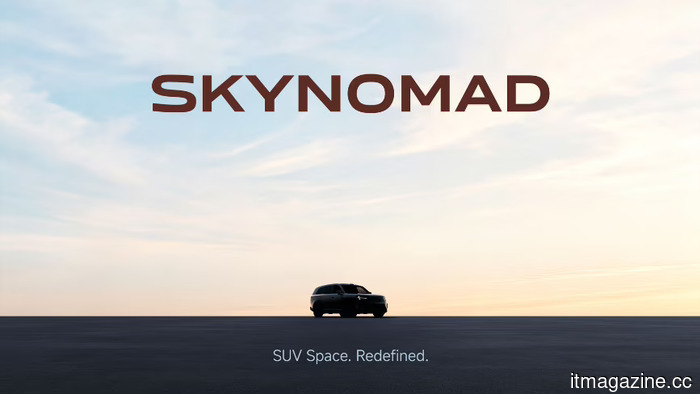 Xiaomi introduces the Sky Nomad, a square-shaped SUV lineup aimed at capturing the market for family cars in China.
Xiaomi has announced the Sky Nomad, a new SUV series that will feature an extended-range N90 equipped with a rooftop tent, as it aims to compete with Li Auto and Aito in the Chinese market.
Alchemab secures £25 million from the British Business Bank in a historic investment in life sciences.
Cambridge-based biotech company Alchemab has expanded its Series A funding with a £25 million investment from the British Business Bank, marking the lender's largest contribution to a life sciences firm.
Xiaomi introduces the Sky Nomad, a square-shaped SUV lineup aimed at capturing the market for family cars in China.
Xiaomi has announced the Sky Nomad, a new SUV series that will feature an extended-range N90 equipped with a rooftop tent, as it aims to compete with Li Auto and Aito in the Chinese market.
Alchemab secures £25 million from the British Business Bank in a historic investment in life sciences.
Cambridge-based biotech company Alchemab has expanded its Series A funding with a £25 million investment from the British Business Bank, marking the lender's largest contribution to a life sciences firm.
Sonos experiences a loss of ten years' worth of design expertise as layoffs affect its upper management.
Sonos has let go of senior design and product leaders who have been with the company for ten years or longer, in what the CEO describes as a move for greater speed, while some employees refer to it as a cost-cutting measure.