

Somalia supports India's opposition to the change in WhatsApp's username policy.
Somalia has expressed its support for India's concerns about WhatsApp’s plan to allow users to connect via usernames instead of phone numbers, escalating a dispute that spans two continents. This endorsement makes Somalia the second national government in just a week to formally question Meta regarding the usernames feature, which started being rolled out at the end of June.
WhatsApp initiated the reservation of unique handles for its nearly three billion users on June 29, with the feature expected to be fully operational later this year. While a phone number is still required to create an account, once a username is established, new contacts will no longer see the associated number.
This design has raised alarms in New Delhi, where last week the government requested WhatsApp to halt the rollout while it assesses potential fraud risks. As the single largest market for WhatsApp with over 600 million users, India’s Ministry of Electronics and Information Technology demanded that Meta provide clarification within three days on how the feature would not contribute to impersonation.
Somalia’s regulatory authority has now echoed these concerns. Mustafa Yasin Sheikh, director-general of the National Communications Authority of Somalia, stated to Bloomberg by phone on Monday that replacing phone numbers with handles could impede Somali security agencies' capability to identify individuals linked to terrorism, organized crime, and other illicit activities.
“Somalia is following India's lead,” Sheikh remarked, expressing worries about the impersonation of government institutions and officials, financial fraud targeting Somalia’s mobile money system, and the exploitation of anonymous communications by entities like al-Shabaab and organized cybercriminal groups.
This reference is significant, as Somalia has been combating the al-Qaeda-affiliated al-Shabaab insurgency since 2006, a conflict that has resulted in thousands of deaths and millions displaced. The nation regards any decrease in digital traceability as a pressing security issue.
According to reports, Meta did not respond to an email seeking comment on Somalia’s objections. The company has previously mentioned that the feature is not yet live in India and that it has taken steps to reserve usernames similar to those of public figures, government entities, and verified Meta accounts to mitigate impersonation risks.
The underlying concern shared by both governments is traceability, with the perception that visible usernames instead of numbers provide investigators a weaker starting point in tracking wrongdoers. India's notice cautioned that usernames “may facilitate impersonation and identity spoofing, including impersonation of individuals, public authorities, financial institutions, and government agencies.”
This argument is not new for India. In past disputes, when the government sought to trace WhatsApp messages, Meta objected, claiming that such requests would compromise end-to-end encryption for all users, not just those suspected of wrongdoing.
The usernames issue also coincides with a broader Indian initiative against anonymity features in messaging applications. Recently, New Delhi blocked Telegram channels over leaked exam papers and has since issued similar notices to Telegram and Signal regarding their own username frameworks.
Not everyone agrees on the legal basis for these actions. The Internet Freedom Foundation, a digital rights organization based in New Delhi, contends that the Ministry of Electronics and Information Technology is misinterpreting a platform-liability provision of the IT Act to exert control over product design, arguing that fraud should be dealt with under existing criminal laws rather than preemptively obstructing a feature.
As of now, the feature is still unavailable in India, and Somalia’s involvement indicates that Meta’s vision of a phone-number-free system may require negotiations on a country-by-country basis rather than being implemented globally at once. How Mogadishu proceeds next and whether other nations will follow suit will reveal the extent of this objection.
Other articles
 Syntiant submits paperwork for a US IPO, anticipating that public markets will also seek edge AI solutions.
Edge AI chip manufacturer Syntiant has submitted a US IPO on the Nasdaq, using the ticker SYTN, although terms and pricing have not yet been revealed.
Syntiant submits paperwork for a US IPO, anticipating that public markets will also seek edge AI solutions.
Edge AI chip manufacturer Syntiant has submitted a US IPO on the Nasdaq, using the ticker SYTN, although terms and pricing have not yet been revealed.
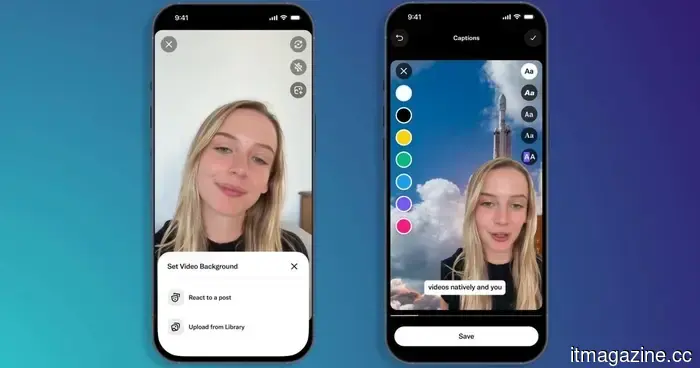 X intends to manage your video edits internally, beginning with captions and personalized backgrounds.
X has introduced an updated Video Editor and Recorder for iOS, incorporating multilingual captions and a green screen feature, allowing creators to edit their videos directly within the app.
X intends to manage your video edits internally, beginning with captions and personalized backgrounds.
X has introduced an updated Video Editor and Recorder for iOS, incorporating multilingual captions and a green screen feature, allowing creators to edit their videos directly within the app.
 Karina Portugal: discovering how to pose the correct question
How an advertising executive, who previously participated in Cannes Lions, emerged as a global authority on digital trust, fraud prevention, and identity for agentic AI, marketing to banks across four continents.
Karina Portugal: discovering how to pose the correct question
How an advertising executive, who previously participated in Cannes Lions, emerged as a global authority on digital trust, fraud prevention, and identity for agentic AI, marketing to banks across four continents.
 South Korea's legislation against 'fake news' is now in effect.
South Korea now permits courts to impose penalties of up to five times the documented losses on media outlets and large social media accounts for disseminating false information. Journalists express concerns about the potential chilling effect.
South Korea's legislation against 'fake news' is now in effect.
South Korea now permits courts to impose penalties of up to five times the documented losses on media outlets and large social media accounts for disseminating false information. Journalists express concerns about the potential chilling effect.
 Karina Portugal: mastering the art of asking the right questions
How an advertising executive, who previously worked at Cannes Lions, became a leading international figure in digital trust, fraud prevention, and identity for agentic AI, marketing to banks on four continents.
Karina Portugal: mastering the art of asking the right questions
How an advertising executive, who previously worked at Cannes Lions, became a leading international figure in digital trust, fraud prevention, and identity for agentic AI, marketing to banks on four continents.
 Meta reports that four states are seeking $1.4 trillion in fines during the youth-safety trial scheduled for August.
Meta informed a court that California, Colorado, Kentucky, and New Jersey are pursuing $1.4 trillion in penalties prior to a youth-safety trial scheduled for August.
Meta reports that four states are seeking $1.4 trillion in fines during the youth-safety trial scheduled for August.
Meta informed a court that California, Colorado, Kentucky, and New Jersey are pursuing $1.4 trillion in penalties prior to a youth-safety trial scheduled for August.
Somalia supports India's opposition to the change in WhatsApp's username policy.
Somalia has aligned with India in opposing WhatsApp's username feature, contending that using handles instead of phone numbers could compromise traceability.