

Karina Portugal: discovering how to pose the correct question
Ten years ago, Karina Portugal attended advertising festivals such as Cannes Lions, focusing on campaigns and branding. Today, she meets with some of the largest banks in Brazil, Europe, and the United States to tackle a much more challenging issue: determining trustworthiness in transactions.
The shift in her career began unexpectedly. A Polish fraud prevention startup, still raising funds and expanding internationally, approached her about a VP of Sales position. It was a notable market choice; Poland had become one of Europe’s key centers for data science and AI, with cities like Wrocław dubbed “Polish Silicon Valley.” For Karina, engaging with that ecosystem was precisely where she wanted her career to head.
Karina did not have a technical background and was unfamiliar with fraud prevention, competing against five male candidates with relevant experience. However, her strength lay in her understanding of customers. “What are the chances of me getting this role in Poland while competing with five men who have actual fraud prevention experience?” she recalls wondering. Unlike her competitors, she had the ability to sell, negotiate, and cultivate relationships.
In the interview, she made her case: “Hire me, and I’ll bring you the client you want most.” This was not an empty promise. Karina traveled to Poland, spent three weeks getting acquainted with the product, returned to Brazil, and secured a proof of concept with one of Latin America’s largest retailers, addressing e-commerce fraud and account takeover. The proof of concept met its targets and converted into a contract in less than a year.
It marked the beginning of her career, founded on a straightforward yet uncommon premise: technology succeeds when it resolves a business issue that the customer is already aware of.
The Offer She Initially Rejected
Years later, after becoming well-recognized in the field, Karina received a LinkedIn message from a Portuguese executive at a fraud prevention startup looking to broaden its investor base and client network. He had been following her career and wanted to meet. When the offer came, she declined, believing it wasn’t the right time due to ongoing negotiations at her current company.
A year later, the same executive approached her again. By then, Karina had completed her negotiations, including securing the large Latin American retailer, and she accepted the challenge of working with ten of Brazil's largest banks on fraud prevention: card transactions, Pix, account opening—areas that connected back to her earlier experiences with European bank clients while at the Polish startup.
Starting From Scratch in Singapore
While with the Portuguese startup, Karina was approached by a Singapore-based company focused on anti-money laundering, seeking investment for international growth and aiming to enter the Brazilian market. The offer came with no established infrastructure: no clients, no ongoing deals, no groundwork laid. Karina built the operation from the ground up: prospecting, building relationships, and developing a pipeline.
This experience further cemented the pattern of her career: entering new markets without a safety net and establishing a commercial presence where none existed previously. By this time, her career already covered clients across four continents (South America, Europe, Asia, and later North America), relying primarily on phone calls, video meetings, and occasional travel.
The Transition to the United States
This pattern (putting things on hold until the time is right, then accepting a challenge and starting from scratch if necessary) arose again in a significant decision in her career. Unlike before, the challenge now was to enter a mature and fiercely competitive market: the United States, home to some of the world’s largest financial institutions and most advanced startups in digital identity and trust-oriented AI, where the barriers to entry are steep and competition is relentless.
Karina underwent nearly a year of negotiations and six or seven interviews before agreeing to take on the role of serving American and international clients from a U.S.-based digital identity startup. This shift added a new dimension to her career, expanding her focus from fraud prevention and anti-money laundering to digital identity linked to AI agents. “The negotiation was very intentional, and ultimately, a satisfying one,” she reflects, noting that a significant factor in her decision was the caliber of the people she would work with.
Throughout her journey, Karina returned to school because of her passion for learning. She completed an executive program at the Wharton School that concentrated on leadership, business, and artificial intelligence, then transitioned straight to Stanford, where she continued in executive programs, engaging closely with faculty and leaders in the tech sector.
She attributes her education to a shift in mindset: learning to lead by asking questions rather than providing ready-made answers. “I’ve consistently learned the most by figuring out how to ask the right questions. Listening and developing the right inquiries has been vital,” she says. In a career that hinges on grasping the customer’s issues before selling solutions, this skill became crucial, aligning with the American tech and AI ecosystem she has since navigated.
This ability is what she applies today while confronting the pressing question of the moment
Other articles
 The Importance of CNAPP in Cloud-Native Security
Grasping the current requirements of online security. Cloud-native security once seemed to be an issue for highly technical teams operating within intricate systems. However, that perspective has evolved. As organizations utilize containers, Kubernetes, APIs, serverless functions, and rapid deployment cycles, security teams require a method to monitor risk throughout all these elements without having to assemble […]
The Importance of CNAPP in Cloud-Native Security
Grasping the current requirements of online security. Cloud-native security once seemed to be an issue for highly technical teams operating within intricate systems. However, that perspective has evolved. As organizations utilize containers, Kubernetes, APIs, serverless functions, and rapid deployment cycles, security teams require a method to monitor risk throughout all these elements without having to assemble […]
 Syntiant submits paperwork for a US IPO, anticipating that public markets will also seek edge AI solutions.
Edge AI chip manufacturer Syntiant has submitted a US IPO on the Nasdaq, using the ticker SYTN, although terms and pricing have not yet been revealed.
Syntiant submits paperwork for a US IPO, anticipating that public markets will also seek edge AI solutions.
Edge AI chip manufacturer Syntiant has submitted a US IPO on the Nasdaq, using the ticker SYTN, although terms and pricing have not yet been revealed.
 X aims to maintain its video edits internally, beginning with captions and personalized backgrounds.
X has launched an updated Video Editor and Recorder for iOS, featuring multilingual captions and a green screen tool, allowing creators to edit their videos directly within the app.
X aims to maintain its video edits internally, beginning with captions and personalized backgrounds.
X has launched an updated Video Editor and Recorder for iOS, featuring multilingual captions and a green screen tool, allowing creators to edit their videos directly within the app.
 Karina Portugal: mastering the art of asking the right questions
How an advertising executive, who previously worked at Cannes Lions, became a leading international figure in digital trust, fraud prevention, and identity for agentic AI, marketing to banks on four continents.
Karina Portugal: mastering the art of asking the right questions
How an advertising executive, who previously worked at Cannes Lions, became a leading international figure in digital trust, fraud prevention, and identity for agentic AI, marketing to banks on four continents.
 Former Tesla Optimus scientist establishes UMA to create a humanoid robot in Europe.
Rémi Cadene, a former Tesla Optimus scientist, has introduced UMA’s Northstar, a lightweight humanoid robot developed in Paris, with a focus on the European market initially.
Former Tesla Optimus scientist establishes UMA to create a humanoid robot in Europe.
Rémi Cadene, a former Tesla Optimus scientist, has introduced UMA’s Northstar, a lightweight humanoid robot developed in Paris, with a focus on the European market initially.
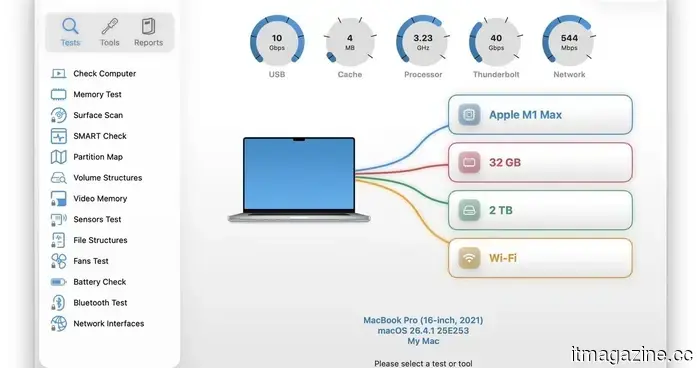 I discovered a free diagnostic app for Mac that reveals information not provided by Apple’s tools.
Techtool Lite is a complimentary diagnostic application for Mac offered by Micromat, providing regular users with a more comprehensive health assessment than Disk Utility.
I discovered a free diagnostic app for Mac that reveals information not provided by Apple’s tools.
Techtool Lite is a complimentary diagnostic application for Mac offered by Micromat, providing regular users with a more comprehensive health assessment than Disk Utility.
Karina Portugal: discovering how to pose the correct question
How an advertising executive, who previously participated in Cannes Lions, emerged as a global authority on digital trust, fraud prevention, and identity for agentic AI, marketing to banks across four continents.