

South Korea's legislation against 'fake news' is now in effect.
In South Korea, a recent ruling by a court determined that posting false information could lead to punitive damages that are five times greater than the actual damages incurred. The country has enacted a stringent "fake news" law, causing concern among journalists.
According to the Associated Press, South Korea is now implementing a strict law addressing false information circulated online. Courts are empowered to impose punitive damages—up to five times the verified financial loss—on media organizations and prominent social media accounts, such as YouTube content creators, that disseminate false or manipulated information for harm or profit.
The consequences escalate further for those who distribute such information after a court has declared it false. Media regulators can impose fines reaching 1 billion won (around $656,000) for repeat offenses. Additionally, platforms with over a million daily users are required to remove flagged content or suspend accounts upon receiving reports.
The concerning aspect, as highlighted by critics, is that the platforms themselves are responsible for the initial determination of what constitutes false information, rather than a court. Companies like Naver and Kakao must assess if a report of "false or manipulated" content is valid. An incorrect decision—either way—can still result in significant repercussions. Although public-interest reporting is exempt from the law, regulators assert that it is not intended to serve as a tool for censorship.
There are significant concerns among journalists. The Journalists Association of Korea has warned that this law could lead to a chilling effect, with media outlets possibly refraining from rigorously scrutinizing officials and large corporations to avoid substantial payouts. A media law professor also expressed worry that platforms might evolve into "online censors," removing lawful content to evade liability.
Even the U.S. State Department has expressed disapproval, labeling the regulation as an invitation for "viewpoint-based censorship."
The importance of this development lies in the context in which South Korea introduced the law; it was in response to a tumultuous political situation in which allegations of election fraud circulated on YouTube, exacerbating the aftermath of a brief martial-law period.
While the government presents the law as a safeguard for democracy, critics warn of the risks it poses, highlighting a critical challenge faced by democracies everywhere: determining who defines what is false and the implications of misjudgments. Various countries are responding differently to similar challenges; India has tightened platform regulations, China has restructured its platform guidelines, and Australia has continually increased penalties.
The surge in generative AI only intensifies these concerns, as it leads to an influx of fabricated and manipulated content online. One uncertainty remains: how foreign platforms, such as Google’s YouTube, will adhere to these regulations. South Korea has taken a definitive stance, and now its courts must demonstrate their ability to distinguish between truth and falsehood.
Other articles
 Karina Portugal: discovering how to pose the correct question
How an advertising executive, who previously participated in Cannes Lions, emerged as a global authority on digital trust, fraud prevention, and identity for agentic AI, marketing to banks across four continents.
Karina Portugal: discovering how to pose the correct question
How an advertising executive, who previously participated in Cannes Lions, emerged as a global authority on digital trust, fraud prevention, and identity for agentic AI, marketing to banks across four continents.
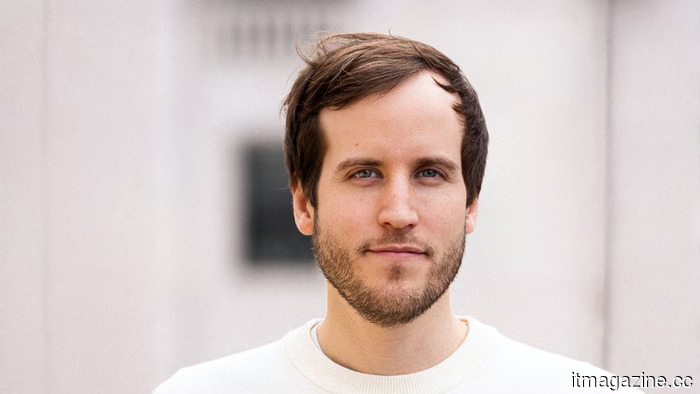 Former Tesla Optimus scientist establishes UMA to create a humanoid robot for Europe.
Rémi Cadene, a former scientist at Tesla Optimus, has introduced UMA’s Northstar, a lightweight humanoid robot designed in Paris with a primary focus on the European market.
Former Tesla Optimus scientist establishes UMA to create a humanoid robot for Europe.
Rémi Cadene, a former scientist at Tesla Optimus, has introduced UMA’s Northstar, a lightweight humanoid robot designed in Paris with a primary focus on the European market.
 X aims to maintain its video edits internally, beginning with captions and personalized backgrounds.
X has launched an updated Video Editor and Recorder for iOS, featuring multilingual captions and a green screen tool, allowing creators to edit their videos directly within the app.
X aims to maintain its video edits internally, beginning with captions and personalized backgrounds.
X has launched an updated Video Editor and Recorder for iOS, featuring multilingual captions and a green screen tool, allowing creators to edit their videos directly within the app.
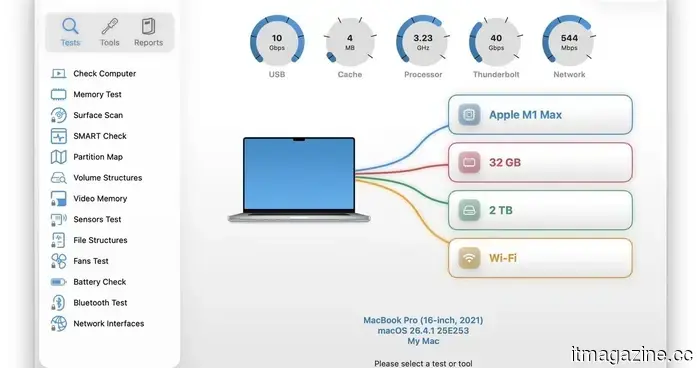 I discovered a free diagnostic app for Mac that reveals information not provided by Apple’s tools.
Techtool Lite is a complimentary diagnostic application for Mac offered by Micromat, providing regular users with a more comprehensive health assessment than Disk Utility.
I discovered a free diagnostic app for Mac that reveals information not provided by Apple’s tools.
Techtool Lite is a complimentary diagnostic application for Mac offered by Micromat, providing regular users with a more comprehensive health assessment than Disk Utility.
 Meta reports that four states are seeking $1.4 trillion in fines during the youth-safety trial scheduled for August.
Meta informed a court that California, Colorado, Kentucky, and New Jersey are pursuing $1.4 trillion in penalties prior to a youth-safety trial scheduled for August.
Meta reports that four states are seeking $1.4 trillion in fines during the youth-safety trial scheduled for August.
Meta informed a court that California, Colorado, Kentucky, and New Jersey are pursuing $1.4 trillion in penalties prior to a youth-safety trial scheduled for August.
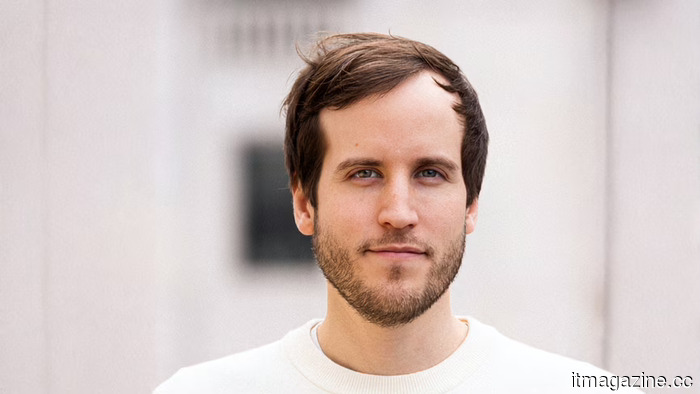 Former Tesla Optimus scientist establishes UMA to create a humanoid robot in Europe.
Rémi Cadene, a former Tesla Optimus scientist, has introduced UMA’s Northstar, a lightweight humanoid robot developed in Paris, with a focus on the European market initially.
Former Tesla Optimus scientist establishes UMA to create a humanoid robot in Europe.
Rémi Cadene, a former Tesla Optimus scientist, has introduced UMA’s Northstar, a lightweight humanoid robot developed in Paris, with a focus on the European market initially.
South Korea's legislation against 'fake news' is now in effect.
South Korea now permits courts to impose penalties of up to five times the documented losses on media outlets and large social media accounts for disseminating false information. Journalists express concerns about the potential chilling effect.