
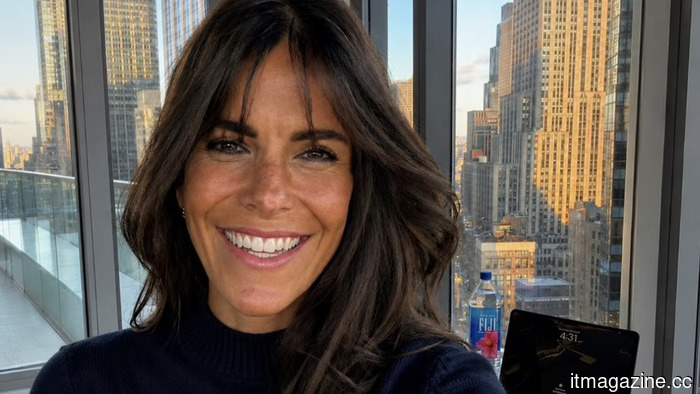
Karina Portugal: mastering the art of asking the right questions
A decade ago, Karina Portugal was attending advertising festivals like Cannes Lions, engaging in discussions about campaigns and branding. Today, she finds herself in meetings with some of the largest banks in Brazil, Europe, and the United States, tackling a much tougher issue: how do you determine trust in transactions.
Her career took an unexpected turn when a Polish fraud-prevention startup, still in its fundraising and expansion phase, sought her for a VP of Sales position. The choice of market was significant; Poland has emerged as a notable hub for data science and AI, with cities like Wrocław dubbed “Polish Silicon Valley.” Karina was eager to immerse herself in that environment at that stage of her career.
Despite lacking a technical background and knowledge of fraud prevention, Karina was up against five male candidates for the role. What she offered that they possibly did not was a deep understanding of customers. “What were the odds of me securing this role in Poland against five other male candidates who had actual experience in fraud prevention?” she thought. What set her apart was her ability to sell, negotiate, and foster relationships.
In her interview, she presented her case: “Hire me, and I’ll bring you your most desired client.” It wasn't an empty commitment. Karina traveled to Poland, dedicated three weeks to understanding the product, then returned to Brazil and secured a proof of concept with one of Latin America’s largest retailers, addressing e-commerce fraud and account takeovers, which met its target metrics and led to a signed contract within a year.
This marked the beginning of a career founded on a straightforward but rare principle: technology sells not by being the best but by addressing a business problem that the customer already recognizes.
The Offer She Initially Rejected
Years later, after gaining recognition in the market, Karina received a LinkedIn message from a Portuguese executive at a fraud-prevention startup looking to broaden its investor base and international clientele. He had followed her career path and wished to discuss opportunities. She agreed to meet, but when the offer was extended, she declined. The timing wasn’t right; she was in the midst of crucial negotiations at her current company and could not abandon her clients.
A year later, the same executive reached out again. By then, Karina had completed her necessary dealings, including with the significant Latin American retailer, and she accepted the position to work with ten of Brazil’s largest banks on fraud prevention related to card transactions, Pix, and account openings, an area that connected back to her early experiences with European bank clients while at the Polish startup.
Building From the Ground Up in Singapore
During her time at the Portuguese startup, Karina was contacted by a Singapore-based startup focused on anti-money laundering, seeking investment for its international expansion and to penetrate the Brazilian market. The offer came with no existing infrastructure—no clients, no deals, nothing to build upon. Karina was tasked with building the operation from the ground up: prospecting, relationship-building, and developing the pipeline.
This experience reinforced a pattern that defined her career: entering new markets without a safety net and establishing a commercial presence from scratch. Her career had already involved clients from four continents (South America, Europe, Asia, and later North America), often long-distance via phone, video calls, and occasional travel.
The Move to the United States
This same approach—waiting for the right moment to say yes and building from scratch if necessary—reappeared years later in a significant career decision. This time, the challenge was not about opening a market but entering a mature and highly competitive one: the United States, home to some of the globe's largest financial institutions and cutting-edge startups in digital identity and trust-focused AI, an environment with a high barrier to entry and relentless competition.
Karina underwent nearly a year of negotiations and six or seven interviews before accepting a role serving American and international clients at a U.S.-based digital identity startup. This shift added a new dimension to her career, which had previously centered on fraud prevention and anti-money laundering, now encompassing digital identity applied to AI agents. “It was a very intentional negotiation, and ultimately a gratifying one,” she reflects, noting that the quality of the people she would be working with influenced her decision.
Throughout this journey, Karina returned to academia because of her passion for learning. She completed an executive program at the Wharton School focusing on leadership, business, and artificial intelligence, then moved on to Stanford, where she continued joining executive programs, staying engaged with faculty and leaders in the tech sector.
She attributes significant value to this education for shifting her mindset: learning to lead by asking questions rather than providing ready-made answers. “I’ve always gained the most from discovering how to ask the right questions. Listening and inquiring effectively,” she emphasizes. In a career built on comprehending customer issues before proposing solutions, this skill became essential, linking her to the American technology and AI ecosystem in which she has since thrived.
This
Other articles
 Meta reports that four states are seeking $1.4 trillion in fines during the youth-safety trial scheduled for August.
Meta informed a court that California, Colorado, Kentucky, and New Jersey are pursuing $1.4 trillion in penalties prior to a youth-safety trial scheduled for August.
Meta reports that four states are seeking $1.4 trillion in fines during the youth-safety trial scheduled for August.
Meta informed a court that California, Colorado, Kentucky, and New Jersey are pursuing $1.4 trillion in penalties prior to a youth-safety trial scheduled for August.
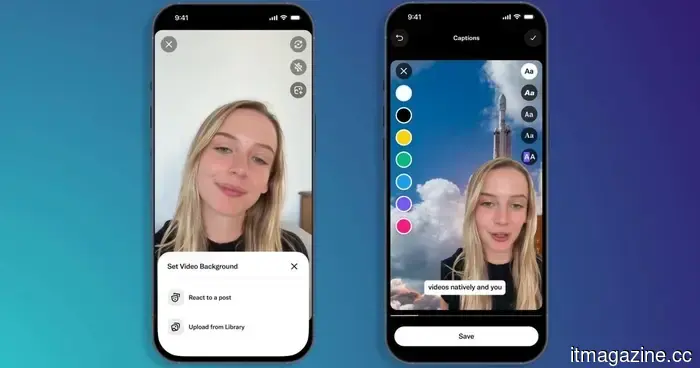 X intends to manage your video edits internally, beginning with captions and personalized backgrounds.
X has introduced an updated Video Editor and Recorder for iOS, incorporating multilingual captions and a green screen feature, allowing creators to edit their videos directly within the app.
X intends to manage your video edits internally, beginning with captions and personalized backgrounds.
X has introduced an updated Video Editor and Recorder for iOS, incorporating multilingual captions and a green screen feature, allowing creators to edit their videos directly within the app.
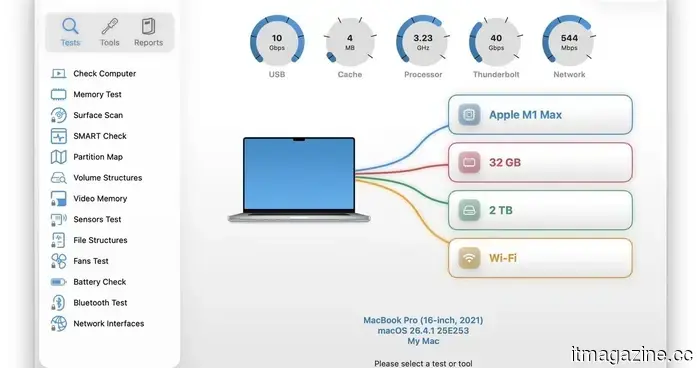 I discovered a free diagnostic app for Mac that reveals information not provided by Apple’s tools.
Techtool Lite is a complimentary diagnostic application for Mac offered by Micromat, providing regular users with a more comprehensive health assessment than Disk Utility.
I discovered a free diagnostic app for Mac that reveals information not provided by Apple’s tools.
Techtool Lite is a complimentary diagnostic application for Mac offered by Micromat, providing regular users with a more comprehensive health assessment than Disk Utility.
 South Korea's legislation against 'fake news' is now in effect.
South Korea now permits courts to impose penalties of up to five times the documented losses on media outlets and large social media accounts for disseminating false information. Journalists express concerns about the potential chilling effect.
South Korea's legislation against 'fake news' is now in effect.
South Korea now permits courts to impose penalties of up to five times the documented losses on media outlets and large social media accounts for disseminating false information. Journalists express concerns about the potential chilling effect.
 Carely's innovative wearables monitor elderly parents so you don't have to.
A wearable device without a screen, known as Carely, monitors vital signs and daily habits to notify families before a health concern escalates into an emergency.
Carely's innovative wearables monitor elderly parents so you don't have to.
A wearable device without a screen, known as Carely, monitors vital signs and daily habits to notify families before a health concern escalates into an emergency.
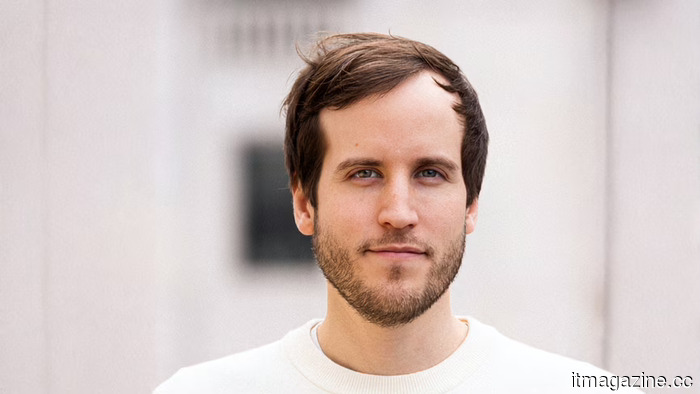 Former Tesla Optimus scientist establishes UMA to create a humanoid robot in Europe.
Rémi Cadene, a former Tesla Optimus scientist, has introduced UMA’s Northstar, a lightweight humanoid robot developed in Paris, with a focus on the European market initially.
Former Tesla Optimus scientist establishes UMA to create a humanoid robot in Europe.
Rémi Cadene, a former Tesla Optimus scientist, has introduced UMA’s Northstar, a lightweight humanoid robot developed in Paris, with a focus on the European market initially.
Karina Portugal: mastering the art of asking the right questions
How an advertising executive, who previously worked at Cannes Lions, became a leading international figure in digital trust, fraud prevention, and identity for agentic AI, marketing to banks on four continents.