
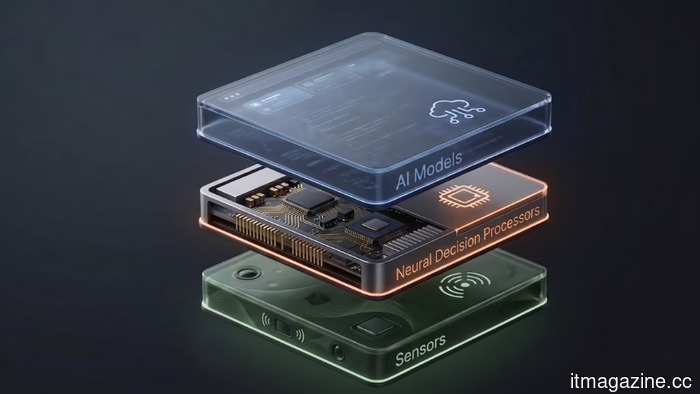
Syntiant submits paperwork for a US IPO, anticipating that public markets will also seek edge AI solutions.
Syntiant, the semiconductor company known for its low-power processors that enable artificial intelligence to be executed directly on devices instead of relying on cloud processing, has submitted a filing for a US initial public offering. Based in Irvine, California, the firm filed its Form S-1 with the Securities and Exchange Commission on July 6 and aims to list Class A shares on the Nasdaq Global Market under the ticker symbol SYTN.
The company operates within the edge AI segment of the semiconductor industry, focusing on the development of small, continuously operating chips alongside the necessary on-device software. Syntiant's processors are utilized in various applications, including earbuds, wearables, vehicles, drones, robots, and industrial equipment, allowing them to perceive their environment and respond locally without needing to connect to a data center.
Syntiant describes its approach as "physical AI," offering a comprehensive platform that includes processors, sensors, and software designed to sense, decide, and act in real-time while powered by batteries. By keeping voice and visual processing on-device, it reduces power consumption and latency and alleviates some privacy concerns associated with transmitting audio to remote servers.
The specifics of the offering have not yet been finalized. Syntiant has not revealed the number of shares it plans to sell or the pricing range, stating that the size and timing of the offering will depend on market conditions and SEC review. The company has not disclosed its fundraising goals, though an IPO is anticipated later this year without a specific date.
According to the filing, Syntiant reported revenues of $64.5 million for the first quarter of fiscal 2026, a decline from $66.6 million in the previous year. The net loss increased to $26.2 million during the same period, up from $16.8 million, with a separate line item indicating a narrower loss of $20.9 million attributable to the company after minority interests.
This effort places Syntiant in a competitive landscape. Companies like Qualcomm, Ambarella, and several startups are targeting the same low-power inference market, and there is a growing demand for silicon that enables AI functionalities on devices rather than in data centers.
To date, Syntiant has secured $311 million in funding, with the latest round occurring in December 2024 at an estimated valuation of around $646 million; Microsoft led a $35 million investment round in 2020. Key stakeholders, each holding 5% or more, include Intel, Microsoft, and Knowles, alongside a broader list of investors including Intel Capital, Microsoft’s M12, the Amazon Alexa Fund, Bosch Ventures, and Applied Ventures.
In December, Syntiant finalized a $150 million acquisition of Knowles’ consumer MEMS microphone division, integrating audio-sensing technology into its offerings and gaining production facilities in China and Malaysia.
This acquisition provided Syntiant with its own microphones to complement its inference chips, marking a notable instance of vertical integration in an industry where most competitors purchase sensors externally. The firm claims that over 100 million of its processors have been shipped across various consumer, industrial, and automotive applications.
Recently, Syntiant has formed new partnerships, including collaboration with sensor manufacturer Partron to develop on-sensor AI solutions for healthcare, robotics, and automotive sectors, as part of a strategy to embed its chips more deeply within hardware supply chains.
Although Syntiant serves a variety of consumer electronics brands and automotive manufacturers, it has publicly disclosed few of its clients.
Citigroup, BofA Securities, and UBS Investment Bank are serving as joint lead book-running managers, with Needham, Stifel, Cantor, and KeyBanc also participating as additional bookrunners. Syntiant mentioned that proceeds from the IPO may be used to repay debt, finance further acquisitions, and support general corporate needs.
The founders will maintain majority voting control post-IPO through super-voting Class B stock, led by CEO Kurt Busch, who co-founded the company in 2017. This filing arrives as a number of chip and AI companies prepare for IPOs, including memory maker SK hynix looking to raise $28 billion on the same day, humanoid robot developer EngineAI aiming for a listing in Hong Kong, and Cerebras already trading publicly.
Other articles
 Former Tesla Optimus scientist establishes UMA to create a humanoid robot in Europe.
Rémi Cadene, a former Tesla Optimus scientist, has introduced UMA’s Northstar, a lightweight humanoid robot developed in Paris, with a focus on the European market initially.
Former Tesla Optimus scientist establishes UMA to create a humanoid robot in Europe.
Rémi Cadene, a former Tesla Optimus scientist, has introduced UMA’s Northstar, a lightweight humanoid robot developed in Paris, with a focus on the European market initially.
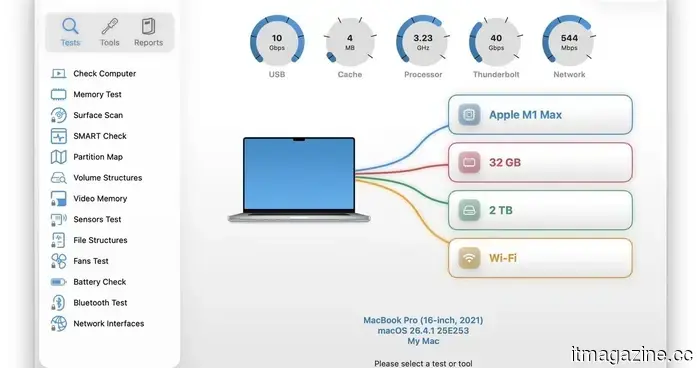 I discovered a free diagnostic app for Mac that reveals information not provided by Apple’s tools.
Techtool Lite is a complimentary diagnostic application for Mac offered by Micromat, providing regular users with a more comprehensive health assessment than Disk Utility.
I discovered a free diagnostic app for Mac that reveals information not provided by Apple’s tools.
Techtool Lite is a complimentary diagnostic application for Mac offered by Micromat, providing regular users with a more comprehensive health assessment than Disk Utility.
 Bentley's inaugural fully electric SUV will be named Torcal.
Bentley has introduced the Torcal, its inaugural electric SUV, focusing on high-quality craftsmanship and rapid charging amidst a decline in demand within the luxury EV market.
Bentley's inaugural fully electric SUV will be named Torcal.
Bentley has introduced the Torcal, its inaugural electric SUV, focusing on high-quality craftsmanship and rapid charging amidst a decline in demand within the luxury EV market.
 Karina Portugal: discovering how to pose the correct question
How an advertising executive, who previously participated in Cannes Lions, emerged as a global authority on digital trust, fraud prevention, and identity for agentic AI, marketing to banks across four continents.
Karina Portugal: discovering how to pose the correct question
How an advertising executive, who previously participated in Cannes Lions, emerged as a global authority on digital trust, fraud prevention, and identity for agentic AI, marketing to banks across four continents.
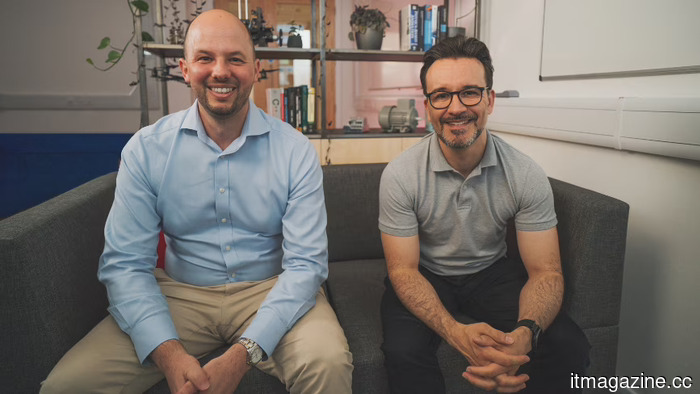 Luffy AI secures £8.1 million to integrate self-tuning AI into electric motors globally.
Culham spinout Luffy AI has secured £8.1 million in a Series A funding round led by BGF to develop edge-based AI that adjusts industrial motors according to their load in real time.
Luffy AI secures £8.1 million to integrate self-tuning AI into electric motors globally.
Culham spinout Luffy AI has secured £8.1 million in a Series A funding round led by BGF to develop edge-based AI that adjusts industrial motors according to their load in real time.
 Karina Portugal: mastering the art of asking the right questions
How an advertising executive, who previously worked at Cannes Lions, became a leading international figure in digital trust, fraud prevention, and identity for agentic AI, marketing to banks on four continents.
Karina Portugal: mastering the art of asking the right questions
How an advertising executive, who previously worked at Cannes Lions, became a leading international figure in digital trust, fraud prevention, and identity for agentic AI, marketing to banks on four continents.
Syntiant submits paperwork for a US IPO, anticipating that public markets will also seek edge AI solutions.
Edge AI chip manufacturer Syntiant has submitted a US IPO on the Nasdaq, using the ticker SYTN, although terms and pricing have not yet been revealed.